



Following string of incidents, FRA 45-day Metra investigation to focus on safety
Set to focus on Metra’s program of operational tests and inspections for all its operating crews, with special emphasis on training, qualification and testing of locomotive engineers.
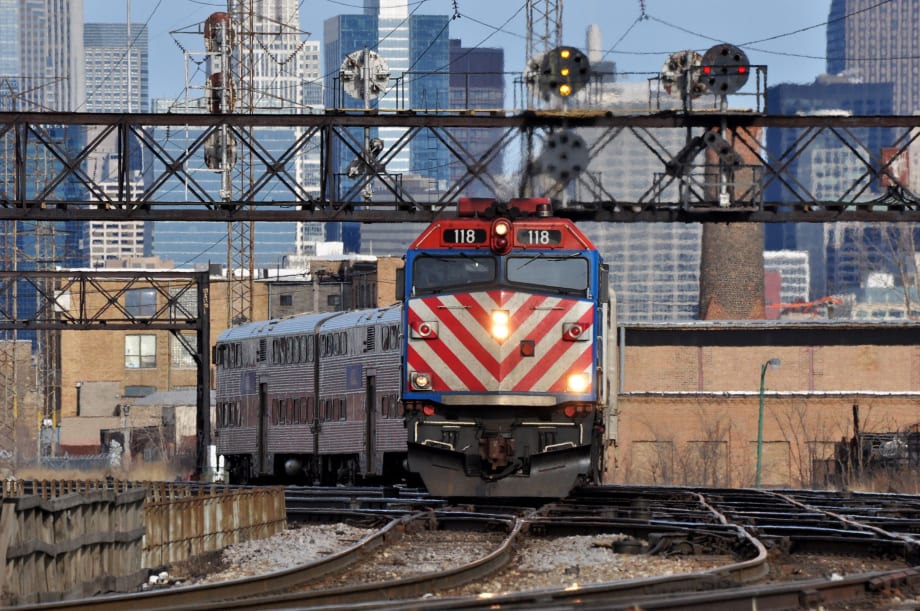
Following incidents resulting in three Metra engineers losing their certifications, the FRA launched a 45-day investigation similar to the one it completed in May of Metro-North Rail Road.
Metra/Mark Llanuza
Following incidents resulting in three Metra engineers losing their certifications, the FRA launched a 45-day investigation similar to the one it completed in May of Metro-North Rail Road.
Metra/Mark Llanuza
In June, the Federal Railroad Administration (FRA) announced it was launching a 45-day, focused deep dive safety assessment of Chicago’s Metra commuter rail system in response to three incidents that took place over the course of two weeks.
The FRA was set to focus on Metra’s program of operational tests and inspections for all its operating crews, with special emphasis on training, qualification and testing of locomotive engineers.
“Safety is Metra’s top priority. We are in the process of completing our own internal investigations on these incidents,” said Metra CEO Don Orseno. “Metra contacted the FRA to inform them of our actions. We are fully committed to working with the FRA and welcome their review. We share a common goal of making commuter rail travel the safest mode of transportation.”
FRA investigators will focus on three recent incidents involving speeding and signal violations, which resulted in three Metra engineers losing their certifications.
During the course of the investigation, FRA inspectors were set to interview all affected employees, as well as review event recorder tapes and video recordings, operations testing records, radio tapes and Metra’s locomotive engineer qualifications certification program.
Investigators will also perform a comprehensive audit of Metra’s program of tests and inspections for its operating employees that will analyze testing records for 2013 and 2014; review training, qualification and competency of testing officers; conduct testing sessions with Metra officers; perform speed checks and conduct independent background reviews on Metra employees.
In addition, FRA personnel were going to meet with labor leaders and Metra employees to listen to their concerns regarding these recent events.
“In addition to our ongoing operational testing, we have directed managers to personally meet and review safety procedures with operating personnel and reinforce the importance of maintaining situational awareness at all times,” Orseno said following the FRA’s announcement. He added that Metra also issued a safety bulletin to all operating employees, with its freight rail partners, BNSF and Union Pacific, also taking the same actions.
The assessment is similar to “Operation Deep Dive,” the recent safety assessment conducted after a series of accidents on the New York Metropolitan Transportation Authority’s Metro-North Rail Road.
As a result of the investigation, Metro-North was directed to address 25 specific recommendations covering eight safety critical concerns in an effort to mitigate risk and to begin a turnaround of the railroad’s safety culture.
In June, Metro-North issued a 100-Day Report on the Action Plan established by President Joseph J. Giulietti, which focused the railroad’s efforts on improving safety, restoring reliability and improving communications.
Of 32 initiatives established in the Action Plan, 21 had been fully implemented by mid-June, with seven still in progress and two continuing to be pursued after outside entities submit independent reports. Two more initiatives — implementing a “back to basics” plan for train reliability and service delivery and communicating service delivery information to customers and elected officials — will remain ongoing, long-term Metro-North priorities, according to the report.
“Our customers and everyone who relies on Metro-North have seen real accomplishments that have gone a long way toward restoring their faith in the railroad,” Giulietti said. “Our challenge is to keep this relentless focus on improvement that our customers expect.”
Major improvements have been made in many areas including enhancing track inspection and maintenance, installing alerters and video cameras in engineers’ cabs, beefing up the safety and training departments, expanding employee testing programs to ensure understanding of safety rules, creating a computer-based track worker safety system and implementing a Confidential Close Call Reporting System.
The FRA completed its review of Metro-North practices in May, and its recommendations are incorporated into the 100-Day Report. Two external reports, from the MTA’s Blue Ribbon Panel and the National Transportation Safety Board, had not yet been submitted, but Metro-North has committed to implementing any recommendations from those entities that have not already been addressed.
More Management

LIT Marks 10-Year Milestone at Annual Summit
Hosted by the COTA from September 10 to 13, the Summit carried the theme “Celebrating 10 Years of Excellence, Leadership, and Impact,” with every part of the program honoring the people, agencies, and partners who built LIT over its first decade.
Read More →
People Movement: Dan Dipert Coaches Adds Third-Generation Leader, Keolis Names New Valley Metro VP/GM, and More
In this edition, we also cover recent appointments and announcements at the Wabtec, SilverRide, HNTB, and more, showcasing the individuals helping to shape the future of transportation.
Read More →
METRO Opens Submissions for 2026 Motorcoach Awards
Nominations are now being accepted for METRO Magazine’s Operator of the Year and Innovative Operator of the Year awards.
Read More →

New York MTA Advances Final Contract for Second Avenue Subway Expansion
Contract Four is the largest in the Second Avenue Subway Phase 2 project and includes construction of station infrastructure, tracks, and signals for the subway expansion, MTA officials said. Work on Contract Four will begin in 2027.
Read More →
Transit Agencies Highlight Safety Gains at National Summit
Leaders from 15 major transit systems shared crime-reduction results and safety initiatives while discussing the role of continued federal support.
Read More →
NITA Names New Leadership, Expands Reduced-Fare Program at First Board Meeting
The new regional transit authority appointed its first board chair and interim executive director while extending reduced fares across CTA, Metra, and Pace for eligible riders.
Read More →
Beyond the Checklist: A Structured Approach to Transit Maintenance
Reliability-Centered Maintenance helps transit agencies move beyond routine checklists to focus limited resources on the assets and failures that have the greatest impact on safety, reliability, and service.
Read More →
APTA 2026 Nominating Committee Selects Leadership Slate, Names Chair and Vice Chair Nominees
Leadership changes will help shape the association’s priorities and its representation of the transportation industry during the 2026–2027 term.
Read More →
DART Launches Major Security, Fare Enforcement Initiative
The 90-day demonstration will deploy coordinated security teams at five light rail stations while testing controlled access and gathering data to guide future investments.
Read More →
Advancing Fare Collection Through Technology and Innovation
Learn about delivering 1300 gates at 91 stations while managing fare evasion. Explore the large scale deployment, solution customization and real-world results that affect the region. Prepare for deployment in your region now.
Read More →