



Government Contracts Enhance Financial Footing
With several types of federal, state and local work available, from university and airport shuttle services to transporting military recruits, firefighters or those in need of medical services, government contract work is coveted by many motorcoach companies and is often used as a way to supplement day-to-day business.

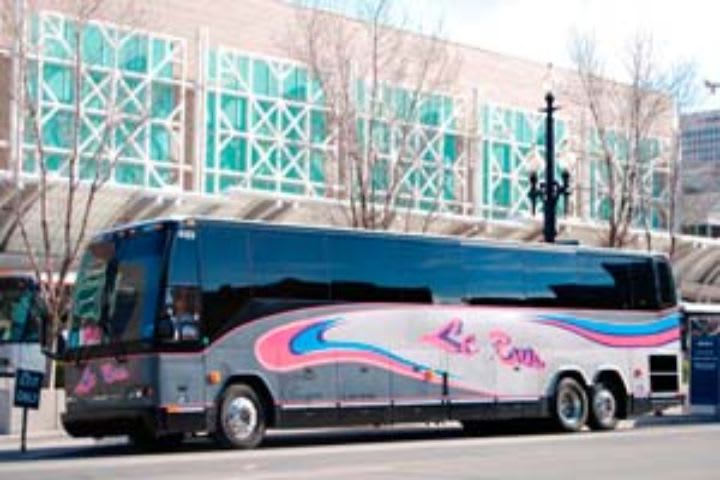
With several types of federal, state and local work available, from university and airport shuttle services to transporting military recruits, firefighters or those in need of medical services, government contract work is coveted by many motorcoach companies and is often used as a way to supplement day-to-day business. While landing the contracts can be competitive and the application process labor-intensive, there are many opportunities to obtain them, and the returns often provide valuable financial stability.
Competition challenge
“There are a very large number of contracts that come up for transportation,” says Dave Bolen, president of Washington D.C.-based New World Tours. Due to their location, the company has taken on many government contracts, mainly working on employee shuttle services for the U.S. Department of Defense (DOD), and the U.S. Department of State. “We’ve done work for every department of the federal government at one point or another, some as just charter, some as short-term movement and some as long-term contracts,” he adds.
The main challenge involved in winning a government contract is competition, according to Bolen. Registered transportation companies often find themselves bidding for the same contracts and putting significant labor and time toward them, while dealing with an uncertain return. “You can find yourself doing a lot of bids, and you’re not going to land a big fish every time. You may get a small contract, or a big one, and you’re going to lose a lot of the time, but you’ve got to keep trying,” says Bolen.
All the efforts to win these contracts can pay off with steady work and revenue for the company and can also offer flexibility to employees. “Some drivers don’t like being away from home. And they like to know that on Monday morning, they’ll be moving employees for eight hours a day, will be home on Friday evening and have the weekend off,” Bolen says.
One potential adjustment to be aware of, Bolen advises, is getting used to billing and payment cycles. In the beginning, while getting the billing started and procedures in place, there may be a long waiting period before receiving the first payment. Being in a stable cash position to begin with, in order to cover about 60 days of outlay, is helpful.
“The margins are probably not what I would call robust, but they are satisfactory for the type of work you are doing and the stability that you receive,” says Bolen.
Meeting criteria
Applying for contracts can be time-consuming — requirements can include courses, inspections, changing qualifications and extensive amounts of paperwork. “It’s a challenge to keep up with all the requirements,” says Dennis Copyak, general manager for Salt Lake City-based Le Bus. “You have to be licensed here, you have to be licensed there, if you don’t update your CCR , CPC and TPT numbers, it gets confusing. It’s almost like you have to have a department that handles nothing but government contracts so that you stay on top of the procedures, paperwork and filing,” he adds.
Some contracts, in addition to all the other criteria required, hinge upon whether an operator has a special type of equipment, or whether their drivers have attended certain courses or hold specific certifications. Le Bus has done work for the U.S. Forest Service, transporting firefighters, and to earn the contract, the entire driving staff had to go through an extensive course — scheduling operators to attend was difficult. “If you get a phone call to transport local firefighters to a wildfire and an available driver hasn’t gone through the wildfire course, then you’re not qualified to go, even though it’s not much more than transporting from one location to another, but may require drivers to be in or near a hazardous area,” says Copyak.
Le Bus also operates an ongoing military contract for U.S. National Guard moves. “The status of those contracts is pretty cut and dry. It’s a nice schedule, and you get plenty of notice if they need to change it,” says Copyak. The company’s past association with the military helped them obtain the contract. Another key to the company receiving military work is their 24-hour availability.
Copyak describes the process for gaining National Guard contracts: “You fax them a bid and you’re either awarded or not awarded, but you’re still on the list, because you’re qualified through the Defense Travel Management Offices, requiring qualifications with their sub-contracted inspection companies, such as consolidated safety services that contracts with the military to ensure that we’re following all the guidelines and regulations.”
Copyak notes that meeting the necessary criteria for these contracts does pay off. “If you’re a large motorcoach company, you usually have equipment available to put to work. And for the most part [government contractors] are not looking for an economy rate, but for a good service, a good competitive rate.”
Reasonable returns
Alberta-based Pacific Western Transportation runs a patient transport service called Northern Health Connections, which brings rural residents from northern B.C. to Vancouver and other faraway urban areas so they can access much-needed medical services, such as MRIs and radiation treatment. The company contracts with Canada’s Northern Health Authority to provide this affordable transportation to patients, at $20 across the province one-way, for those who can pay (qualifying individuals ride for free). “In smaller centers, facilities don’t have the funds to be able to purchase very high-end medical equipment and that’s typically centralized in larger centers. Our fleet supports medical transportation to and from those locations,” says Kevin Stinson, general manager, B.C. division. Northern Health Connections operates five long-range Prevosts (wheelchair-accessible and washroom-equipped) and five short-range ElDorados. In addition, the company is planning to equip all of their buses with global positioning systems and will enable passengers to access real-time route information on booking MRIs and surgeries. Coach locations will be monitored onscreen.
The procedure for obtaining this work lasted about one year, began with replying to a Request for Proposal (RFP) and went fairly smoothly, according to Stinson. “The tendering process was sophisticated and demanding. The performance standards are high and we are comfortable meeting them.”
While the return on contracts like these varies, Stinson says that generally, if they are managed responsibly and economically, the return will be reasonable, providing a respectable source of revenue.
Value-added focus
Combining equipment and resources has helped Seattle-based Starline Luxury Coaches manage its contract work. The motorcoach operator also has a military contract for coaches that run beginning at 4:45 a.m. for two hours each day, using 55-passenger motorcoaches. Because of the timing, they are able to tie the coaches to their other corporate moves. Starline is also able to derive some extra value from their government contracts by using their contract work coaches in charter services on the evenings and weekends.
Over the years, the company has run multiple government contracts for hospital, university and community college parking lot shuttles. Starline has also been working with the State of Washington Department of Social and Health Services on an ongoing paratransit contract for more than 10 years — the company provides 15 paratransit routes daily. The service contract is worth $150,000 per month.
Additionally, the company is also currently writing a proposal to provide 10 commuter/park-n-ride shuttle buses daily for Sound Transit.
The greatest challenge in obtaining contract work, according to Becky Pritchett, Starline’s president, is writing a complete proposal. Having come from a background in contracting, she advises that while the bid process may seem daunting to a newcomer, it gets easier after writing the first boilerplate proposal to use for future RFPs.
Underbidding is also an issue that keeps some motorcoach companies from receiving contracts. The company recently ended work on a five-year, $9,000-per-month contract for a local university, due to being underbid. Pritchett says that some transportation management companies seek Starline out as their Disadvantaged Business Enterprise (DBE), since they are a woman-owned business, to meet their minority contracting goals, but these contracts aren’t always the best fit. “I usually do not bid on the low bid contracts. My experience is that they spend so much time beating you down on price that we do not even bother with sub-contracted bids,” she adds.
Overall, in Starline’s experience with government contract work, Pritchett has found that, “The benefits are steady year-round revenue and annual increases that keep up with the cost of operating at a fairly good profit margin. Government contracting is an excellent way to remain diversified and is something Starline will continue to do in the future,” says Pritchett.
Providing ongoing stability
Most motorcoach operators have found that the main benefit of working on government contracts is that they bring steady, predictable revenue year-round and a sense of certainty of what the expenses and cost structures will be. While not always considered big money-makers, the contracts do bring in a modest profit and can help operators maintain financial stability. “It would be a stretch to call them lucrative. They are somewhat profitable. We appreciate getting them, when we get them,” says Michael Sharff, director of planning for Peter Pan Bus Lines.
The motorcoach operator is currently working on a contract with the Massachusetts Bay Transportation Authority (MBTA) to run commuter service from the western suburbs as part of what MBTA has established as a commuter bus program. Peter Pan and four other companies are under contract to operate services from different areas around Boston. In addition, the company also operates commuter service for Connecticut DOT, has taken on charter work for the University of Massachusetts and the University of Connecticut, and has run a transit management contract, providing operation and maintenance for Pioneer Valley Transit Authority (PVTA).
Like Copyak, Sharff also acknowledges that the process of getting a government contract usually involves lots of diligent monitoring and labor expended on bidding and paperwork. “We monitor advertisements, legal ads, newspapers and trade publications, and try to get on as many bid and mailing lists as we can,” says Sharff.
Sharff notes that once contract opportunities are spotted, there can be quite a bit of work involved in applying. “[Application] documents are usually very, very detailed and require a great deal of information. The volume of material we need to submit is sometimes significant,” he says. Some military contracts also perform their own inspections, audits and reviews of bus companies and their hiring and maintenance practices before they can qualify to become a DOD carrier.
Like Starline, Peter Pan Bus has experienced being underbid on contracts they were trying to obtain. “Peter Pan has certain standards, we do a lot of training for our employees and have extremely high insurance coverage for our vehicles, and our costs might be higher, so we have to continually try to show that, while we’re not the cheapest proposal that the customer may get, we think we’re the best proposal overall, considering other things besides price,” says Sharff. “Generally, on a price-only bid, we can’t win too many of those. But, we think we offer the best quality, so part of our challenge is to document that.”
Another benefit for many operators has been the ability to use the equipment needed for the contract work for their charter work as well. Similar to Starline, Peter Pan Bus has been able to exercise this type of versatility. The company operates a subsidiary called CoachBuilders, which performs major renovation and rehabilitation of equipment, and has held contracts with Cobb County (Atlanta) Transit Authority and the Merrimack Valley (Haverhill, Mass.) Regional Transit Authority.<P>
“CoachBuilders exists for us as a body shop as well. When we have one of those contracts, we work on it. When we don’t, we work on our own vehicles, trying to keep our appearance programs up,” says Sharff. “We think contracting out service is a good thing, particularly when government bodies have a need for a shorter-term service. It helps the government control costs.”
Locating opportunities
There are also services available to help motorcoach operators find contract opportunities. One source for military contracts is Falls Church, Va.-based Gopax. “It seems like I’ve seen more and more third parties now getting involved. [If you] sign up with that third party, they’ll tell you where the military contracts are and will take their cut out of the middle,” says Copyak.
In some cases, being eligible to apply for a contract requires government registration with Central Contractor Registration (www.ccr.gov) Registering also allows companies to receive grants. There are additional opportunities for disadvantaged business enterprises (DBEs) to gain contracts. Many federal agencies aim to have a certain percentage of their business go to smaller or disadvantaged business enterprises.
More Management
People Movement: Dan Dipert Coaches Adds Third-Generation Leader, Keolis Names New Valley Metro VP/GM, and More
In this edition, we also cover recent appointments and announcements at the Wabtec, SilverRide, HNTB, and more, showcasing the individuals helping to shape the future of transportation.
Read More →
METRO Opens Submissions for 2026 Motorcoach Awards
Nominations are now being accepted for METRO Magazine’s Operator of the Year and Innovative Operator of the Year awards.
Read More →
New York MTA Advances Final Contract for Second Avenue Subway Expansion
Contract Four is the largest in the Second Avenue Subway Phase 2 project and includes construction of station infrastructure, tracks, and signals for the subway expansion, MTA officials said. Work on Contract Four will begin in 2027.
Read More →

Transit Agencies Highlight Safety Gains at National Summit
Leaders from 15 major transit systems shared crime-reduction results and safety initiatives while discussing the role of continued federal support.
Read More →
NITA Names New Leadership, Expands Reduced-Fare Program at First Board Meeting
The new regional transit authority appointed its first board chair and interim executive director while extending reduced fares across CTA, Metra, and Pace for eligible riders.
Read More →
Beyond the Checklist: A Structured Approach to Transit Maintenance
Reliability-Centered Maintenance helps transit agencies move beyond routine checklists to focus limited resources on the assets and failures that have the greatest impact on safety, reliability, and service.
Read More →
APTA 2026 Nominating Committee Selects Leadership Slate, Names Chair and Vice Chair Nominees
Leadership changes will help shape the association’s priorities and its representation of the transportation industry during the 2026–2027 term.
Read More →
DART Launches Major Security, Fare Enforcement Initiative
The 90-day demonstration will deploy coordinated security teams at five light rail stations while testing controlled access and gathering data to guide future investments.
Read More →
Advancing Fare Collection Through Technology and Innovation
Learn about delivering 1300 gates at 91 stations while managing fare evasion. Explore the large scale deployment, solution customization and real-world results that affect the region. Prepare for deployment in your region now.
Read More →
Game Day in Motion: Moving Millions During the 2026 World Cup
Between packed transit stations and team motorcoaches, see how agencies and operators across North America tackled the transportation demands of the 2026 FIFA World Cup.
Read More →