



Green Report: Hydrogen Fuel Cells Gather Steam as Viable Fleet Option
U.S. transit systems testing the technology see economical as well as environmental benefits. Conversion to other alternative fuels — biodiesel, natural gas and propane autogas — continues growth.
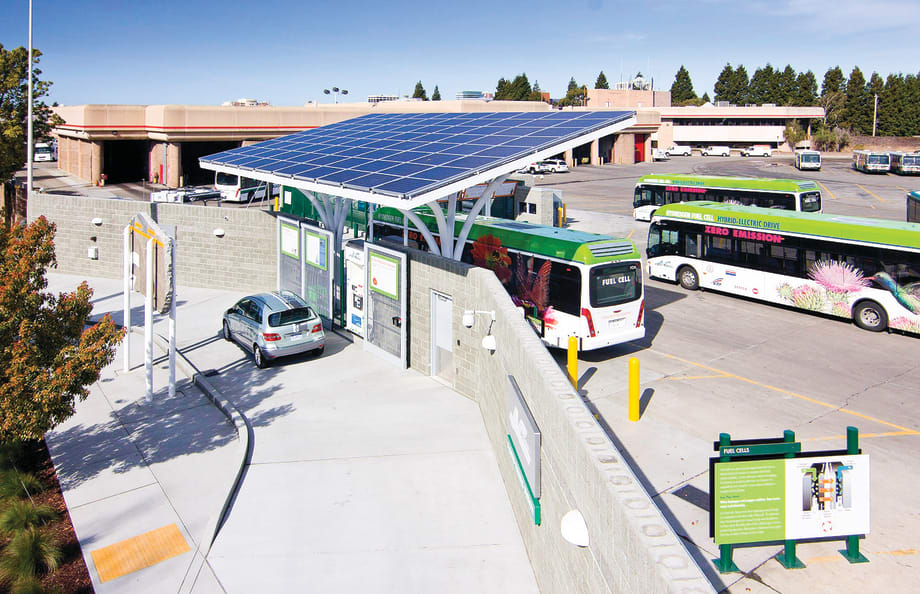
A recent U.S. Department of Energy (DOE) report found that fuel economy of fuel-cell electric buses was 1.8 to two times higher than conventional diesel buses (4 mpg) and compressed natural gas buses (3 mpg), a significant improvement toward the DOE and Federal Transit Administration’s (FTA) target of 8 mpg (diesel equivalent).
The 12-month status report, “Fuel Cell Buses in U.S. Transit Fleets: Current Status 2012,” written by the National Renewable Energy Laboratory (NREL), includes data collected from 18 fuel-cell electric buses at three transit agencies in California and Connecticut. In one year, the fleet of fuel-cell electric buses in the study traveled 250,000 miles and had almost 25,000 hours of fuel-cell system operation. The report also documented one fuel-cell system operating more than 12,000 hours, an advancement toward the DOE and FTA's 2016 target of 18,000 hours and the ultimate target of 25,000 hours.
The data and subsequent report is part of the FTA’s National Fuel Cell Bus Program; a cooperative initiative between government and industry to advance the commercialization of fuel-cell technology in U.S. transit buses. The program has awarded approximately $60 million for competitively selected projects, while industry has provided more than $60 million in additional private commitments. Under the program, the typical lifecycle of a project develops concepts, constructs prototypes, demonstrates and evaluates, and publishes findings.
Currently, there are several projects under way throughout the nation in the demonstration and evaluation process, including Oakland, Calif.-based AC Transit; Austin, Texas’ Capital Metro; and the Greater Cleveland Regional Transit Authority (RTA). So, how does this technology work, and more importantly, how are the buses responding in real-world applications? METRO Magazine spoke to these agencies as well as power system manufacturer, ClearEdge Power (formerly UTC Power), to find out.
Fuel-cell technology
In 2005, ClearEdge launched its PureMotion zero-emission proton exchange membrane (PEM) hydrogen fuel-cell system and has continually improved the technology to make the current fuel cells more durable and reliable.
“The current PureMotion system is more than three times more durable and powered a transit bus for more than 12,000 operating hours, while still producing full power,” says Dana Kaplinski, manager, transportation business for ClearEdge Power.
Fuel cells operate electrochemically and are combustion-free, as well as one of the cleanest energy-generation sources available in the world today, according to Kaplinski. A fuel cell running on pure hydrogen — like the PureMotion system utilized in transit buses — emits zero emissions at the source.
“PureMotion systems are now operating in fleets in California, Connecticut, Michigan and Ohio and have traveled more than 600,000 miles to date,” she says.
Ideally sized for transit vehicles, the PureMotion Model 120 power system generates up to 120 kW of net power. The modular design is intended to maximize uptime and simplify routine maintenance. The power system is particularly well-suited for integration into hybrid vehicle applications, according to ClearEdge.
In 2005, Thousand Palms, Calif.-based SunLine Transit was the first system to put a bus equipped with the PureMotion120 system in service. Hartford-based Connecticut Transit added its first hydrogen fuel-cell vehicle — a 40-foot Van Hool equipped with a UTC Power hydrogen fuel-cell — in 2007. Since then, the agency has added five more hydrogen buses. [PAGEBREAK]
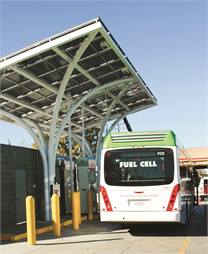
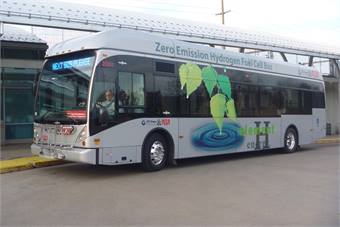
AC Transit uses solar panels to power its hydrogen fuel production process, further enhancing its sustainability efforts.
Early adopters
Another early and consistent user of hydrogen fuel-cell buses is Oakland, Calif.-based AC Transit, which ran three fuel-cell buses, logging more than 270,000 miles while carrying more than 700,000 passengers from March 2006 through mid-2010.
“In 2000, the California Air Resources Board mandated all transit agencies with 200 or more buses convert to CNG fuels or engage in a demonstration project to assess the viability of hydrogen fuel-cell technology. AC Transit opted for the latter,” explains Clarence Johnson, media affairs manager for AC Transit. “Because the buses emit no pollutants — only water vapor from their tailpipes — and uses solar panels to power the fuel production process, the project actually enhances our environmental sustainability efforts.”
AC Transit is currently operating 12, third-generation fuel-cell buses. The new buses, manufactured by Van Hool, feature a redesigned chassis that is 5,000 pounds lighter than the earlier buses. Each new bus is powered by the 120 kW ClearEdge fuel-cell power system an advanced lithium-ion energy storage system by Indianapolis’ Enerdel.
“The early results are promising, with ‘H2 Buses’ getting about twice the fuel mileage as diesel buses,” says Johnson.
Hydrogen tanks on the roof give the bus a range of 220 miles to 240 miles, and batteries recharged during braking can provide extra power for acceleration and climbing steep grades, according to the agency.
AC Transit’s “HyRoad” program is supported entirely by grants from the California Energy Commission, California Air Resources Board, Bay Area Air Quality Management District, Metropolitan Transportation Commission and the FTA. The funds are specifically tagged for fuel-cell development and may not be used for any other purpose.
The agency contracted with outside firms to build the station and the fuel-cell buses, managing the contracting and building processes with three staff members.
The program is being monitored, evaluated and reported by NREL as part of the U.S. governments program. Johnson explains there is currently no timetable for the project to end or be expanded.
“The demonstration project is for an indefinite period of time,” he says. “The Air Resources Board will determine how long the project will last and what happens when it ends. However, the future of hydrogen fuel-cell ventures will likely largely depend on how proven the technology is/will be; and the availability of funding to pay for other hydrogen facilities and vehicles.”[PAGEBREAK]
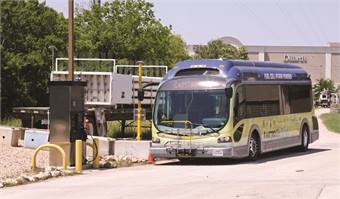
Capital Metro began testing its Proterra fuel-cell electric bus in June 2012. The bus services shuttle routes for the University of Texas, with the program slated to last a year.
Mining data
Last June, Austin, Texas-based Capital Metro and the University of Texas Center for Electromechanics (UT-CEM) introduced a hydrogen hybrid bus into operations among the UT shuttles as a part of a year-long demonstration to test and further refine fuel-cell technology for public transit.
“We have done quite a bit in terms of greening the organization, and looking at clean fuels is certainly one of those, so it just fit in with what both our community and our agency are working on,” says Todd Hemingson, VP, planning, for Capital Metro.
The Austin one-year demo represents the second phase of the project supported through the FTA’s National Fuel Cell Bus Program and managed by the Center for Transportation and the Environment (CTE). The bus previously operated in Columbia, S.C.
“What FTA really wants out of this project is data,” explains Erik Bigelow, project manager, technology development, at CTE. “FTA wants to know how efficient the buses are and how available they are, because both of those factors play a huge part into the economic decision on whether to go for an advanced technology bus [in the future].”
The prototype bus, built by Proterra from the ground up as a zero-emission bus, has plug-in rechargeable batteries, a hydrogen fuel-cell system and an efficient all-electric drivetrain. Water vapor is the only emission. The bus will alternate among the Forty Acres and Intramural Fields routes.
“When this bus rolls on the street, it is actually replacing one of our regular buses,” says Andrew Murphy, quality assurance manager for Capital Metro. “By doing that, we didn’t have to add a driver and are not incurring a huge expense, so we are able to participate in a program like this without having to outlay a bunch of money.”
The bus will be fueled daily at a state-of-the-art hydrogen fueling station on the J.J. Pickle Research Campus, the first of its kind in Texas. The fueling station allows for the on-site generation, compression, storage and dispensing of hydrogen.
Data collection during the demonstration is also being reported to the FTA and the NREL for further analysis.
[PAGEBREAK]
ClearEdge Power, formerly UTC Power, donated Cleveland's fuel-cell bus.
Fuel conversion
In coordination with the NASA Glenn Research Center, Cleveland RTA launched its hydrogen bus project in January.
RTA worked with Sierra Lobo, a Glenn contractor, to install a hydrogen fueling station at its Hayden Garage in East Cleveland, where the bus is based. The garage already had fueling equipment for CNG, including 50 sensors to monitor the tanks.
“We were able to utilize those CNG tanks for hydrogen, and NASA’s contactor was able to convert the location into a hydrogen fueling station,” explains Mary Shaffer, the RTA’s media relations manager. “We were able to convert the hydrogen into fuel via electrolysis, with the only emission being vapor on site. It’s a big deal to have the fueling station right at our facility. It gives us more flexibility with the vehicle.”
The 40-foot bus has a capacity of 57 passengers and will be in service between six and eight hours daily on various RTA routes, says Shaffer.
“We were able to put the vehicle right out into regular service,” she says. “Our usual routes are three to four hours with a break in between, so it can usually go out for its first section of routes, and then, get fueled up and get back out for the afternoon.”
The hydrogen-fueled bus is on loan from ClearEdge with the electrolyzer on loan from NASA Glenn. The entire program, which includes the fueling system and bus, is valued at $3 million. RTA Board members approved a $50,000 investment in this project, which pays for the installation and use of fueling equipment.
“Overall, it’s important that this was something we were able to do inexpensively for taxpayers, but we really put a lot of human investment into this vehicle,” says Shaffer.
Similar to AC Transit, the length of RTA’s project is indefinite.
“We were looking at between three months and a year, which is what we’re able to do per federal guidelines. We’re seeing if maybe we can possibly extend that,” says Shaffer. “We feel we can supply some really interesting data for all the companies involved. And hopefully, there will be some positive things that will come from this project.”
Partnering for success
The demonstration projects in Austin, Cleveland and Oakland are the results of multiple partners working together to find success. Many times, transit agencies, such as Cleveland RTA, will find themselves working with partners they would have never imagined working with.
“It’s nice to have those different perspectives and to be able to say ‘hey, we are working with the people who launch rockets,’” says Shaffer of working with NASA on the Cleveland project. “We are really thinking about ways to be green, be good to the environment and learn from those folks who really have the expertise in fuel cells, while we share with our partners what we know from the transit business.”
For agencies looking to test hydrogen fuel-cell buses, or any new technology, finding the right partners is key, according to Capital Metro’s team.
“You have to find people that are dedicated to the project and have, if not the available resources, the available drive to make it happen,” says Murphy. “Having a dedicated team to manage a program like this is also key. CTE has lived up to every expectation in that regard.”
Each of the transit agencies involved report success testing the hydrogen fuel-cell buses, while being able to embark on their projects with little or no financial output, other than some slight infrastructure improvements — typically the installation of the hydrogen fueling station — and driver training.
“Everybody’s goal is to be greener, so it’s a really nice option to have at least one vehicle that truly provides zero emissions,” Shaffer says. “We are getting more visual comments than people acknowledging that we are green, but it’s important that we are testing hydrogen fuel-cell vehicles. Hopefully, it will lead to these vehicles being an economical alternative for fleets.”
More Bus

New York MTA Plans Largest Bus Fleet Upgrade in More Than a Decade
The agency is seeking manufacturers for 650 new CNG buses to replace aging vehicles, improve reliability, and advance its broader fleet modernization strategy.
Read More →
Building a Flexible Path to Transit Electrification
John Hroncich discusses BAE Systems’ modular and scalable approach, lessons learned from decades of real-world operations, and how agencies can identify electrification strategies that fit their fleets.
Read More →
Bus Tech Talk: Keeping Transit Technicians Ahead of the Technology Curve
LA Metro’s Obed Mejia discusses technician training, evolving maintenance technology, fleet replacement, and strategies for getting the most out of today’s transit fleets.
Read More →
Biz Briefs: RIPTA Unveils New Frontrunners, Clevland RTA Adds New Siemens, and More
In METRO's latest installment, we take a look at recent news from Siemens, Prevost, Dodge, and more partnerships making headlines across the transportation sector.
Read More →
People Movement: Holly Arnold Joins Transdev and More
In this edition, we also cover recent appointments and announcements at Pace, CamTran, MCI, and more, showcasing the individuals helping to shape the future of transportation.
Read More →
The High Cost of Transit Buses: Industry Leaders Look to Procurement Reform
Transit leaders and policymakers examine how standardized bus designs, streamlined procurement, and predictable funding could help agencies stretch budgets and deliver better service.
Read More →
The Business Voice Behind Public Transportation
As chair of APTA’s Business Members Board of Governors, Ray Melleady explains how more than 850 business members are partnering with transit agencies to advance funding, innovation, and industry-wide collaboration.
Read More →
From Surviving to Thriving: Building Stronger Transportation Organizations
Bus Business Consultants founder Brian Dickson shares lessons on leadership, organizational health, and creating options for long-term success in a changing transportation industry.
Read More →
Finding the ‘Happy Medium’: Optimizing Maintenance Without Sacrificing Reliability
The key to maintenance optimization isn’t doing less work—it’s doing the right work at the right time on the right assets.
Read More →
LA Metro, City of West Hollywood, and Partners Advance Smarter Bus Lane Enforcement
The award-winning partnership combines AI-powered detection with human oversight to improve bus reliability, accessibility, and enforcement efficiency.
Read More →