




Learn More: Are 'Bad' Microbes Getting a 'Free Ride' on Your Transit System?
Houston’s METRO Focuses on Providing Greater Safety, Accessibility
The agency has won APTA's award for agencies providing 20 million or more passenger trips annually twice in the last five years.
November 16, 2020
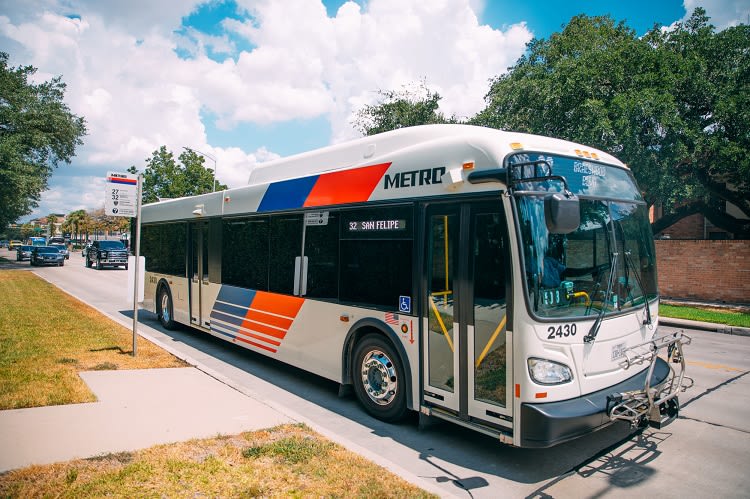
In 2017, METRO embarked on the development of a transformative long-range transportation plan to provide 500 miles of travel improvements across the Houston region.
Photo: Houston METRO
6 min to read
Houston’s Metropolitan Transit Authority of Harris County (METRO) not only exceled during the last year but has won APTA’s prestigious Outstanding Public Transportation System award for agencies providing 20 million or more passenger trips annually twice in the last five years, and three times overall.
“Being named Outstanding Public Transportation of the Year by APTA is an incredible honor,” METRO officials say. “Receiving this award twice in five years is a testament to the leadership and support of the METRO Board of Directors and the tireless efforts of the Authority’s employees.”
Over the last few years, METRO employees accomplished some incredible milestones, including carrying a record-breaking number of people to Super Bowl LI events, working around the clock to ensure customers from the Houston area, other parts of the state and country, and from around the world were delivered safely to their destinations. METRO also broke ridership records transporting fans to the Astros’ World Series victory parade.
Aside from being reliable day-to-day and during special events, METRO has also stepped up during times of crisis, including the current pandemic, as well as during natural disasters.
In 2018, METRO was the recipient of an APTA Gold Award and called a “model for emergency response” for its proactive response to Hurricane Harvey in 2017. The storm, considered one of the costliest tropical cyclones in U.S. history, made landfall on the Texas coast as a Category 4 hurricane with winds of more than 130 mph. In a five-day period, Harvey produced more than 50 inches of rain in the Houston area, flooding more than 300,000 structures and causing $126 billion in damage. More than 60,000 rescues occurred in Harris County, alone. During the crisis, METRO’s exemplary preparedness and adherence to its Emergency Management Plan helped the agency serve as a valued community and emergency response partner.
Examples of METRO’s bus safety and security efforts before, during, and after Hurricane Harvey included moving 120 buses to higher ground before the storm, saving $76 million worth of assets; transporting more than 15,000 displaced residents to emergency shelters; aiding police and firefighters by deploying bus operators to drive higher profile school buses as first responders rescued drivers from floodwaters; providing transportation to grocery stores and pharmacies; and communicating with the public around-the-clock, generating a total of 17 news releases, 842 Twitter posts, 257 Facebook posts, and 104 service alerts.
Developing for the Future
In 2017, METRO embarked on the development of a transformative long-range transportation plan to provide 500 miles of travel improvements across the Houston region, with the 20-year, $7.5 billion METRONext program.
Major goals of the plan include system enhancements, including a 25% increase in local bus service, new local routes, and improved amenities like bus stop improvements, new shelters, and upgraded customer information; a METRORapid BRT network designed to provide station-to-station service similar to METRORail, but with the flexibility to accommodate multiple routes; and a BOOST network to include 17 of METRO’s high-ridership, frequent bus routes where speed, reliability, and access improvements are designed to enhance the customer experience. Improvements could include bus stop relocation, new shelters and accessibility upgrades, transit signal priority, and real-time passenger information.
The plan also included the expansion of its light rail system to serve more people and places and accessibility and usability improvements and other investments designed to reduce barriers for seniors, the disabled, and other users of METRO’s transit system.
“Early on, we knew we would need the public’s help. The overwhelming passage of bonding authority — nearly 70% approval — for METRONext, by Houston area voters in 2019 would not have been possible without a robust public engagement process developed by METRO’s public affairs department,” say METRO officials. “[We] reached out to riders and residents, business and community leaders, young people and senior citizens, newcomers, and lifelong Houstonians to learn more about their needs for a better transportation system — hosting nearly 1,000 community meetings and events. We welcomed input from advocacy groups and elected officials. People were also encouraged to submit their feedback on the plan through a survey on our website.”
Part of the communication strategy was to engage with not only those who support public transit but those who were skeptical about the value of improved mobility options. The key was starting at a place on which everyone could agree heavy traffic and gridlock adversely affect quality of life, resulting in delays and increased transportation costs, added stress, and wasted time commuting.
Focus on ADA
Focused on the ADA community, all of METRO’s vehicles are ADA accessible and all local bus, rail, and commuter bus services are free for riders over 70, METROLift Freedom Q Card holders, and qualified veterans.
Additionally, the agency’s METROLift paratransit program provides curb-to-curb service in ADA-accessible vans for disabled subscribers who, because of their disability, cannot access regular bus routes and rail lines. A Travel Training Program intended to coach and educate participants on how to ride METRO’s local bus routes and the light rail system is also available to groups and individuals at no cost.
Taking its dedication to accessibility to the next level, the agency launched a first-of-its-kind Bluetooth beacon app in 2017. METRO was one of the first transit agencies in the country to take a significant step to improve accessibility to bus stops and rail platforms with the use of a smartphone. Development of the program was made possible through a partnership between METRO and Texas A&M’s Texas Transportation Institute and supported by a grant from the Google Internet of Things Technology Research Award Pilot.
Small beacons, about the size of a garage door opener, placed at all bus and rail stops allow users to plot their location using a mapping program. Beacons are then integrated into directions. As someone approaches their intended stop, their phone receives signals from the beacon, which sends an alert to their phone. Alerts can be delivered either as audio instructions or as tactile directions that use pulsing so someone can understand the instructions via sense of touch.
“While METRO’s entire fleet of buses and trains is already accessible, we understand improvements to bus stops, bus shelters, and public facilities make it easier for riders to use the system,” say METRO officials. “The Universal Accessibility Initiative includes a commitment to ensure all bus stops are compliant with the Americans with Disabilities Act by 2024. Improved, weatherproof signage will help customers find their way when using the system. Installation of new shelters and improving the sidewalks leading to bus stops will make these stops more comfortable for all users. The initiative also includes a process of engaging with stakeholders, including groups such as the city’s Office for People with Disabilities.”
METRO has pledged $35 million for the Universal Accessibility Initiative in its FY2019-20 budget and received a $30 million financial commitment from the Houston-Galveston Area Council in 2019. The agency’s METRONext strategic plan also calls for an additional $70 million.
Subscribe to Our Newsletter
More Bus

New York MTA Plans Largest Bus Fleet Upgrade in More Than a Decade
The agency is seeking manufacturers for 650 new CNG buses to replace aging vehicles, improve reliability, and advance its broader fleet modernization strategy.
Read More →
Building a Flexible Path to Transit Electrification
John Hroncich discusses BAE Systems’ modular and scalable approach, lessons learned from decades of real-world operations, and how agencies can identify electrification strategies that fit their fleets.
Read More →
Bus Tech Talk: Keeping Transit Technicians Ahead of the Technology Curve
LA Metro’s Obed Mejia discusses technician training, evolving maintenance technology, fleet replacement, and strategies for getting the most out of today’s transit fleets.
Read More →
Biz Briefs: RIPTA Unveils New Frontrunners, Clevland RTA Adds New Siemens, and More
In METRO's latest installment, we take a look at recent news from Siemens, Prevost, Dodge, and more partnerships making headlines across the transportation sector.
Read More →
People Movement: Holly Arnold Joins Transdev and More
In this edition, we also cover recent appointments and announcements at Pace, CamTran, MCI, and more, showcasing the individuals helping to shape the future of transportation.
Read More →
The High Cost of Transit Buses: Industry Leaders Look to Procurement Reform
Transit leaders and policymakers examine how standardized bus designs, streamlined procurement, and predictable funding could help agencies stretch budgets and deliver better service.
Read More →
The Business Voice Behind Public Transportation
As chair of APTA’s Business Members Board of Governors, Ray Melleady explains how more than 850 business members are partnering with transit agencies to advance funding, innovation, and industry-wide collaboration.
Read More →
From Surviving to Thriving: Building Stronger Transportation Organizations
Bus Business Consultants founder Brian Dickson shares lessons on leadership, organizational health, and creating options for long-term success in a changing transportation industry.
Read More →
Finding the ‘Happy Medium’: Optimizing Maintenance Without Sacrificing Reliability
The key to maintenance optimization isn’t doing less work—it’s doing the right work at the right time on the right assets.
Read More →
LA Metro, City of West Hollywood, and Partners Advance Smarter Bus Lane Enforcement
The award-winning partnership combines AI-powered detection with human oversight to improve bus reliability, accessibility, and enforcement efficiency.
Read More →