



How open-source platforms helped 2 agencies manage real-time info
Many agencies still rely on expensive proprietary software for trip planning and real-time customer information, which present such issues as lack of user-friendly interfaces and a concomitant price structure in which license renewals and software modifications generally cost in the thousands annually.
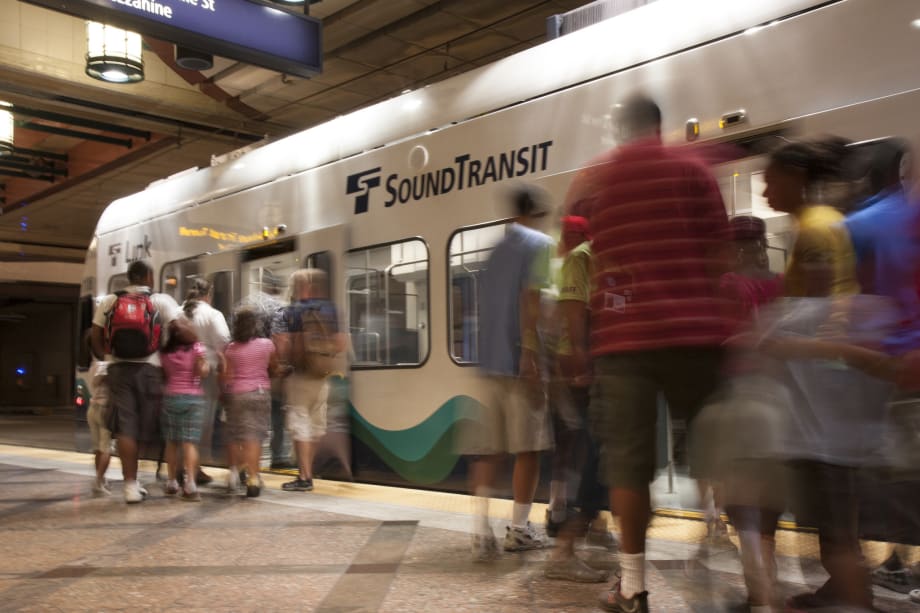
Previous trip-planning programming at Sound Transit lacked real-time information.
Previous trip-planning programming at Sound Transit lacked real-time information.
Transit agencies face three key challenges: meeting the needs of their ridership, working with other agency partners whose objectives may somewhat differ and, of course, controlling costs while achieving the first two. The latter often is the toughest challenge. Many agencies still rely on expensive proprietary software for trip planning and real-time customer information, which present such issues as lack of user-friendly interfaces and a concomitant price structure in which license renewals and software modifications generally cost in the thousands annually, regardless of shrinking budgets. Those costs are especially prohibitive for medium to smaller agencies, to the point that some believe their only cost-effective alternative is the published schedule. Unfortunately, static schedules are of little use to riders looking for up-to-date information on the status of buses or trains.
To meet today’s demands for real-time information where it is needed most, an increasing number of transit agencies have turned to open-source software platforms. The only expenses they incur are modification and support costs, since use of the basic platform is free to everyone — a key differentiator from expensive and less flexible proprietary software. Transit agencies in the Denver and Seattle metropolitan areas have been using open source platforms for several years. The experiences of both, related here, can be helpful for other agencies, regardless of size, that are considering adopting and modifying such platforms for their use.
Sound Transit
Sound Transit plans, builds, and operates light rail, express bus, and commuter train services in the three-county urban areas of Seattle and Tacoma, Wash. In August 2016, Sound Transit reported a total daily ridership of nearly 149,000. In the second quarter, agency statistics showed increases of 76% for Link light rail overall boardings and 13% for commuter rail, compared with the same period in 2015.
Previously, trip planning programming lacked the real-time information that passengers wanted, according to Michael Berman, agency research and technology program manager at Sound Transit. Berman said the database fell far short with little room for flexible modifications. One example: it did not allow users to find the points of interest they were looking for, and Berman said some riders probably found the experience frustrating.
“If they were looking for information about Sea-Tac [Seattle-Tacoma International Airport], the search may have brought up such things as airport motels and towing information before the pages displayed what they wanted — information about planning trips to the airport,” Berman said.
Sound Transit, looking for ways to develop prompt, more specific information, turned to Open Trip Planner (OTP) in 2013, an open-source platform used by other transit agencies. Because OTP is open source, the agency did not incur the license fees they had with the previous proprietary trip-planner software serving the website.
“We were paying more than $25,000 a year for the trip planner we were using, and now we’re not,” Berman said. The agency pays for use of a vendor to support and enhance the platform when needed. Alternatively, that work can be done in house.
“Open Trip Planner powers our trip planner and fundamentally allows us to correct issues with the previous planner,” Berman said.
Sound Transit also has leveraged the increasingly popular OneBusAway open-source platform, by which riders get real-time bus arrival information for Sound Transit, King County Metro Transit and Pierce Transit. Sound Transit and King County Metro are the lead agencies for this regional deployment, which launched in 2008 as a student project at the University of Washington and has been continually expanded and enhanced. “We’ve made it viable and robust long term,” Berman said.
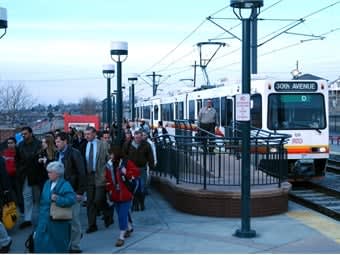
RTD spent a year on due diligence before switching to an open-source platform.
Denver RTD
The Regional Transportation District (RTD) annually serves a total of 140 million bus and rail riders in the 14-county metropolitan area of Denver. RTD had been relying on off-the-shelf software and Google applications for trip planning.
“We hired a third-party to interview the team and then perform a gap analysis (comparison of actual versus desired performance) compared with what’s available out of the box,” said Ashley Rice, IT program manager at RTD. Rice said the company spent a year on due diligence before making the decision to switch to open-source. Like Sound Transit, RTD adopted, as its active platform, One Trip Planner, which was appreciated by its ridership. With support from a vendor, it also modified the open source software Open Street Map.
“We did a thorough job identifying requirements and needs of our internal and external customers,” Rice said.
“There’s an ease of customization for our open-source platforms and it’s much easier than going with a vendor product,” said Rahul Sood, manager of software architecture and development at RTD. “What we have is customizable and can be tweaked when needed, [unlike] some vendor products that can take up to a month to customize.”
Although RTD’s open-source trip planner had not yet gone live to its millions of riders, Rice described feedback as positive from its internal customers (customer service agents) and marketing experts involved throughout the platform’s development.
“Our internal customers like what they’re seeing and they’re excited,” Rice said. “It gives our external customers flexibility to get the data they need and better data gives them more options.”
And then there are the savings, which Sood described as quite substantial. “We estimate between $150,000 and $200,000 per year,” he said.
Open Source Advice
While both agencies praise the capabilities and the savings they’ve experienced from using open-source platforms, they do offer some caveats for those considering switching from off-the-shelf or other proprietary software:
1. Be specific about requirements
“Your organization should be specific about what requirements you need,” said Ashley Rice. “It’s easy to look at what products offer in terms of solutions, but you might end up developing something you don’t need.”
2. Select the right vendor
Rice said selection of a vendor to develop and modify open-source material is especially important.
“You have to select the right vendor, one with the tools to develop items and customizations that are not out-of-the-box,” Rice said.
3. Know the challenges
Sound Transit’s Berman said agencies have to understand that there are challenges associated with open-source even with all of its benefits. He identified them as staffing and support needs.
“You have to make certain your agency is up to the challenge,” Berman said. He, too, recommended careful evaluation in the selection of a vendor for developing and modifying open source should the agency determine it lacks the in-house staff to properly support and update its programs.
4. Focus on one consideration first
Berman advised agencies to focus on one fundamental consideration before taking on open-source programs that meet the needs of riders and partners. It is advice that other agencies using open source are likely to echo. “The first thing I recommend is that you really understand what problems you are trying to solve,” he said. “Focus on what you’re trying to accomplish.”
Sarah Anderson is a senior associate, CS Software, for Cambridge Systematics Inc., www.camsys.com.
More Management

METRO Opens Submissions for 2026 Motorcoach Awards
Nominations are now being accepted for METRO Magazine’s Operator of the Year and Innovative Operator of the Year awards.
Read More →
New York MTA Advances Final Contract for Second Avenue Subway Expansion
Contract Four is the largest in the Second Avenue Subway Phase 2 project and includes construction of station infrastructure, tracks, and signals for the subway expansion, MTA officials said. Work on Contract Four will begin in 2027.
Read More →
Transit Agencies Highlight Safety Gains at National Summit
Leaders from 15 major transit systems shared crime-reduction results and safety initiatives while discussing the role of continued federal support.
Read More →

NITA Names New Leadership, Expands Reduced-Fare Program at First Board Meeting
The new regional transit authority appointed its first board chair and interim executive director while extending reduced fares across CTA, Metra, and Pace for eligible riders.
Read More →
Beyond the Checklist: A Structured Approach to Transit Maintenance
Reliability-Centered Maintenance helps transit agencies move beyond routine checklists to focus limited resources on the assets and failures that have the greatest impact on safety, reliability, and service.
Read More →
APTA 2026 Nominating Committee Selects Leadership Slate, Names Chair and Vice Chair Nominees
Leadership changes will help shape the association’s priorities and its representation of the transportation industry during the 2026–2027 term.
Read More →
DART Launches Major Security, Fare Enforcement Initiative
The 90-day demonstration will deploy coordinated security teams at five light rail stations while testing controlled access and gathering data to guide future investments.
Read More →
Advancing Fare Collection Through Technology and Innovation
Learn about delivering 1300 gates at 91 stations while managing fare evasion. Explore the large scale deployment, solution customization and real-world results that affect the region. Prepare for deployment in your region now.
Read More →
Game Day in Motion: Moving Millions During the 2026 World Cup
Between packed transit stations and team motorcoaches, see how agencies and operators across North America tackled the transportation demands of the 2026 FIFA World Cup.
Read More →
Surface Transportation Extension Averts Shutdown, Leaves Transit Funding Gap
The stopgap keeps federal transportation programs moving, but missing advance funding could complicate the transit and rail projects agencies are planning next.
Read More →