




Want More? Why a Pre-DOT Audit is Important for Motorcoach Companies
How to Train Bus Drivers in Safety Techniques
By definition, most transit bus drivers are high-risk workers, working late at night and alone.
January 1, 2001
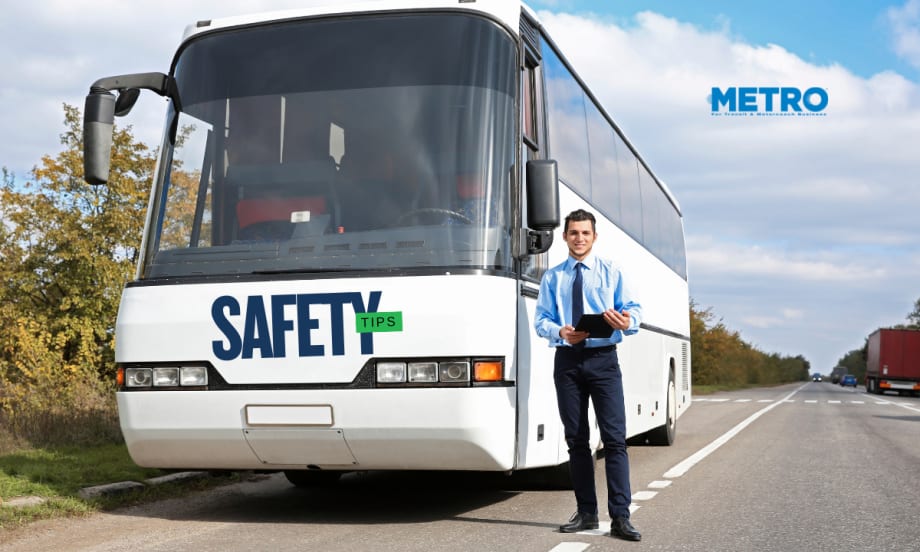
Be proactive in having operators protect themselves and others.
Photo: Metro
2 min to read
By definition, most transit bus drivers are high-risk workers, working late at night and alone. To help defend themselves from potentially dangerous situations, Mark Anderson of San Diego Transit offered these tips at the California Transit Association’s Annual Meeting in November.
4 Safety Tips for Bus Drivers
Prepare. Decide what to wear and how to wear it. Plan for various situations through training and role-playing. Be somewhat physically fit in order to better defend yourself.
Identify. Do a quick glance around the vehicle to check for people who may give you problems. Learn what problems can be handled while approaching a stop and while stopped. Know the signs of a situation that is “heating up.”
Deescalate. Use verbal controls to help calm the situation down. Know how to present yourself to reduce the risk of being robbed or attacked. Always leave yourself an out.
Defend. Know techniques for self-defense as well as the elements of an assault. Always interact with the person from a seated position so there is no question of who is the aggressor.
“You need to be proactive in having operators protect themselves and others,” Anderson said. “Hopefully they will never, ever have to use these techniques.”
Operators at San Diego Transit sit through a three-and-a-half-hour CD-ROM training that covers essential safety and security elements, including self-defense techniques.
Operators at Santa Monica’s Big Blue Bus (BBB) work closely with the local police department to enhance safety coordination. Training includes tactical police deployment and procedures such as disabling a bus. All Santa Monica buses are equipped with a silent alarm system. In collaboration with the BBB, the Santa Monica Police Department created a training video that guides operators and security personnel through tactical maneuvers.
Monterey-Salinas Transit (MST) also emphasizes collaborative training, preparing for worst-case scenarios involving active shooters, hostages, and casualties. Troy Holt, MST’s manager of safety and security, recommends making training scenarios as realistic as possible to test inter-agency coordination and response at various times and days. MST further supports local law enforcement by providing buses for training exercises.
Topics:Management
Subscribe to Our Newsletter
More Management

LIT Marks 10-Year Milestone at Annual Summit
Hosted by the COTA from September 10 to 13, the Summit carried the theme “Celebrating 10 Years of Excellence, Leadership, and Impact,” with every part of the program honoring the people, agencies, and partners who built LIT over its first decade.
Read More →
People Movement: Dan Dipert Coaches Adds Third-Generation Leader, Keolis Names New Valley Metro VP/GM, and More
In this edition, we also cover recent appointments and announcements at the Wabtec, SilverRide, HNTB, and more, showcasing the individuals helping to shape the future of transportation.
Read More →
METRO Opens Submissions for 2026 Motorcoach Awards
Nominations are now being accepted for METRO Magazine’s Operator of the Year and Innovative Operator of the Year awards.
Read More →

New York MTA Advances Final Contract for Second Avenue Subway Expansion
Contract Four is the largest in the Second Avenue Subway Phase 2 project and includes construction of station infrastructure, tracks, and signals for the subway expansion, MTA officials said. Work on Contract Four will begin in 2027.
Read More →
Transit Agencies Highlight Safety Gains at National Summit
Leaders from 15 major transit systems shared crime-reduction results and safety initiatives while discussing the role of continued federal support.
Read More →
NITA Names New Leadership, Expands Reduced-Fare Program at First Board Meeting
The new regional transit authority appointed its first board chair and interim executive director while extending reduced fares across CTA, Metra, and Pace for eligible riders.
Read More →
Beyond the Checklist: A Structured Approach to Transit Maintenance
Reliability-Centered Maintenance helps transit agencies move beyond routine checklists to focus limited resources on the assets and failures that have the greatest impact on safety, reliability, and service.
Read More →
APTA 2026 Nominating Committee Selects Leadership Slate, Names Chair and Vice Chair Nominees
Leadership changes will help shape the association’s priorities and its representation of the transportation industry during the 2026–2027 term.
Read More →
DART Launches Major Security, Fare Enforcement Initiative
The 90-day demonstration will deploy coordinated security teams at five light rail stations while testing controlled access and gathering data to guide future investments.
Read More →
Sponsored•September 9, 2026
Advancing Fare Collection Through Technology and Innovation
Learn about delivering 1300 gates at 91 stations while managing fare evasion. Explore the large scale deployment, solution customization and real-world results that affect the region. Prepare for deployment in your region now.
Read More →