



Information Management Bolsters Transit Safety & Security
PSIM technology provides an integrated “cockpit” view of different security, safety and operational systems, and analyzing and correlating information across these different sub-systems in real-time.
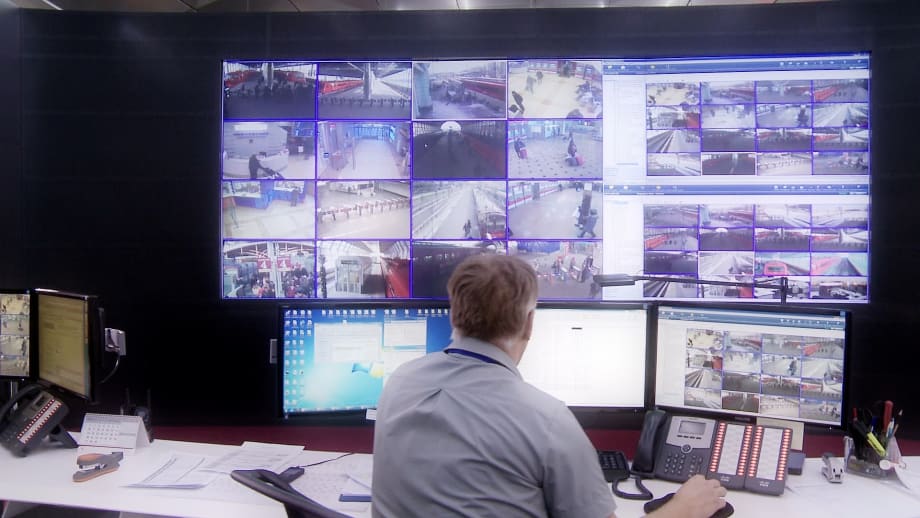
Over the past decade, public transit has readily embraced technology aimed at making operations safer and secure, and with good reason. The responsibility of making sure people get from point A to point B safely, securely and on time is fundamental. But, it’s also no easy feat. Toward that end, transit operations have invested in a variety of technologies — video surveillance, fire systems, access control, communications systems, intercoms, radar, GPS, LPR, CAD, perimeter protection and video analytics, to name a few. The problem — for transit command centers, the flood of data can obscure the big picture.
With information bombarding them from all directions, and so much at stake, how can security operators discern what’s relevant and decide what actions to take when situations happen?
These are precisely the problems PSIM addresses.
What is PSIM?
The term “PSIM” stands for “Physical Security Information Management.” Essentially, PSIM is a software platform that provides an integrated “cockpit” view of different security, safety and operational systems. By analyzing and correlating information across these different sub-systems in real-time, and presenting it in the right context, PSIM helps operators see the bigger picture so they’re able to act effectively to resolve security, safety and operational issues.
The term is somewhat misleading because it implies PSIM is only about “managing information.” In reality, it’s just as much about “managing incidents.” PSIM allows transit command centers to leverage people, technology and processes to the fullest to manage incidents better.
Manual observation is replaced by automatic correlation; manual logging of incidents by automatic tracking. Instructions in manuals give way to adaptive response plans embedded in the PSIM solution. These guide the operator through what to do next. Integrated GIS allows operators to see exactly what’s happening where on a multi-layered display.
To illustrate how it all works, imagine it’s rush hour on a busy rail platform. In the command center miles away, a security operator receives an on-screen sensor alert from a remote smoke detector situated on that very same rail platform. A map immediately pops up on the operator’s display showing the exact location of the alert and the nearby video camera. The system automatically pushes live video of the scene to the operator. The camera view allows the operator to verify that it’s not a false alarm. He confirms the incident in the PSIM system and is prompted to click a button that immediately notifies transit patrol officers, sending a message to their mobile devices. At the same time, the PSIM system automatically alerts the fire department and provides the security operator with additional procedures to safely evacuate passengers from the platform.
The fire department arrives in speedy fashion to extinguish the fire while the operation control center (OCC) is automatically notified of the incident as well. The OCC promptly broadcasts a platform change over the public address system while redirecting the incoming train to a different platform. The redirected train arrives on schedule, and service continues without disruption.
The above illustrates a best-case scenario. With the aid of PSIM, the security operator was able to handle the incident with minimal risk to people, property and operations. Most of the passengers will go on with their day having little or no knowledge that an incident ever took place.
Any number of variables could have influenced a different outcome to our hypothetical situation. What if there was no PSIM solution in place, and the security operator on duty that day was inexperienced or not properly trained? What if the fire department hadn’t been notified right away, or sent to the right location? What if the passengers hadn’t been evacuated from the platform in time? Or, if the operator hadn’t noticed the alert in the first place? Every incident has variables that can influence their outcome. PSIM neutralizes the potential negative impact of these variables by enhancing situational awareness and situation management.
By integrating and correlating different systems, PSIM can help connect the dots to provide clarity on exactly what’s happening where and how best to respond.
“Most major transit systems have intercoms strategically placed on platforms so passengers can summon help if they need it,” explains Tom LaBarbera, regional VP, transportation sector, at NICE Security Americas. “Many have expressed an interest in using PSIM to tie that into a common operating picture with video, so if somebody calls from an intercom, operators in the control room are not only able to hear the caller, they can see what camera they’re near. If someone’s being attacked or reporting an incident, you want your operator to see where on the map that intercom is. You also want to see if there’s a camera nearby, so you not only have the audio, but also a visual of what’s taking place as well. With PSIM, these elements can all be part of a fully integrated, seamless security system.”[PAGEBREAK]
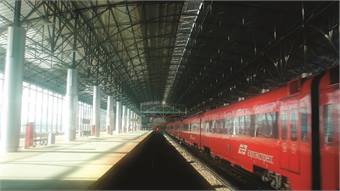
Public safety agency tie in
Transit operators can also integrate video analytics through PSIM to trigger other types of alerts and present response instructions. For example, video analytics signifying overcrowding on a subway platform could alert an operator to take specific actions, as could a suspicious object, or a person on a track or in a tunnel.
Transit operations are also looking at PSIM as a way to tie in with public safety agencies (police, fire, EMS).
“If there was a major incident or threat, every involved agency, everyone at every level, would be able to share a common operating picture, to see what’s going on and work off the same response plan, so they could collaborate more effectively,” says LaBarbera.
Another benefit PSIM brings to transit is in the area of reporting and analysis. The PSIM solution captures every incident in minute detail, from the initial alert through each subsequent action, with links to video and other captured multimedia. This allows transit agencies to thoroughly track, review and document incidents for investigations, liability or compliance. Reports can also be used to identify safety, security and operational issues, which can be addressed through training or other modifications.
PSIM also has value for transit beyond safety and security. For example, PSIM can help transit agencies coordinate complex processes and resources (related to operational scenarios or maintenance issues), which contributes to the smooth operation of the transit system.
“Transit agencies primarily see PSIM to as a way to tie their various legacy sub-systems into a common operating picture, such as access control, video management, intercom, fire and so on,” explains LaBarbera. “That’s the number one driver. But in addition, they realize that PSIM can tie into building controls, operations and other aspects, and that helps them build an even stronger business case and ROI.”
For example, if an escalator is out, or an elevator’s not working, the PSIM system could generate an automatic alert, creating a work order and promptly dispatching maintenance personnel to the precise location.
These are just some of the many ways that transit operators can take advantage of PSIM to limit exposure to risk and provide their ridership with a safe, secure, on-time traveling experience. [PAGEBREAK]
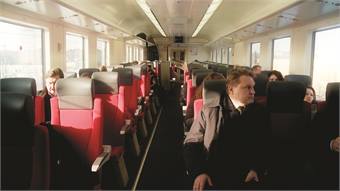
Russian train operator Aeroexpress says its PSIM system has shortened incident response times, doubled the effectiveness of its security operators and reduced the number of customer complaints.
Living up to the buzz
But, is PSIM living up to all the expectations and buzz it’s creating? One need look no further than Russian train operator Aeroexpress for an example of transit PSIM success.
Founded in 2005, Aeroexpress offers high-speed railway service within Moscow to the capitol’s three major airports — Vnukovo, Domodedovo and Sheremetyevo —and rail service to the Moscow satellite town of Lobnya. The rail operator transported more than 14 million passengers in 2011. Realizing that passengers have a variety of transportation options, Aeroexpress’s strategy is to deliver operational excellence in all areas — from safety and security to passenger service. The NICE Situator PSIM solution helps Aeroexpress do exactly that.
Using Situator, Aeroexpress can monitor all aspects of operations in real-time, whether related to safety, security or passenger service, and involving any location (trains, rail platforms and terminals). The PSIM solution integrates a large number of complex and diverse systems and sensors spread over many remote locations. This includes video surveillance, access control, fire detectors, telephone and radio.
Aeroexpress uses Situator to handle a vast number of events, and not all are related to security. Some situations arise as part of daily operations and have the potential to negatively impact passenger satisfaction. For example, through integration with NICE’s advanced crowd detection video analytics, Aeroexpress’s Situator system alerts and instructs operators to take action when there’s excessive congestion at exit turnstiles or when long queues form at ticket counters.
Aeroexpress says the PSIM system has shortened incident response times, doubled the effectiveness of its security operators and reduced the number of customer complaints.
Aeroexpress has also found Situator’s reporting capabilities extremely beneficial from the standpoint of identifying what it calls “pain-points.” Aeroexpress tracks the number, severity and specific types of incidents occurring at each location and uses Situator to watch how those stats are trending. The company also tracks and documents maintenance issues, regulatory compliance violations and any incidents that required assistance from external agencies. Tracking these “pain-points” helps Aeroexpress identify root causes of problems and continuously learn and improve as it strives for excellence in all areas of its operations.
Udi Segall is director, vertical marketing, for NICE Systems’ surveillance division. He can be reached at Udi.Segall@nice.com.
More Rail

New York MTA Advances Final Contract for Second Avenue Subway Expansion
Contract Four is the largest in the Second Avenue Subway Phase 2 project and includes construction of station infrastructure, tracks, and signals for the subway expansion, MTA officials said. Work on Contract Four will begin in 2027.
Read More →
San Diego MTS Breaks Monthly Trolley Ridership Record
Agency officials said July’s ridership indicates MTS’s continued recovery from the pandemic.
Read More →
Report Examines NJ TRANSIT Reliability, Funding Challenges
The Garden State Initiative analysis examines the roles of Amtrak infrastructure, fleet management, and agency operations while recommending a more performance-based approach to improving reliability.
Read More →
Stadler, CapMetro Sign Long-Term Rail Fleet Support Agreement
Beginning in 2027, Stadler will provide on-site technical expertise, spare parts support, training, and obsolescence management to help extend the reliability and longevity of CapMetro’s GTW fleet.
Read More →
Biz Briefs: Alstom Lands Canadian Contract, LYT to Supply California TSP, and More
In METRO's latest installment, we take a look at recent news from Complete Coach Works, Beep, FlixBus, and more partnerships making headlines across the transportation sector.
Read More →
CATS Gold Line Marks 5 Years of Service, 2.8M Passenger Trips
With a six-mile expansion planned, the Charlotte streetcar is positioned to connect more neighborhoods and major transit hubs across the region.
Read More →
Why Simulating Pedestrian Movement Has Become Essential for Modern Rail Stations
Pedestrian microsimulation is helping rail planners identify bottlenecks, test station designs, and prepare complex transit hubs for growing passenger volumes.
Read More →
Amtrak Begins Major Construction at New York’s Sunnyside Yard
The new maintenance facility will support Amtrak’s Airo trainsets while improving maintenance efficiency and turnaround times in New York.
Read More →
Chicago Leaders Unveil Plans for O’Hare Airport Express Train
The privately developed project would offer a 15-minute trip between downtown and O’Hare’s Terminal 2, with trains operating every 15 minutes on a dedicated track. The service would use battery-electric trains and three existing freight rail rights-of-way.
Read More →
OCTA Maps Out 30-Year Strategy to Protect Coastal Rail Corridor
The draft feasibility report identifies strategies to protect the coastal rail line for decades as the agency continues near-term stabilization and sand placement efforts.
Read More →