



Innovative Operator Profile: Business Growth Fuels Expansion
At the suggestion of their daughter, Judy Lewis, the Dugals— Paul and Patricia— started Caz Limo and Tours with two limousines that they purchased in March 2000.

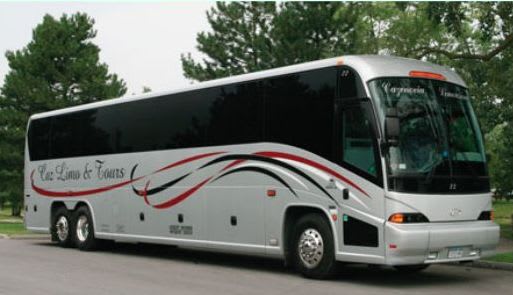
At the suggestion of their daughter, Judy Lewis, the Dugals— Paul and Patricia— started Caz Limo and Tours with two limousines that they purchased in March 2000. Operating out of their home, the Dugals served as their own two-person staff, doing everything from marketing to taking reservations to chauffeuring and cleaning the vehicles. Hoping to pick up some prom business, they began leaving flyers on cars at high schools, and then things started taking off.
Today, they have a fleet composed of limousines, luxury vehicles and more than 27 motorcoaches, including MCIJ4500s. The company boasted a growth rate of 35 percent a year over their first eight years. One of Caz’s most successful business ventures is its partnership with Ithaca, N.Y.-based Cornell University, where it provides staff, students, visitors and faculty with luxury shuttle services from Ithaca to the university’s Weill Cornell Medical College, the Cornell Club, the Cornell University Center for Advanced Computing facility and the School of Industrial and Labor Relations extension office in New York City.
“We started our executive class service with Cornell University in 2004, when they came to us and asked if we’d be willing to do a pilot program for them because they were fed up with the unreliability and high cost of the airlines going from Ithaca to La Guardia,” explains Paul Dugal, sr. vice president, director of operations, for Caz.
The service has grown to six coaches that make two trips daily, seven days a week.
“With Wi-Fi and the ability to use their laptops and such, it’s like a classroom on wheels for them,” says Dugal. “We’ve only missed one date in four years and that was because the roads were totally shut down because of a storm.”
In fact, the program with Cornell has been so successful that Caz will begin running a similar program for Syracuse University with two coaches.
To help cut down on the cost of new vehicles, Caz has created a sister company, Creative Coach Design LLC, to do all of the conversions at their own facilities.
“We buy the buses as shells and are able to build them at a very economical price, rather than going to the aftermarket and paying a lot more money,” says Dugal. “It’s turned out to be a successful arm of the business.”
Caz also provides a Manhattan express service, has 150 sports team contracts with as many as 10 different colleges and universities in Central New York, and is the largest corporate transportation company in the region.
Dugal says that his operation’s biggest challenge is managing growth and admits that there have been some setbacks coupled to its successes.
Having outgrown its current facility, Dugal and his family plan on building a new 20,000-plus square-foot, LEED-type facility to house its offices, vehicles and vehicle conversion business. The operation also hopes to expand its use of biodiesel as part of its move to go greener.
“We are using biodiesel in some applications, but our biggest problem is when we [are on the road] for a few days because it is very difficult to find on the open market,” says Dugal. “For our local [trips], we are able to use biodiesel, though, and Cornell is looking at providing us with biodiesel there for their runs, which are now up to 14 trips a week.
MOTORCOACHES: 27
FLEET MIX: MCI J4500s, Van Hool
EMPLOYEES: 15
DRIVERS: 40
SERVICE AREA: Northeast, Florida
SERVICES OFFERED: charter, tour, schools, casino and contract
YEAR STARTED: 2000
AVERAGE ANNUAL MILEAGE: 750,000
SR. VICE PRESIDENT: Paul Dugal
More Management

LIT Marks 10-Year Milestone at Annual Summit
Hosted by the COTA from September 10 to 13, the Summit carried the theme “Celebrating 10 Years of Excellence, Leadership, and Impact,” with every part of the program honoring the people, agencies, and partners who built LIT over its first decade.
Read More →
People Movement: Dan Dipert Coaches Adds Third-Generation Leader, Keolis Names New Valley Metro VP/GM, and More
In this edition, we also cover recent appointments and announcements at the Wabtec, SilverRide, HNTB, and more, showcasing the individuals helping to shape the future of transportation.
Read More →
METRO Opens Submissions for 2026 Motorcoach Awards
Nominations are now being accepted for METRO Magazine’s Operator of the Year and Innovative Operator of the Year awards.
Read More →

New York MTA Advances Final Contract for Second Avenue Subway Expansion
Contract Four is the largest in the Second Avenue Subway Phase 2 project and includes construction of station infrastructure, tracks, and signals for the subway expansion, MTA officials said. Work on Contract Four will begin in 2027.
Read More →
Transit Agencies Highlight Safety Gains at National Summit
Leaders from 15 major transit systems shared crime-reduction results and safety initiatives while discussing the role of continued federal support.
Read More →
NITA Names New Leadership, Expands Reduced-Fare Program at First Board Meeting
The new regional transit authority appointed its first board chair and interim executive director while extending reduced fares across CTA, Metra, and Pace for eligible riders.
Read More →
Beyond the Checklist: A Structured Approach to Transit Maintenance
Reliability-Centered Maintenance helps transit agencies move beyond routine checklists to focus limited resources on the assets and failures that have the greatest impact on safety, reliability, and service.
Read More →
APTA 2026 Nominating Committee Selects Leadership Slate, Names Chair and Vice Chair Nominees
Leadership changes will help shape the association’s priorities and its representation of the transportation industry during the 2026–2027 term.
Read More →
DART Launches Major Security, Fare Enforcement Initiative
The 90-day demonstration will deploy coordinated security teams at five light rail stations while testing controlled access and gathering data to guide future investments.
Read More →
Advancing Fare Collection Through Technology and Innovation
Learn about delivering 1300 gates at 91 stations while managing fare evasion. Explore the large scale deployment, solution customization and real-world results that affect the region. Prepare for deployment in your region now.
Read More →