



Light Rail Vehicle Designs Look to the Future
Vehicles for current projects in Houston, Minneapolis and Phoenix strike a balance between form and function with streamlined exteriors, low floors and a new ergonomic sensibility.

Like the forward-thinking cities they represent, light rail vehicles (LRVs) are finally catching up with the times. Today’s streamlined designs, with low-floor configurations, advanced materials and a new, ergonomic sensibility, are pleasing to the eye and geared to take on 30,000 passengers a day. Projects in Houston, Minneapolis and Phoenix, showcasing the current crop of LRV styles, are setting the pace by compiling community and stakeholder input for how vehicles should look and feel. A common requirement among the cities is that vehicles exude a modern, futuristic image, steering clear of outdated box-like designs of old. Likened to a “Saltine box on wheels,” early light rail vehicles from the 1980s were based on a German subway car design. Aesthetics appeared to be an afterthought on previous LRVs. “They weren’t beautiful, just boxy, extremely functional items,” says John Swanson, vehicle engineering manager for Parsons Brinckerhoff Transit and Rail Services. European influence Today, vehicle designs are contoured, rounded and streamlined in appearance. This new style is in line with the image of a growing, vibrant city, says Joe Marie, assistant general manager of rail operations at Metro Transit in Minneapolis. The primary influence for these newer vehicles can be traced back to the Eurotram vehicle in Strasbourg, France. The Strasbourg tram designed by Adtranz (now owned by Bombardier Transportation), with its sloping cab front and platinum coloring, set the tone for future projects. “It broke the mold in Europe as far as being an extremely aesthetically pleasing vehicle. It was very elegant in its design,” Swanson says of the system, which went into operation in 1994. “Here we are eight years later, and the influence is starting to be felt in the U.S.” Green or blue? Color selection, frivolous sounding at first, plays an integral part in the overall look and appeal of railcar interiors and exteriors. Transit systems go to great lengths to find the right mix of colors for LRVs. Graphics staff and the marketing department of Minneapolis’ Metro Transit held four design conferences with board members to discuss designs and features they thought passengers would appreciate. “We asked [board members] to give us adjectives to describe the personality of the Hiawatha line,” says Bob Gibbons, Metro Transit’s director of customer services. Factions developed over what color the cars should be, he says. “A number of board members were interested in green and blue — we are Minnesota, the land of 10,000 lakes and we are environmentally friendly,” Gibbons says. “We ended up using a fair amount of blue in the car.” Colors have the ability to present a certain image to the customer and can instill feelings of comfort. Houston Metro worked in tandem with The BMW Group’s Design Centre in Newbury Park, Calif., to develop a color scheme that created a soothing backdrop for customers of its Metro Rail project. “As BMW put it, they wanted people to feel as if they were in their living room,” says Connie Krisak, Houston Metro’s urban and station design manager. Selecting hues able to withstand the test of time is another consideration. Opting for grays and blues for interiors and exteriors, Houston Metro wanted to ensure that its vehicles would look good now and later, Krisak says. A move toward low floors Transit authorities are moving toward low-floor designs for accessibility and ease of boarding. Specifications for 70% low-floor configurations, where the remaining 30% of the vehicle is a high-floor design, are the prevailing choice. “Vehicles that have steps create an obstacle. With low floors anyone can enter at any point of the vehicle,” says Krisak. Reducing dwell times is also key to low-floor layouts. “One of our biggest concerns was our expected ridership of 30,000 to 40,000 per day, so we wanted to make sure we got people in and out of the vehicle quickly,” Krisak says. Low-floor designs also save on infrastructure costs. “You are not having to build platforms,” says Sid Sparks, director of projects for Siemens Transportation. Although Europe is going toward a 100% low-floor plan for all vehicles, the U.S. is more attracted to the 70% design, which allows for faster vehicle speeds, says Parsons Brinckerhoff’s Swanson. The high-floor portion of the 70/30 layout houses a larger, more powerful truck for increased speeds.“In Europe these vehicles seldom go more than 50 mph, whereas most light rail procurements in the U.S. are wanting [vehicles] to go 65 mph or more,” he says. The design of the system dictates whether the 70% or 100% low-floor configuration makes sense, Minneapolis’ Marie says. “They are both good solutions, but it depends on your needs,” he says. Calling the 70% plan a halfway step toward full accessibility, Swanson says that specifying 100% designs will give the U.S. an opportunity to bring in a variety of low-floor designs from Europe. In addition, Swanson says by eliminating steps present in 70% configurations, vehicles can be made longer to extend sections. “It makes a vehicle that is much more accessible and it turns out to be cheaper because you eliminate all of that dead space where you couple two trains together,” he says. Form follows function Ergonomics and aesthetics are usually the last things that come into the engineers’ consideration when designing a vehicle, Swanson says. “The truth is it’s very important to do,” he says. Past designs for light rail vehicles followed the sturdy appearance of buses, which looked like they could be hosed down at the end of the day. “That is not very appealing,” Swanson says. “If one of the goals is to get people out of their cars, that’s not the way to do it.” Valley Metro is mitigating this issue by going for brighter, cleaner looking interiors with fewer sharp angles for its Central Phoenix/East Valley Light Rail Transit project. In order to create a vehicle that appealed aesthetically and ergonomically to all people, Valley Metro incorporated the principles of universal design in studies of its vehicle. Developed at The Center for Universal Design, North Carolina State University, the new philosophy of universal design is defined as: the design of products and environments to be usable by all people, to the greatest extent possible, without the need for adaptation or specialized design. These principles evolved out of the need to break away from the traditional military specifications, which catered to a smaller proportion of people of a certain height, weight and size range. “Universal design means you are opening up a broader definition to what a person is,” Swanson says. “Taking into account people who are partially sighted, who are frail and hard of hearing.” Following this new philosophy, Valley Metro is looking to place handrails and grab-handles in various locations around the vehicle. “What has been done in the past was a bit ad hoc, as it were,” he says. In keeping with the new aesthetic principles, Valley Metro also required the use of cantilevered seating. Cantilevered seats are suspended from the sides of the vehicle, leaving the floor area clear of leg supports. “It’s much more appealing and easier to clean,” he says.
More Rail

The Business Voice Behind Public Transportation
As chair of APTA’s Business Members Board of Governors, Ray Melleady explains how more than 850 business members are partnering with transit agencies to advance funding, innovation, and industry-wide collaboration.
Read More →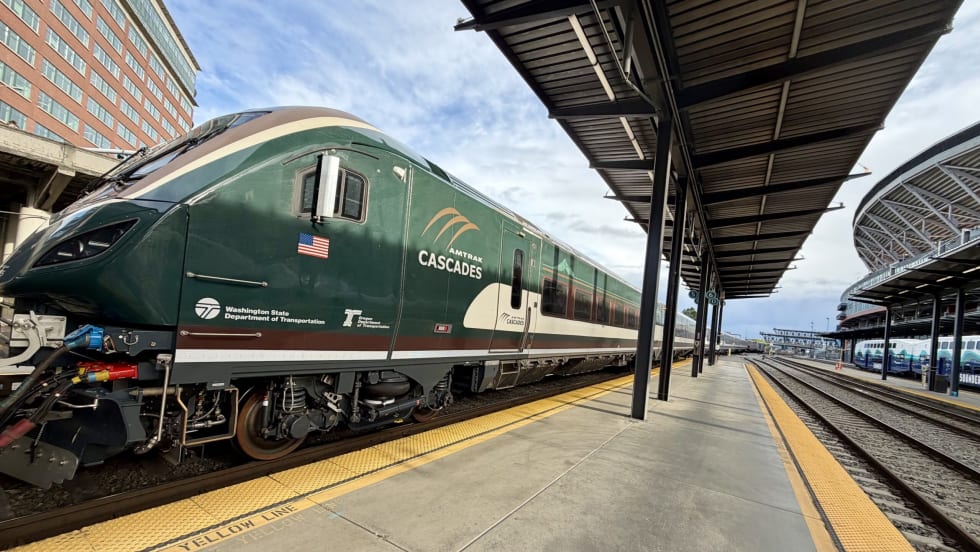
FRA Announces $5.3B in Rail Investments, Including $2B for Amtrak
Funding will support grade-crossing improvements, infrastructure upgrades, and new Amtrak equipment in 23 states.
Read More →
Finding the ‘Happy Medium’: Optimizing Maintenance Without Sacrificing Reliability
The key to maintenance optimization isn’t doing less work—it’s doing the right work at the right time on the right assets.
Read More →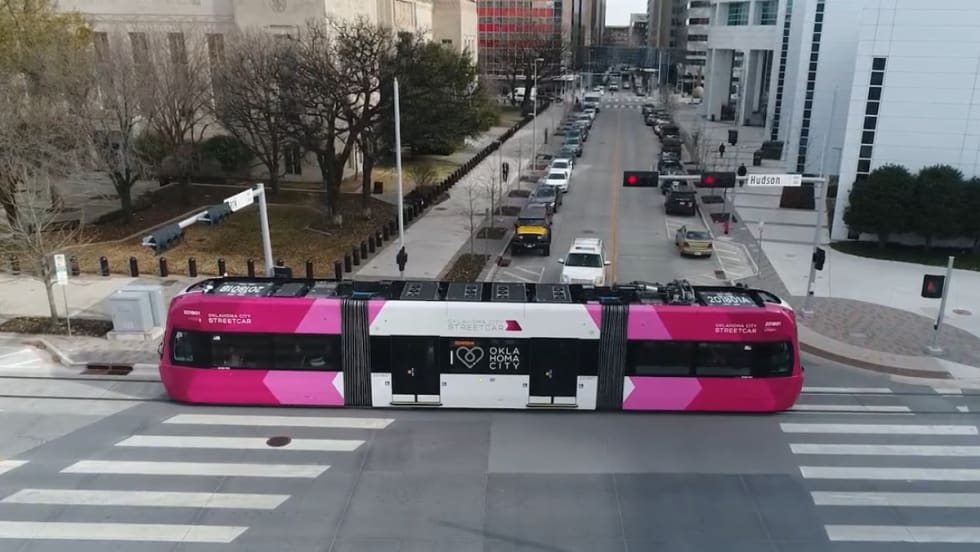
OKC Streetcar Makes Zero-Fare Service Permanent
Ridership increased an average of 71% compared with the same period a year earlier during the fare-free pilot.
Read More →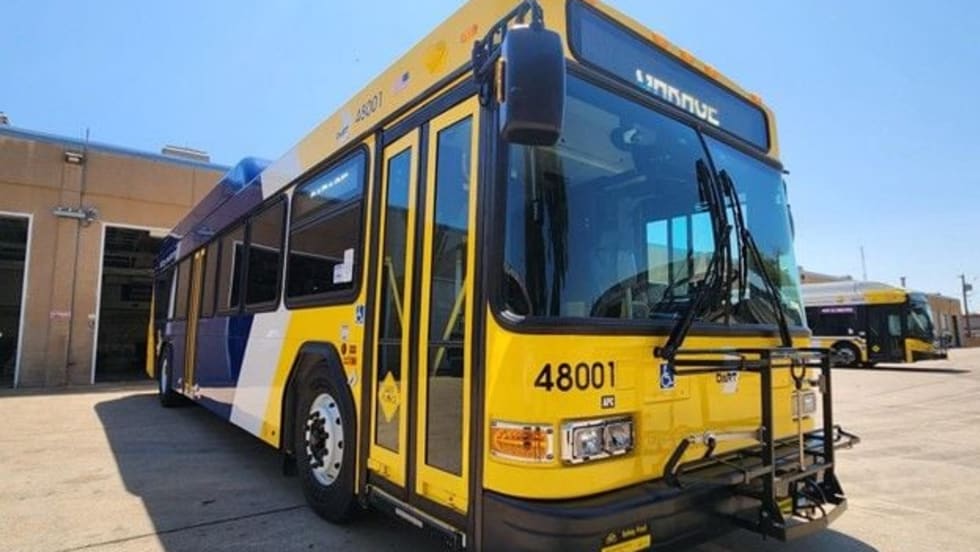
DART Customer Satisfaction Reaches Six-Year High
Overall satisfaction rose to 74.9%, while the agency’s Net Promoter Score reached a record 33.7.
Read More →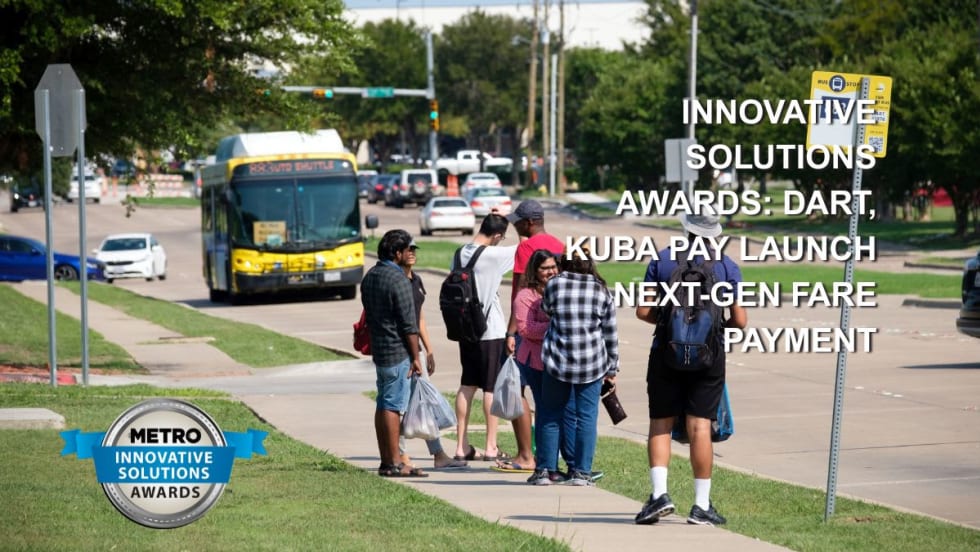
How DART's GoPass Is Redefining Regional Mobility
Serving 14 transit agencies, GoPass simplifies multimodal travel by allowing riders to plan, pay for, and manage an entire trip through one app.
Read More →
Amtrak Board Advances Plan to Restructure Organization, Seeks Public Input
The proposal, developed by Amtrak management and approved by the board for further consideration, is intended to modernize the organization's structure while improving accountability, operational efficiency, and customer service.
Read More →
Biz Briefs: STV teams with Amtrak, Motorcoach Operators Boost Fleet and Land Contracts, and More
From manufacturers and suppliers to transit agencies and motorcoach operators, these updates offer a snapshot of the projects, partnerships and business moves driving the industry forward.
Read More →
Metra Celebrates 100 Years of Electric Rail, Looks to the Future
The event was also a celebration of recent reforms to public transportation in the Chicago area, changes that could be as transformative in the future as the major civic achievement a century ago, said officials.
Read More →
LA Metro Marks Banner Year, Sets Ambitious Goals for New Fiscal Year
Incoming LA Metro Board Chair and Los Angeles Mayor Karen Bass joined outgoing Board Chair Fernando Dutra and LA Metro CEO Stephanie Wiggins to review accomplishments from fiscal year 2026, which included the opening of new rail extensions, advancement of major transit projects, expanded safety programs, and new rider amenities.
Read More →