



Minneapolis Rides High on Light Rail Revolution
A booming population and a desire to rein in congestion led to the dawning of the Hiawatha light rail line, the first to be built in Minnesota. Plans to integrate the light rail project with a multimodal transportation system in Minneapolis are also on the horizon.
Debate over the merits of expanding services at Metro Transit in Minneapolis from buses to light rail has raged on for more than 30 years. But smart-growth thinking has begun to finally take hold and Minneapolis is joining the list of American cities constructing or expanding light rail transit (LRT) systems. Ground was broken on the $675 million Hiawatha Line last January. Partial service will open from downtown Minneapolis to Fort Snelling National Park in late 2003 and full service is scheduled for the end of 2004, taking commuters to the Minneapolis/St. Paul International Airport and Mall of America. Upon completion, the line will stretch for 11.6 miles and have 17 stations. Discussions are underway for three commuter lines that would hook up with the system. The most feasible in the Twin Cities area is the 80-mile Northstar Corridor that would run from downtown Minneapolis to St. Cloud. Two other feasibility studies are nearly done and focus on a proposed corridor from Northfield to Minneapolis and the Red Rock Corridor from Hastings to Minneapolis. There’s also talk of at least two more LRT corridors. Smart-growth thinking “If you build it, they will come.” A consistently strong Minnesota economy has led to high home ownership — which consumes more land — and low unemployment. But new influxes of immigrants meant a more crowded central city, unable to meet the housing and transportation needs of the new residents. The new influx of residents has strengthened the city’s core. Immigrants have moved into older, less expensive neighborhoods, stabilizing them and even increasing home values. “Our downtowns and surrounding neighborhoods are coming around instead of dying,” says Ted Mondale, chairman of the Metropolitan Council. Such development has spurred economic blessings, but in other ways it has worked to the Twin Cities’ detriment. Land has been lost, traffic congestion in the area is now growing at the second fastest pace in the U.S. The Twin Cities metro region has been consuming land at a furious rate compared to cities with similar levels of population growth. The 2000 census reported Minnesota’s population as just under 5 million, a 12.4% growth since 1990, with more than half of the population living in the 11 county metro area. It used to be that cities worldwide developed based on a half-hour commute to work. Today, sprawl has stretched that concept to the very last second. For many commuters, the cell phone call home sounds more akin to, “Honey, I’m almost home.” According to a recent report by the Texas Transportation Institute, the average commuter in the Twin Cities idles in traffic 38 hours a year — two hours more than the national average. “Providing more choices — such as light rail — not more lanes, will ultimately provide commuters with relief from the region’s growing congestion,” says John DeWitt, co-director of Transit for Livable Communities, a transit advocacy group. Boost to the economy Before construction even began, the economic outlooks looked good for the Hiawatha Line. “Minneapolis is among the cities nationally benefiting from light rail transit,” Mondale says. “The Hiawatha line will expand access to jobs, housing and economic opportunity for everyone.” The Minnesota Department of Transportation released the findings of an analysis comparing the major economic benefits of the project against resources expended to achieve those benefits. The analysis identified several important economic benefits:
Travel time savings of $123 million.
Pollution reductions of $25 million.
Avoidance of vehicle operating costs of $66 million.
Likely reductions in crashes totaling $26 million. The resulting benefit-to-cost ratio was 42%, consistent with start-up public transportation projects around the country. Economists with this initial study did not consider other social policy goals, such as urban development, and did not capture possible additional benefits as the LRT system matures and the transit network expands. The analysis also did not include possible benefits from denser region-wide land use patterns and increased business productivity. A federally funded market study for the Hiawatha Light Rail Line also predicted local economic development. The report said light rail would be an economic boon within one-half mile of each of the 17 stations. Potential developments by 2020 include:
Nearly 7,000 new housing units.
More than 19 million square feet of new commercial space.
Up to 68,000 new jobs. Minneapolis Mayor Sharon Sayles Belton says such outcomes result in a stronger city. “That means a more livable city,” she says. “Thanks to a process that heavily involved citizen input, the stations along the corridor will not be stand-alone structures. They’ll lead to multi-purpose community gathering spots and, in many cases, serve as gateways to development in the neighborhoods.” When ground broke Aug. 2, 2001, on the first station, many area residents attended the celebration. “We’re grateful to have the first light rail transit station built in our neighborhood,” says Martin Adams, chair of a neighborhood transportation action group. Adams is reflective of many local residents. Opponents to light rail outnumbered supporters for years. It’s the simple explanation for why it never got the political support needed to make it a reality. But, when smart growth moved out of the halls of academia and into the kitchens and cafés where Minnesotans do their talking, it became colloquial to the adage, “How to Talk Minnesotan.” Public involved in planning Many state leaders, policymakers and advocates in support of light rail knew that when left alone long enough, citizens themselves would come up with the most sensible solutions to sprawl. Policymakers scheduled a series of workshops and invited 300 local officials, civic leaders, land developers and residents from all areas of the region. “Our approach was to ask and not tell,” Mondale says. To begin the process, the workshop participants were given a problem: A half million more people are expected by 2020 — that’s 270,000 additional households and 285,000 new jobs that would be needed. Where and how should these be configured? People placed tens of thousands of high-density housing units near downtown Minneapolis and tens of thousands of medium-density housing units along transit lines. They located new jobs along freeway and transit corridors. Ultimately, community involvement in the Hiawatha Line resulted in the selection of the corridor route, as well as the public art component of the project. For more information on the Hiawatha Light Rail Transit line, e-mail LRT@dot.state.mn.us or click on www.metrocouncil.org/transit or www.dot.state.mn.us/metro/LRT.
More Rail
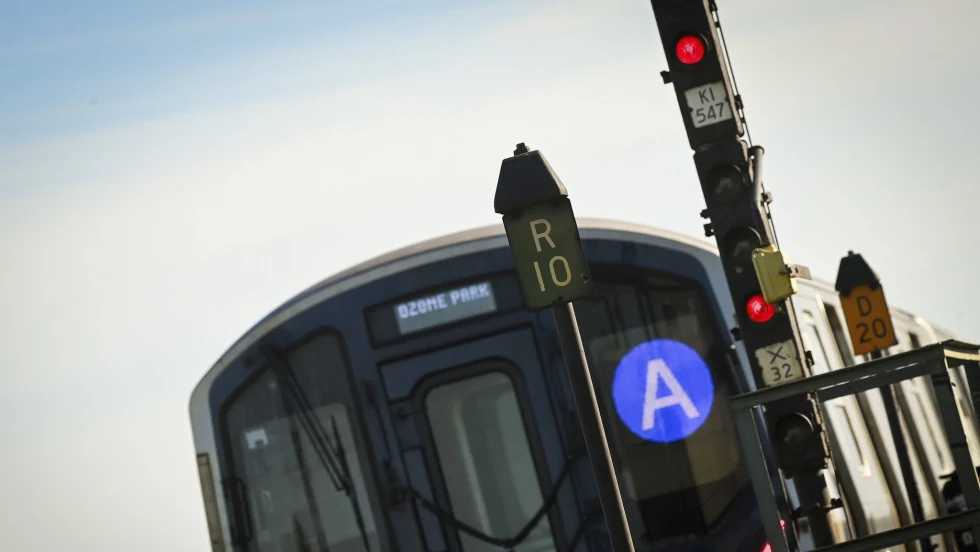
New York MTA Launches Historic $1.9B Signal, Track Modernization Project
Funded in part by congestion pricing revenue, the project will replace nearly century-old signals along the A and C lines in Brooklyn and Queens.
Read More →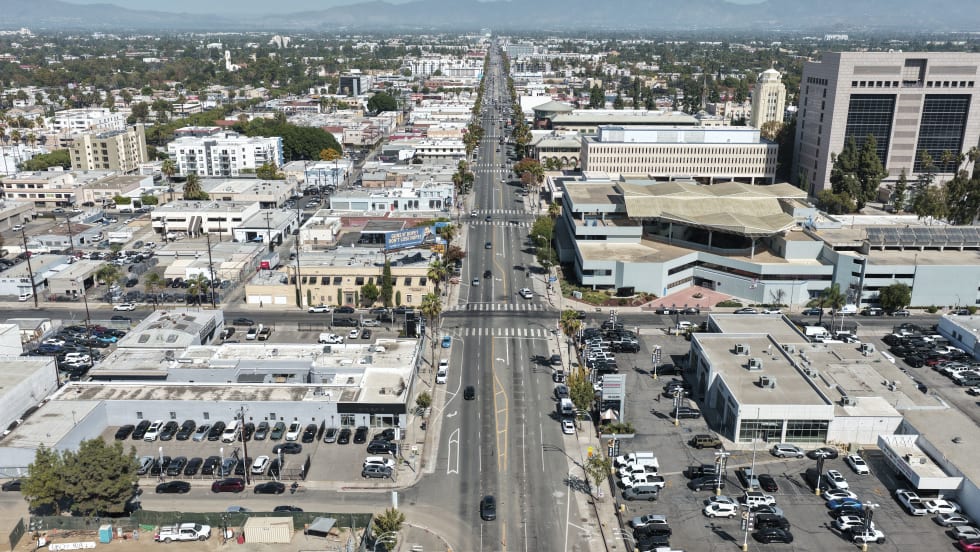
LA Metro Breaks Ground on East San Fernando Valley Light Rail Project
The 6.7-mile line will add 11 stations along Van Nuys Boulevard, expand access to jobs and regional transit connections, and support Metro’s broader efforts to improve mobility as rail ridership grows.
Read More →
CSA Group Releases Climate Resilience Standard for Transit, Passenger Rail
Developed with support from the Standards Council of Canada, CSA D700 guides assessing climate-related risks and planning adaptation measures for transit and passenger rail systems.
Read More →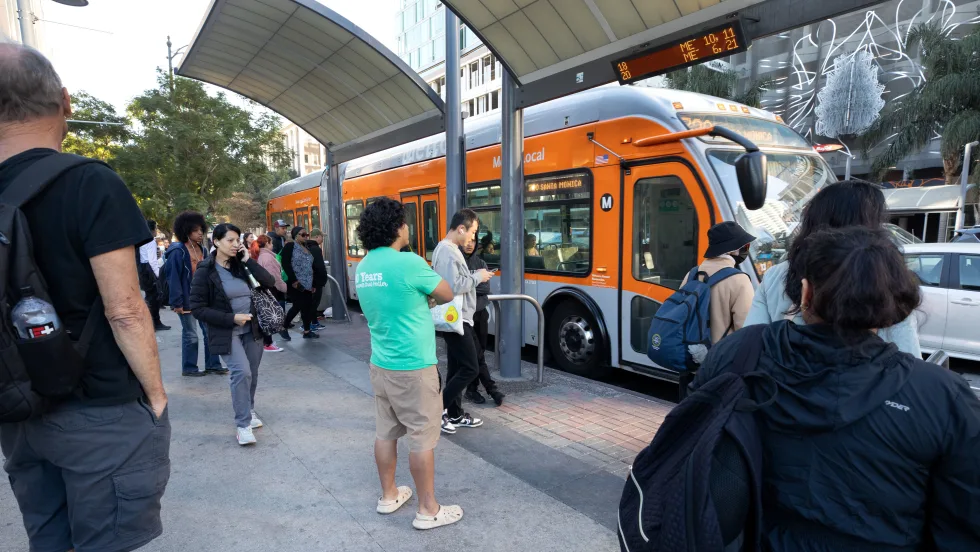
LA Metro September Ridership Climbs 3.9%, Led by Rail Growth
The agency recorded more than 27.2 million boardings, with rail ridership increasing 12.4% year over year and the D Line posting the largest gains.
Read More →
First Full MetroLink Rail Expansion Completed in 20 Years with $192M Airport Project
The project links two St. Louis-area airports by light rail while adding roadway and bike trail connections to improve regional access and mobility.
Read More →
Utilimarc Launches SmartReplace to Optimize Fleet Replacement Decisions
AI-powered SmartReplace helps fleets prioritize vehicle replacements, model budget scenarios, and build more defensible long-term strategies.
Read More →
Scenes from APTA TRANSform & EXPO 2026
Transit leaders, manufacturers, and industry professionals gathered in Chicago to explore new technologies, share ideas, and discuss the future of public transportation.
Read More →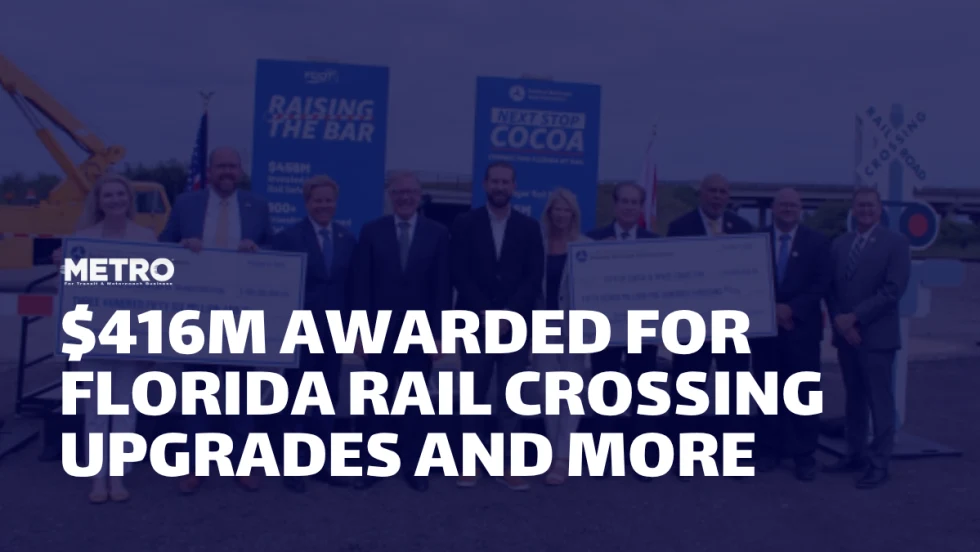
USDOT Awards $416 Million for Florida Rail Crossing Safety Upgrades, New Brightline Station
The projects aim to reduce risks for motorists and pedestrians at rail crossings while expanding passenger rail access along Florida’s Space Coast.
Read More →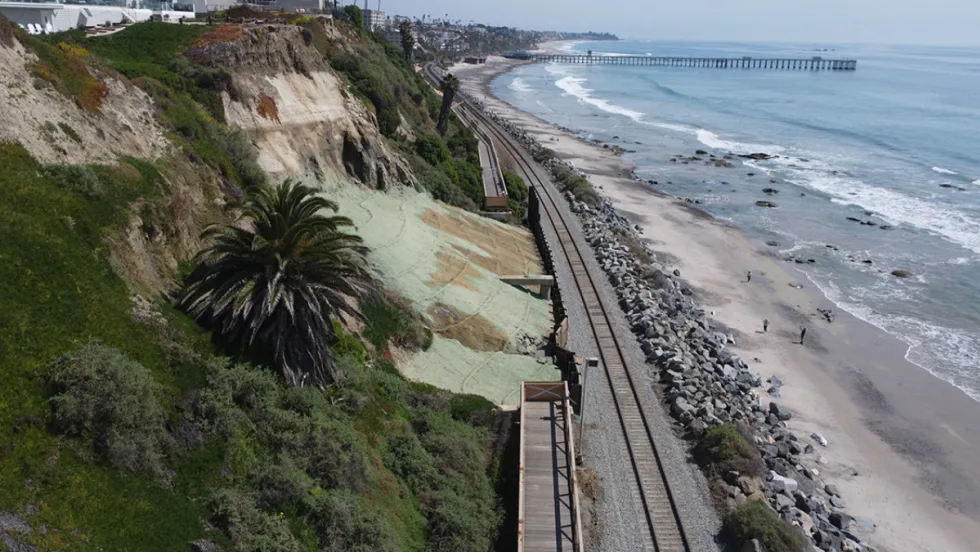
OCTA Declares Emergency to Protect Rail Corridor From Coastal Erosion
The California agency is accelerating shoreline protection and plans to place approximately 690,000 cubic yards of sand along the San Clemente coast to protect a key passenger and freight rail link.
Read More →
More Than a Summer Job: Building the Next Generation of Transit Talent
The Delaware River Port Authority and PATCO have transformed their internship program into a hands-on professional development experience that introduces students to the breadth of transportation careers — and creates a pipeline for future employees.
Read More →