



N.C. Transit Agency Bans So-Called 'Saggy Pants' on Buses
Recently, the N.C.-based City of Greensboro Transit Authority (GTA) adopted a new rule that calls for people who wear so-called “saggy pants” to pull them up or risk being barred from riding the system.
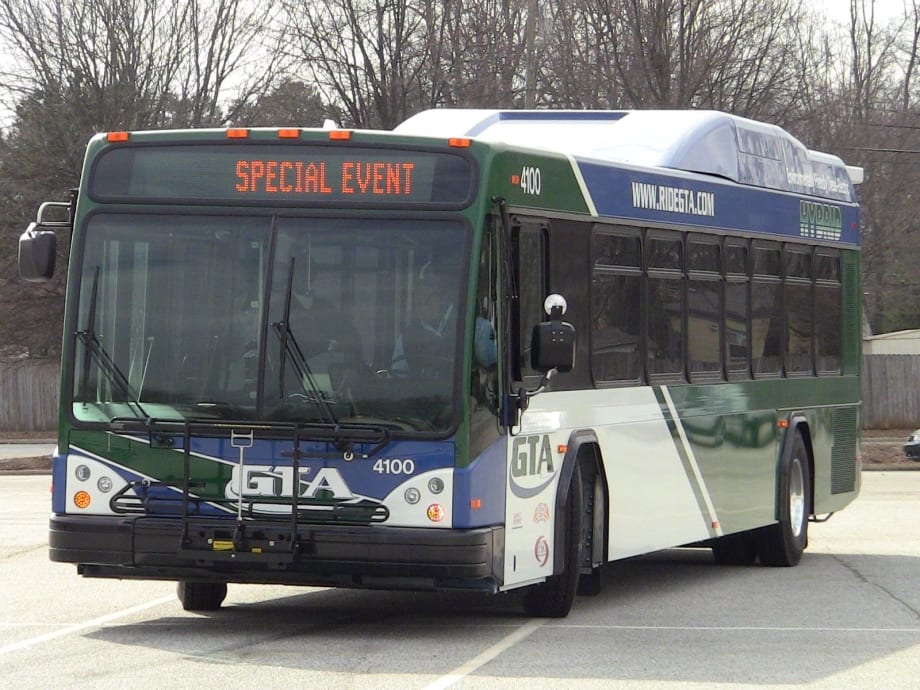
N.C.'s Greensboro Transit Authority will follow in the footsteps of Fort Worth, Texas' The T, which banned saggy pants in 2011, using a marking campaign on its buses.
N.C.'s Greensboro Transit Authority will follow in the footsteps of Fort Worth, Texas' The T, which banned saggy pants in 2011, using a marking campaign on its buses.
Recently, the N.C.-based City of Greensboro Transit Authority (GTA) adopted a new rule that calls for people who wear so-called “saggy pants” to pull them up or risk being barred from riding the system.
“The idea for the rule came from a speaker who came to a City Council meeting and raised concern about the attire of transit riders,” explained Elizabeth James, public transportation manager for the City of Greensboro. “As a result, our transit liaison, Councilwoman Sharon Hightower, asked GTA staff to look into forming a policy to address the matter.”
Specifically, GTA’s new rule states: “The waistbands of pants, skirts, shorts, and/or swim trunks shall not be worn more than three inches below the wearer’s waist, interpreted to mean at a level below the crest of the ilium so as to expose either skin or undergarment(s).”
Riders who violate the provision will be asked to pull their pants up and secure them while in a GTA facility or on a bus, with the failure to do so resulting in a 24-hour ban from all GTA facilities and vehicles. Habitual offenders are subject to a ban of up to 30 days.
GTA was set to begin implementation of the new saggy pants rule in September; however, it was pushed back once concerns were raised by the agency’s bus drivers.
“Our drivers had some concerns regarding enforcement of the new rule, so the implementation process has slowed down a bit,” said James, who added GTA is currently involved in educating the riding public on the rule.
“Before we begin implementation, we want to make sure all the stakeholders or people that could be impacted have a mutual understanding of what the policy is, and specifically, what the enforcement piece will be,” James said.
The City is also considering implementing the rule at all city facilities beyond public transportation, but no decision on that had been made as of press time.
If implemented, though, both the GTA and the City would join several agencies and cities in states including Illinois and Florida who have adopted such a policy.
In Texas, the Fort Worth Transportation Authority (The T) became one of the first transit agencies to introduce a rule banning saggy pants on its system in spring 2011, which started with signs on buses saying “Grandma Says: Pull ‘Em Up!”
Interestingly enough, like GTA, the T’s rule stemmed from a suggestion from a city council member, explained Joan Hunter, communications manager for The T.
“The council member asked The T if we would put the signs up as a courtesy, so we did,” said Hunter. “The feedback we got was very positive, so we made it a rule on our system.”
Like GTA’s rule, The T bans riders for a 24-hour period for refusing to pull their pants up and extends that ban for repeat offenders or for those who become belligerent or refuse to get off of the bus when told to do so.
“We really saw the rule, and continue to see it, as a common courtesy that really goes along with the ‘No shirt, No shoes, No service’ signs you’ll find in many restaurants, public places and other venues,” Hunter said. “We require proper attire to ride our transportation system, much like we don’t allow smoking, loud music, drinking or firearms, to make the passengers’ experience more safe and enjoyable.”
While initially there was blowback from some passengers and activist groups about the new rule, resulting in approximately 50 incidents on the first day the rule was implemented and some public relations work for The T, Hunter said the agency currently only has two or three incidents reported a month.
“Overall, it’s a very easy policy for the driver to enforce and the rider who is wearing saggy pants,” Hunter explained. “All people have to do is belt their pants up before they get on the bus, and often, you will see people doing just that. It isn’t about telling people what they can or cannot wear; it’s about having a dress code, as a common courtesy for all our riders, to ride our system.”
As of press time, GTA didn’t have a new timetable for implementation of the rule.
More Management

METRO Opens Submissions for 2026 Motorcoach Awards
Nominations are now being accepted for METRO Magazine’s Operator of the Year and Innovative Operator of the Year awards.
Read More →
New York MTA Advances Final Contract for Second Avenue Subway Expansion
Contract Four is the largest in the Second Avenue Subway Phase 2 project and includes construction of station infrastructure, tracks, and signals for the subway expansion, MTA officials said. Work on Contract Four will begin in 2027.
Read More →
Transit Agencies Highlight Safety Gains at National Summit
Leaders from 15 major transit systems shared crime-reduction results and safety initiatives while discussing the role of continued federal support.
Read More →

NITA Names New Leadership, Expands Reduced-Fare Program at First Board Meeting
The new regional transit authority appointed its first board chair and interim executive director while extending reduced fares across CTA, Metra, and Pace for eligible riders.
Read More →
Beyond the Checklist: A Structured Approach to Transit Maintenance
Reliability-Centered Maintenance helps transit agencies move beyond routine checklists to focus limited resources on the assets and failures that have the greatest impact on safety, reliability, and service.
Read More →
APTA 2026 Nominating Committee Selects Leadership Slate, Names Chair and Vice Chair Nominees
Leadership changes will help shape the association’s priorities and its representation of the transportation industry during the 2026–2027 term.
Read More →
DART Launches Major Security, Fare Enforcement Initiative
The 90-day demonstration will deploy coordinated security teams at five light rail stations while testing controlled access and gathering data to guide future investments.
Read More →
Advancing Fare Collection Through Technology and Innovation
Learn about delivering 1300 gates at 91 stations while managing fare evasion. Explore the large scale deployment, solution customization and real-world results that affect the region. Prepare for deployment in your region now.
Read More →
Game Day in Motion: Moving Millions During the 2026 World Cup
Between packed transit stations and team motorcoaches, see how agencies and operators across North America tackled the transportation demands of the 2026 FIFA World Cup.
Read More →
Surface Transportation Extension Averts Shutdown, Leaves Transit Funding Gap
The stopgap keeps federal transportation programs moving, but missing advance funding could complicate the transit and rail projects agencies are planning next.
Read More →