



New York Claims Top Spot at $10 Billion
METRO’s 8th annual rail study shows slight growth, with project costs up $1 billion from the previous year.
Despite the transportation industry’s travels along the rocky road of 2001 — beginning with the slumping economy, followed by the drama of Amtrak’s uncertain future and then the disastrous effects of September 11 — the outlook for rail projects appears to be steady, according to METRO’s eighth annual North American rail projects survey. Rail projects in this year’s survey totaled $53 billion, an increase of $1 billion from last year. With project-cost totals increasing at a minimal pace, about 2%, this may signal a more conservative outlook for the future of projects. We asked our survey respondents what they felt was the single greatest hurdle to getting rail projects done quickly — and the answer was finding a funding source. The U.S. funding total this year for major capital projects, or New Starts, is $1.2 billion, $1 million more than the previous year’s budget. The majority of respondents (80%) are not considering turnkey approaches for New Starts. Big Apple is tops Though there have been big changes in our Top 50 rankings, most notably in our Top 10, MTA New York City Transit (NYCT) held on to the No. 1 spot for the second year in a row, with $10.2 billion designated for projects. That price tag includes the purchase of 1,550 IRT (R142/142A) subway cars at a cost of $2.3 billion. Another pricey item is the reconstruction of the Stillwell Avenue Terminal, worth $169.4 million. NYCT also plans to modernize its signal system on the Flushing Line by replacing the current equipment with fixed-block signal equipment. The cost is expected to be in excess of $50 million. The replacement will take place on various interlockings from Times Square in Manhattan to the 82nd Street Jackson Heights station in Queens. NYCT also scored the No. 1 slot in our Top 10 largest fleets listing by having 6,543 railcars, accounting for 30% of the Top 50 fleet total of 21,344 railcars. The Top 10 rail fleets possess 16,941 railcars, 79% of our agency listings. Some slices of the railcar fleet-mix pie got bigger while others shrank. As usual, heavy railcars remain the dominant force with a 58% portion (12,303 cars) of fleet totals. Commuter railcars are gaining momentum with 4,995 cars, a 23% total share. In the No. 2 spot, the Washington Metropolitan Area Transit Authority (WMATA) made an impressive showing, holding a project purse worth $3.8 billion. Planned WMATA projects include a $3.3 billion Dulles Corridor Rapid Transit Project. Also in the works is 3.1-mile, $434 million extension of the Blue Line from the current Addison Road-Seat Pleasant Metro station to Largo Town Center. A lot of juggling went on in our Top 10 this time around, with five previous members slipping in the ranks, while others such as the Chicago Transit Authority (CTA) and Central Puget Sound (Seattle) Regional Transit Authority/Sound Transit, Nos. 3 and 4, respectively, hurtled forward. CTA, with a majority of its $3 billion project costs earmarked for the purchase of new railcars, made the most impressive advance in this year’s survey, moving up 30 spots. OCTA leaps ahead Another big gainer in the rail rankings is the Orange County (Calif.) Transportation Authority (OCTA), leaping into tenth place and bringing along project costs of $1.4 billion. OCTA was absent from last year’s survey after its Centerline light rail project was temporarily shelved due to a lack of local support. The project, a 17.9-mile route linking major business and commercial centers, including John Wayne Airport, is back on track. Construction is slated for early 2007. Some notable drops in the survey include the Kansas City Area Transit Authority (No. 21 last year), which lost support for its $793 million light rail transit system, taking it out of the running altogether. Amtrak, facing its most severe budget crisis ever, also took a dramatic plunge from No. 5 to 25. The national rail service deducted a $1 billion New York and Baltimore Tunnels project for which there is no forthcoming funding. Many big projects have been shelved, at least temporarily. Despite its uncertain status, Amtrak is still a force to be reckoned with, bringing $559 million to the table for projects such as the New York and Penn Station tunnel safety upgrades. Some fresh faces have also joined our ranks. The Alaska Railroad Company, which claims some of the most scenic routes, reported $300 million in project costs. Also making its debut in our listing is the Connecticut Department of Transportation, with $807 million worth of projects, including catenary replacement, interlocking improvements at New Haven and the construction of five new rail stations. Drop in ridership Like the costs of projects, ridership numbers for 2001, at 3.2 billion, remained steady for rail agencies in our survey. Ridership for the Port Authority Trans-Hudson Corp. (PATH) in New York dropped 5.7% in 2001 to 69.7 million from 74 million in 2000. That drop was caused by the closure of two of its busiest stations, Exchange Place in New Jersey and the World Trade Center station, which sustained heavy damage from the Sept. 11 attacks, cutting off service to thousands of commuters. PATH, which also lost seven railcars that day, expects to reopen the Exchange Place commuter rail station in Jersey City in June 2003. Funding leads to building Federal funding has been the impetus behind many new projects. The Federal Transit Administration (FTA) provided a $13.8 million grant to the Utah Transit Authority for the University light rail line, a 2.5-mile three-station line that extends from the North/South line in downtown Salt Lake City to Rice-Eccles Stadium on the University of Utah campus. Also on board with FTA funding, Dallas Area Rapid Transit (DART) received $69.3 million for the construction of the North Central Light Rail Transit line extension for the Dallas area. The project is a nine-station, double-track system that extends 12.5 miles from Park Lane in Dallas to Plano. Ridership on DART’s light rail line is approximated at 40,000, with 27,000 new riders expected from the addition of new stations. Some existing projects in the FTA’s funding pipeline include New Jersey Transit’s 5.1-mile extension of the Hudson-Bergen light rail, running south one stop in Bayonne and north from Hoboken to North Bergen, adding seven additional stops. Among its many existing projects, NJ Transit is awaiting the 2003 opening of its Southern New Jersey Light Rail Transit System, a 34-mile 20-station line between downtown Camden and the Trenton Rail Station. A proposed extension to the state’s capitol district is currently under study. Denver’s Regional Transportation District (RTD), together with the Colorado Department of Transportation, is building its Southeast Corridor light rail system, known as T-Rex. Projected capital costs for the 19.12-mile double-track light rail system, which includes 13 stations, totals $879 million. Revenue service is expected to begin in the fall 2006. Click here to see the Top 50 listing. If you know of a rail agency that has plans for the future, but was missed in this year’s survey, please let us know so we can include it next year. The staff at METRO would like to thank all survey participants, with special thanks to Joanna Capelle of the Southern California Regional Rail Authority (Metrolink) for being the first to respond to this year’s survey.
More Rail
FTA Advances $164M Broward County Commuter Rail Project
The proposed 10.5-mile commuter rail extension would connect Fort Lauderdale and Aventura, expanding passenger rail options in South Florida.
Read More →
New York MTA Launches Historic $1.9B Signal, Track Modernization Project
Funded in part by congestion pricing revenue, the project will replace nearly century-old signals along the A and C lines in Brooklyn and Queens.
Read More →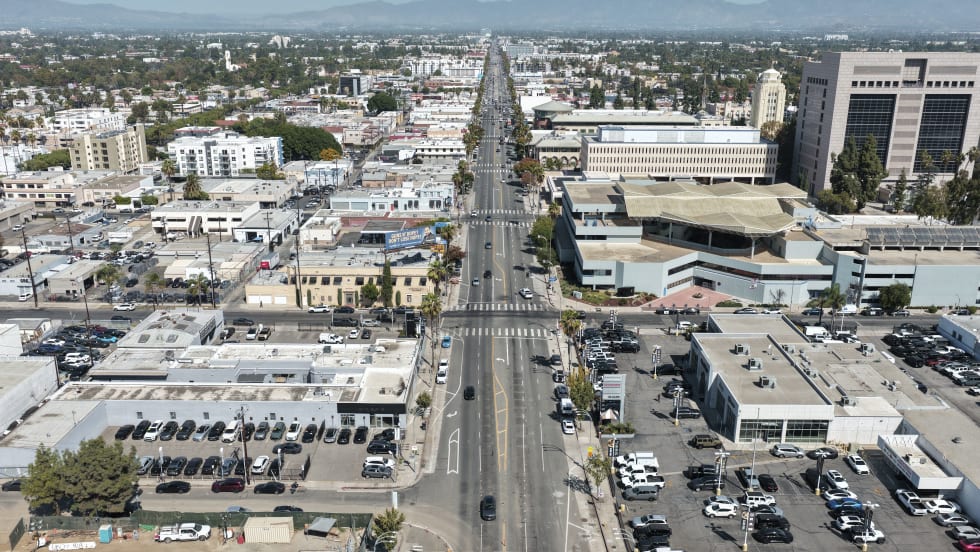
LA Metro Breaks Ground on East San Fernando Valley Light Rail Project
The 6.7-mile line will add 11 stations along Van Nuys Boulevard, expand access to jobs and regional transit connections, and support Metro’s broader efforts to improve mobility as rail ridership grows.
Read More →
CSA Group Releases Climate Resilience Standard for Transit, Passenger Rail
Developed with support from the Standards Council of Canada, CSA D700 guides assessing climate-related risks and planning adaptation measures for transit and passenger rail systems.
Read More →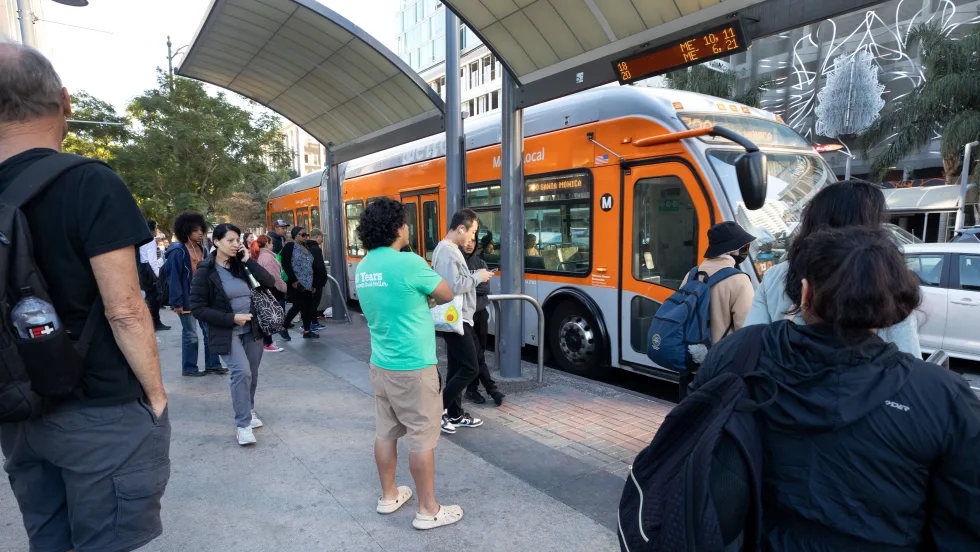
LA Metro September Ridership Climbs 3.9%, Led by Rail Growth
The agency recorded more than 27.2 million boardings, with rail ridership increasing 12.4% year over year and the D Line posting the largest gains.
Read More →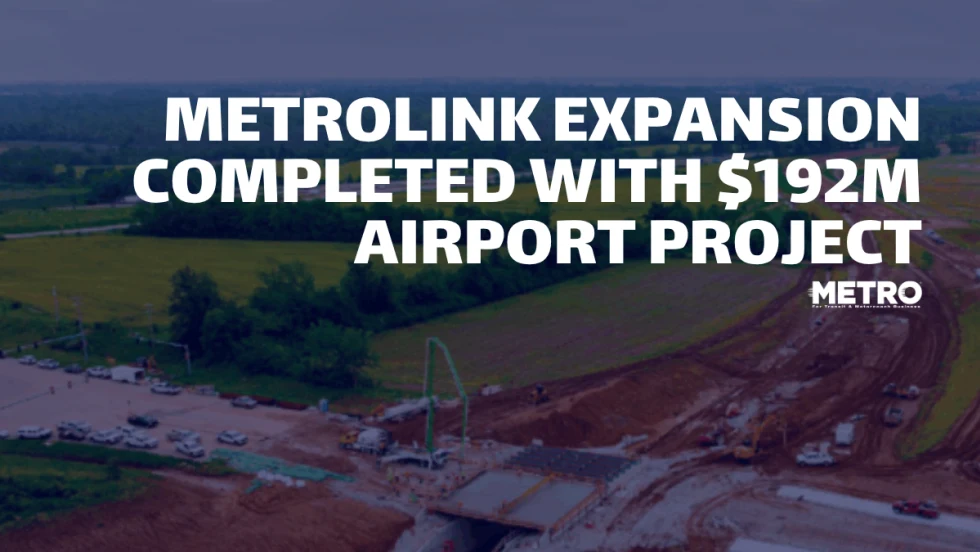
First Full MetroLink Rail Expansion Completed in 20 Years with $192M Airport Project
The project links two St. Louis-area airports by light rail while adding roadway and bike trail connections to improve regional access and mobility.
Read More →
Utilimarc Launches SmartReplace to Optimize Fleet Replacement Decisions
AI-powered SmartReplace helps fleets prioritize vehicle replacements, model budget scenarios, and build more defensible long-term strategies.
Read More →
Scenes from APTA TRANSform & EXPO 2026
Transit leaders, manufacturers, and industry professionals gathered in Chicago to explore new technologies, share ideas, and discuss the future of public transportation.
Read More →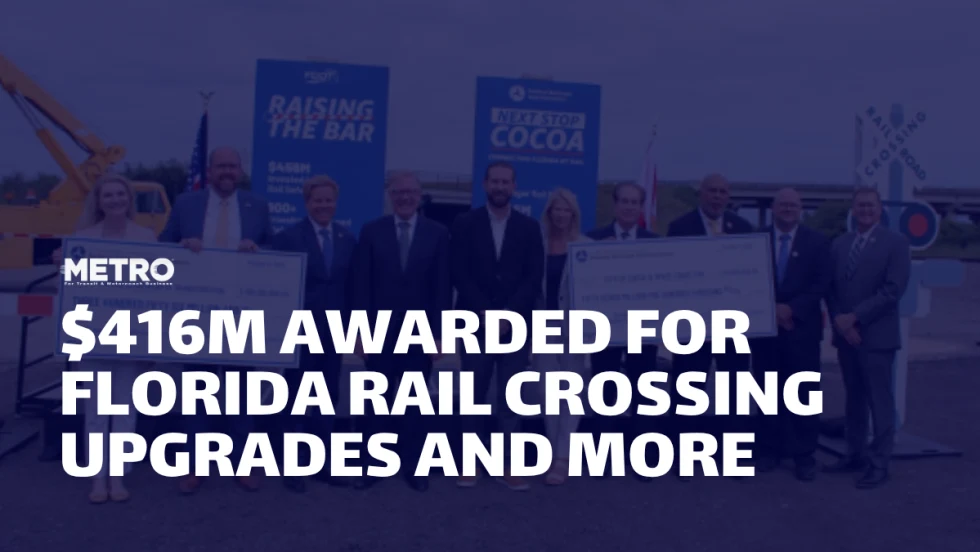
USDOT Awards $416 Million for Florida Rail Crossing Safety Upgrades, New Brightline Station
The projects aim to reduce risks for motorists and pedestrians at rail crossings while expanding passenger rail access along Florida’s Space Coast.
Read More →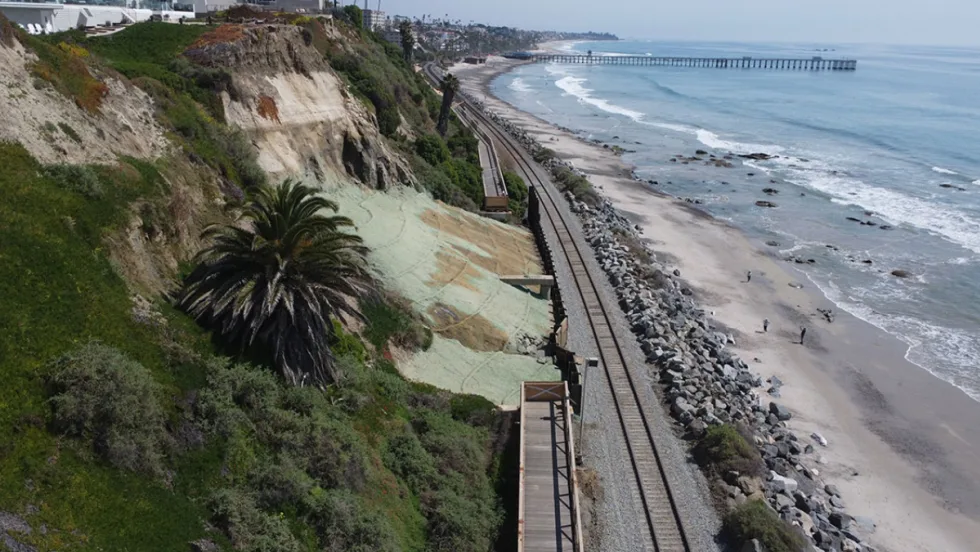
OCTA Declares Emergency to Protect Rail Corridor From Coastal Erosion
The California agency is accelerating shoreline protection and plans to place approximately 690,000 cubic yards of sand along the San Clemente coast to protect a key passenger and freight rail link.
Read More →