Pennsylvania's CATA Fuels Innovation with Propane Autogas
A look at how the agency streamlined fueling and reinvested cost savings into services for the community.
by Joel Stutheit
March 17, 2025
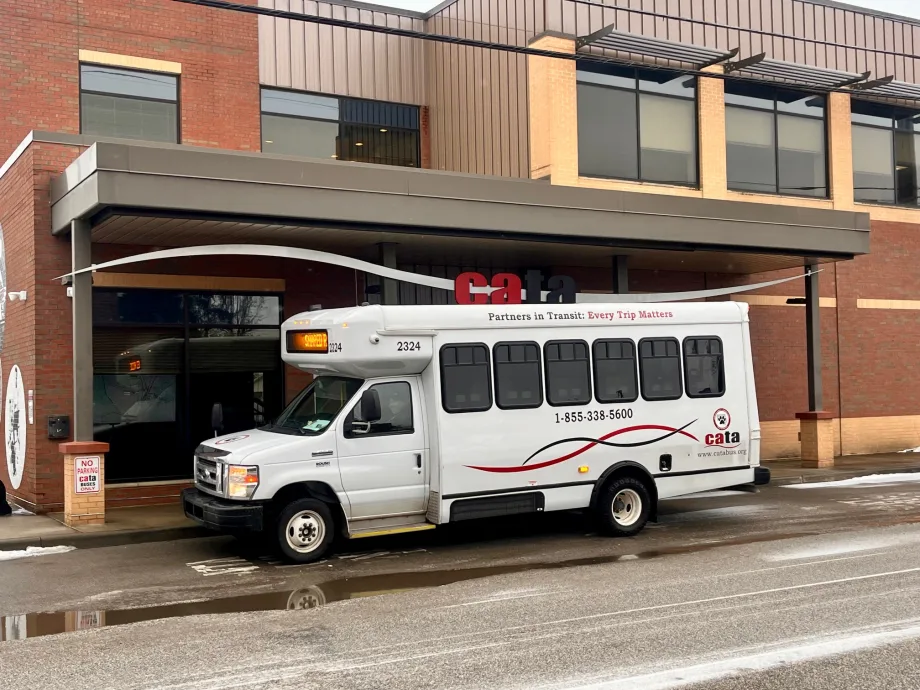
CATA services multiple counties with fixed routes, demand response, and microtransit services.
Photo: CATA/PERC
4 min to read
Pennsylvania's CATA adopted propane autogas to enhance fueling efficiency.
The use of propane autogas provided significant cost savings for CATA.
CATA reinvested these savings to improve community services.
*Summarized by AI
Between rising fuel and infrastructure costs, and growing demands for cleaner, more efficient transportation, public transit agencies across the U.S. are facing more challenges than ever.
While some may struggle to meet these demands, the Crawford Area Transportation Authority (CATA) in Northwest Pennsylvania saw these challenges as an opportunity to innovate.
Ad Loading...
After doing his research, Tim Geibel, executive director for CATA, found that by switching to a new fuel source for paratransit vehicles, they’d be able to not only save costs and increase their efficiencies, but also the organization would be able to better serve the community.
Propane autogas emerged as an energy source that checked all the boxes as a clean, efficient, and affordable option. Today, the transportation authority operates 20 propane autogas E-450s, which make up about 22% of the fleet.
A Smarter Refueling Strategy
CATA services multiple counties with fixed routes, demand response, and microtransit services. Before switching to propane autogas, CATA’s gasoline paratransit buses refueled at public gas stations, a process that added downtime, cost, and other liabilities.
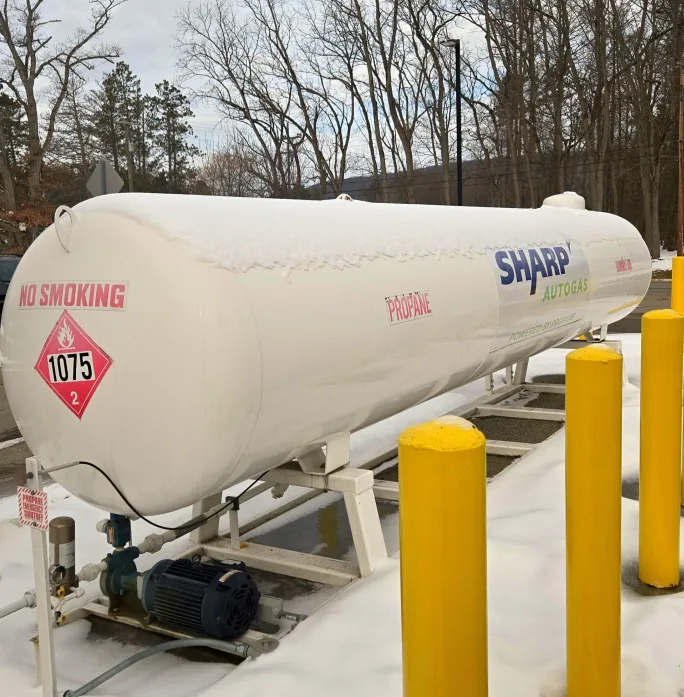
By working with Sharp Energy, the agency’s propane supplier, CATA was able to take control of the refueling process.
Propane autogas refueling infrastructure is customizable, scalable, and can be installed at a home base for easy access.
Ad Loading...
CATA chose to install two propane autogas refueling stations in Meadville and Oil City, which are leased from Sharp Energy at an affordable cost.
Each refueling infrastructure includes dispensers and a 2,000-gallon tank that is refilled on-demand multiple times per week, ensuring the fleet is never left without fuel. The propane autogas paratransit vehicles are equipped with a 60-gallon tank with a range performance of over 250 miles, making it easy for the fleet to complete any route before returning to base to refuel.
“We wanted a way to control the fueling process so it was safer, reduced downtime, and could be managed in-house,” said Geibel. “With propane, we eliminated the need for drivers to wait at gas stations, which improved safety and efficiency.”
By working with Sharp Energy, the agency’s propane supplier, CATA was able to take control of the refueling process.
Photo: CATA/PERC
Cost Savings that Drive Growth
In addition to affordable infrastructure, CATA has also been able to reduce its overall operational costs right from the start.
CATA took advantage of several funding opportunities, including the Alternative Fuels Incentive Grant (AFIG) from the Pennsylvania Department of Environmental Protection, to offset the upfront costs of the vehicles.
Ad Loading...
CATA has experienced further savings from fuel costs.
Each propane autogas vehicle saves approximately $13,000 annually compared to gasoline, amounting to nearly $194,000 in total fleet-wide savings per year. The organization also used the Alternative Fuel Tax Credit to further reduce costs.
These savings allowed the agency to expand services for the community.
One of the most impactful changes has been in Titusville, Pa., where CATA switched from underproductive fixed routes to a microtransit service. By reinvesting the cost savings from propane into this effort, the agency has seen a 125% increase in service.
A Cleaner, Healthier Ride
By transitioning to propane autogas, CATA has also significantly reduced its emissions to provide a cleaner ride for both passengers and drivers.
Ad Loading...
Propane autogas engines are 90% cleaner than Environmental Protection Agency standards, with virtually zero particulate matter, a 96% reduction in nitrogen oxides (NOx), and fewer greenhouse gases compared to traditional fuels.
Gary Harp, maintenance manager for CATA, has noticed a difference in the air quality while being around the vehicles.
“It doesn’t put out emissions that will harm you like a car will,” he said. “It won’t make you sick. It’s totally different coming out of the tailpipe. It’s much safer than traditional carbon fuels.”
Harp also noted that the oil from the propane autogas engine isn’t as dirty as gasoline, thanks to propane’s clean emissions profile.
“Gasoline oil comes out black from all the soot from the combustion system,” he said. “Propane is almost as clean coming out in 5,000 miles as it is once you put it in. It's always good to know that I'm helping clean the environment and helping maintain better emission standards for my kids.”
Ad Loading...
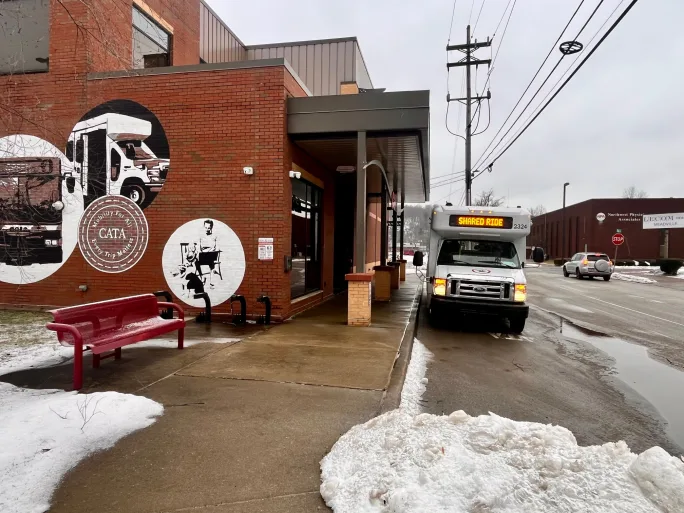
While some may struggle to meet these demands, the Crawford Area Transportation Authority in Northwest Pennsylvania saw these challenges as an opportunity to innovate.
Photo: CATA/PERC
Leading the Charge in Transit Innovation
The transition to propane autogas has not only streamlined operations for CATA, it reduced expenses and provided passengers with a cleaner, healthier ride.
“We’re a success story with propane autogas, and we’re happy to share our experience to help other rural communities reinvest their funding into operations instead of fueling costs,” said Geibel.
As CATA continues to grow and serve its communities, propane will remain a key part of its commitment to innovation and sustainability.
About the Author: Joel Stutheit is the sr. manager, autogas business development, at the Propane Education & Research Council. He can be reached at joel.stutheit@propane.com. For more information on propane autogas, visit propane.com/paratransit.
Quick Answers
CATA stands for the Centre Area Transportation Authority, a public transportation agency in Pennsylvania.
CATA has adopted propane autogas for its fleets to streamline fueling processes, leading to cost savings and reduced emissions.
Propane autogas is cost-effective, environmentally friendly, and helps reduce operational costs for transportation services.
The cost savings from using propane autogas have been reinvested into community services, enhancing CATA's public transportation offerings.
CATA's use of propane autogas not only saves costs but also reduces environmental impact, benefiting the community through better, more sustainable transportation services.
In METRO's latest installment, we also take a look at recent news from Masabi, Troman Industries, ioki, CCW, and more partnerships making headlines across the transportation sector.
The Call for Papers is now open, allowing transit agency professionals and industry experts to help shape the PTC educational program by submitting session ideas for consideration.
From breaking down data silos to preparing for AI, Strada360 CEO Steve Lassey discusses how transit agencies can use technology to improve operations, customer information, and long-term decision-making.
Eric Reese discusses how interoperability, open architecture, and modular design can help transit agencies control costs, reduce vendor lock-in, and upgrade technology without starting over.
John Hanlon shares how AlphaRoute is leveraging AI-powered technology to help paratransit providers optimize operations, support frontline staff, and enhance the rider experience.
CEO Magnus Friberg discusses Luminator’s shift toward becoming a digital partner, the growing importance of software and interoperability, and how AI can help agencies improve operations and passenger experience.
Reliability-Centered Maintenance helps transit agencies move beyond routine checklists to focus limited resources on the assets and failures that have the greatest impact on safety, reliability, and service.
More than 1,500 buses now feature upgraded technology designed to improve arrival predictions and provide free Wi-Fi, with deployment expected to reach nearly 2,000 buses by the end of 2026.
John Hroncich discusses BAE Systems’ modular and scalable approach, lessons learned from decades of real-world operations, and how agencies can identify electrification strategies that fit their fleets.