Why Paratransit Fleets are Choosing Propane-Powered Shuttles
For more than four decades, fleet owners have selected propane autogas as the energy solution for their vehicles to lower operating costs, clean up their communities with reduced emissions, and meet the performance needs of their duty cycles.
David Walters・Director, Autogas Business Development for the Propane Education & Research Council
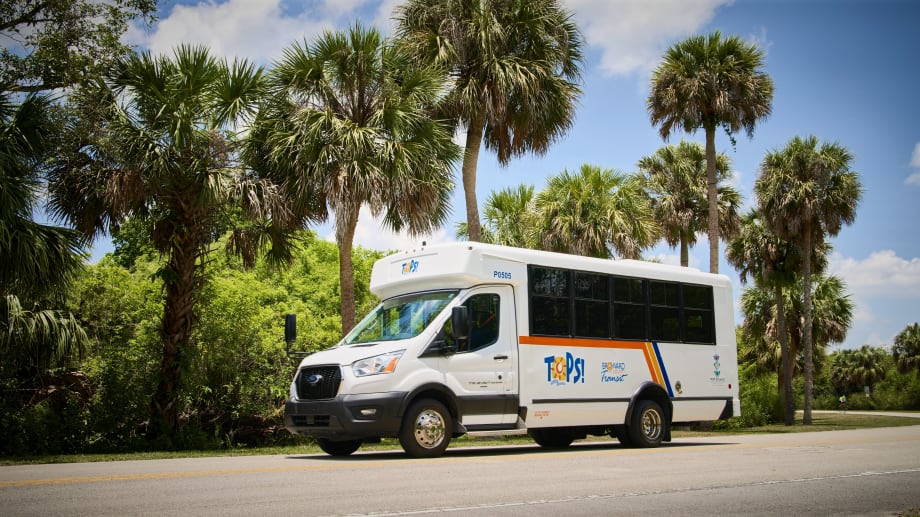
Each year, BCT provides more than 770,000 trips annually across the 471-square-mile county.
Photo: PERC
3 min to read
For more than four decades, fleet owners have selected propane autogas as the energy solution for their vehicles to lower operating costs, clean up their communities with reduced emissions, and meet the performance needs of their duty cycles.
From coast to coast, propane autogas technology is providing thousands of fleet owners with the confidence they need to make the next run.
Ad Loading...
This is especially true for paratransit fleets, which face unique challenges to reduce emissions, provide reliable service, and do it all in a fiscally responsible way using taxpayer money.
In recent years, two case studies from the Land of Enchantment Clean Cities Coalition (LOECC) and Broward County Transit have demonstrated the value propane autogas can provide to fleet owners.
Land of Enchantment Head-to-Head Study
In the LOECC study, several energy sources were put to the test.
The research compared gasoline, propane autogas, compressed natural gas (CNG), ethanol E85, and electric paratransit vehicles in head-to-head, real-world testing. Over the course of two years, Ford E350 shuttle buses were evaluated for fuel economy, cost-per-mile, and emission reductions.
The results found propane autogas offers paratransit fleets the lowest fuel and maintenance costs compared to other energy sources.
Ad Loading...
Specifically, it showed propane autogas lowered lifetime fuel and maintenance costs by $20,000 compared to the next alternative fuel.
The cost-per-mile for propane autogas was $0.08 cheaper than its closest competitor. It was the only alternative fuel that proved to be less expensive than gasoline.
And when compared to electric paratransit buses, propane autogas saved more than $43,000 in lifetime fuel and maintenance costs and approximately $0.16 per mile.
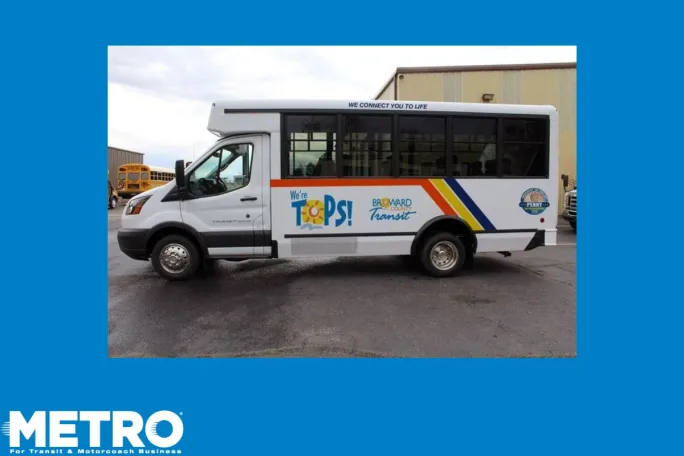
In 2015, BCT began transitioning its fleet from gasoline to propane autogas and now has 297 propane autogas shuttles.
Photo: BCT
Broward County Transit Case Study
On the other side of the country, Broward County Transit (BCT) in southeastern Florida has also leveraged the benefits of propane autogas in its paratransit fleet.
Each year, BCT provides more than 770,000 trips annually across the 471-square-mile county.
Ad Loading...
When the agency was working to select the right energy source, it needed a fiscally responsible option for the taxpayers; to provide a safe, clean, and healthy ride for residents; and be able to service the entire county especially in times of emergency. Propane autogas checked all the boxes.
In 2015, the agency began transitioning its fleet from gasoline to propane autogas and now has 297 propane autogas shuttles.
In the nine years since its first propane adoption, BCT has saved more than $14 million in taxpayer dollars. The fleet’s average cost-per-mile is $0.20 less than gasoline thanks to propane autogas’s low fuel and maintenance costs.
BCT also takes advantage of grants and tax credits to further reduce operating costs.
Since transitioning to propane autogas, BCT has also reduced its carbon emissions by 47 metric tons per bus. That translates to a total reduction of more than 14,000 metric tons across the fleet over nine years, or the equivalent of about 35 million miles driven in one gasoline-powered passenger car.
Ad Loading...
The shuttles also reduce harmful nitrogen oxide (NOx) emissions, which are known to exacerbate breathing-related issues. This commitment to operating a clean fleet is protecting both the environment and BCT’s passengers.
Another way BCT is going above and beyond for its residents is with its emergency response plan. During hurricane season, BCT’s propane autogas shuttles play a crucial role in evacuation efforts.
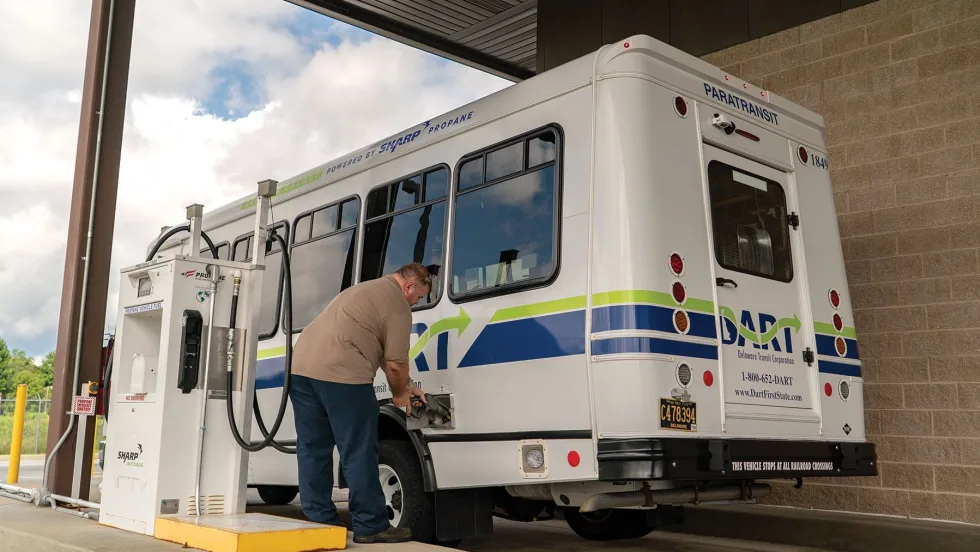
While gasoline stations are closed or out of fuel, and electric chargers are inoperable because the grid is down, BCT’s propane autogas shuttles are able to continue operating. The agency works with their propane supplier to have propane bobtails strategically placed in the county where BCT can easily refuel. With a range of almost 400 miles, these vehicles ensure uninterrupted service when it’s needed most.
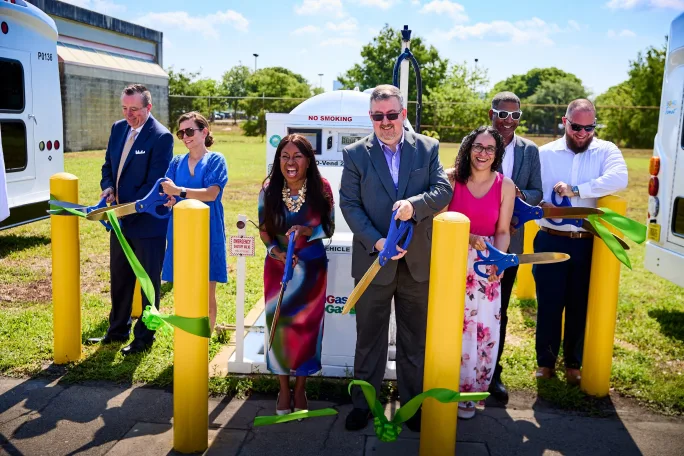
BCT and PERC recently celebrated the opening of a new propane autogas refueling station with a ribbon-cutting ceremony. The station will be the fifth in the county allowing the transit agency to reliably service all residents.
Photo: PERC
The Way Toward Increased Benefits
The findings of the LOECC study and the success story of BCT highlight why paratransit fleets are increasingly choosing propane-powered vehicles.
Offering the lowest total cost-of-ownership, reliability, and substantial environmental benefits, propane autogas is a compelling choice for paratransit operations looking to optimize performance and sustainability.
With $610 million available through the FY 2026 Buses and Bus Facilities Competitive Program and the Low or No Emission Grant Program, agencies must build a compelling case before the September 21 deadline that balances environmental compliance with operational feasibility.
The global cycling conference highlighted how cities are integrating bicycles into multimodal transportation networks, expanding cycle tourism and reshaping urban mobility.
Mike Bismeyer — often known as “The Kindness Guy” — has spent more than 17 years in public transit and mobility, serving in industry leadership roles, speaking across North America, and advocating for stronger workplace cultures. But his message doesn’t come from theory. It comes from lived experience.
Transport leaders from around the world gathered in Leipzig, Germany, for the 2026 International Transport Forum to discuss resilience, climate impacts, supply chains and the future of sustainable mobility.
Polis comprises cities and regions, as well as corporate partners, from across Europe, promoting the development and implementation of sustainable mobility. This year’s event had over a thousand attendees across various policy forums and an exhibition.
Across North America and beyond, transit agency officials are contending with a perfect storm of operational headaches and strategic challenges that hamper daily service and long-term progress.
Simply incentivizing electrification is not enough to make a meaningful impact; we must shift our focus toward prioritizing public transportation and infrastructure.