



South Dakota Transit Agencies Clear the Air with Propane Buses
With Mount Rushmore and the Black Hills, western South Dakota is one of the most scenic places in America. Its air is also cleaner, thanks to the recent addition by two regional transit agencies of environmentally friendly and economical buses fueled by propane.

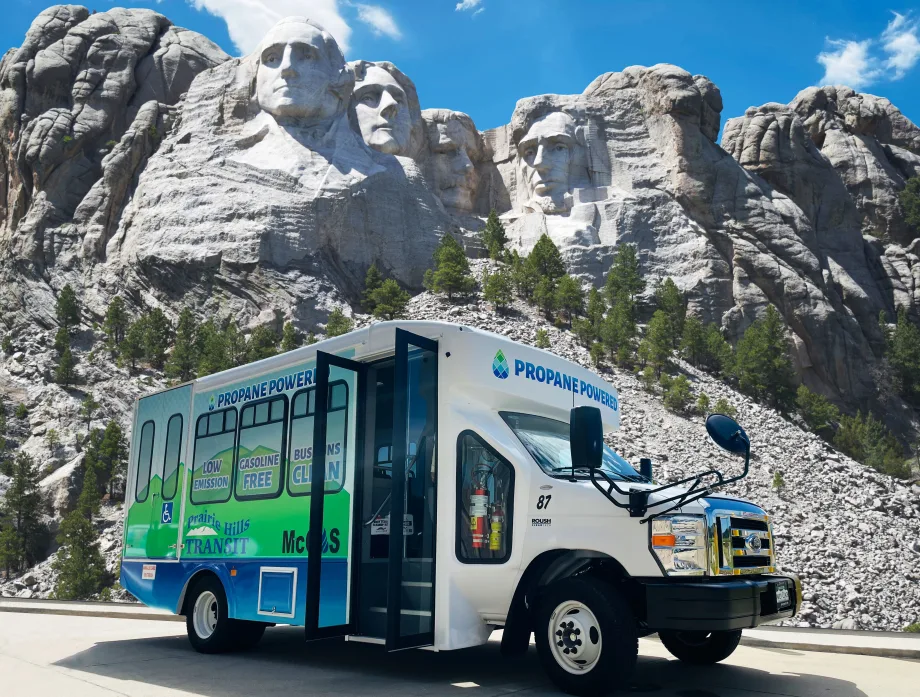
Prairie Hills Transit accessed readily available funding streams to support the purchase of the new buses.
Photo: ROUSH CleanTech
- South Dakota's scenic western region, including Mount Rushmore and the Black Hills, benefits from improved air quality.
- Two regional transit agencies have introduced buses powered by propane fuel.
- Propane-fueled buses are chosen for their environmental friendliness and cost efficiency.
*Summarized by AI
With Mount Rushmore and the Black Hills, western South Dakota is one of the most scenic places in America.
Its air is also cleaner, thanks to the recent addition of environmentally friendly, economical buses fueled by propane by two regional transit agencies.
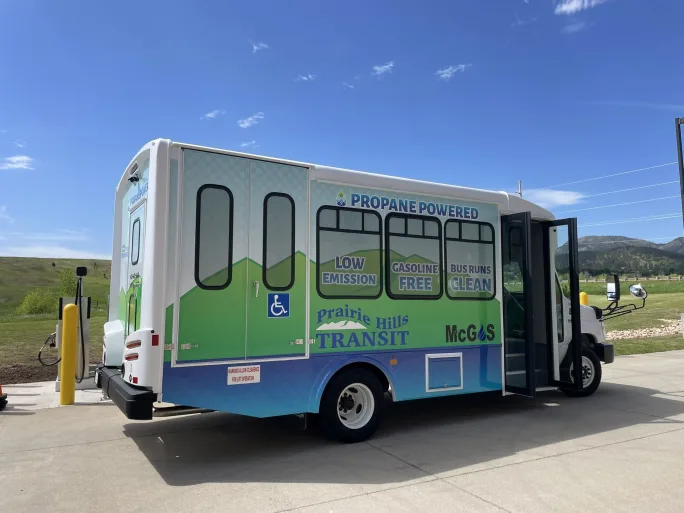
The ROUSH CleanTech Ford E-450 cutaway chassis buses are lower in all eight measured outputs by an average of 64%.
Photo: ROUSH CleanTech
New Propane Buses in S.D.
People’s Transit in Huron and Prairie Hills Transit in Spearfish unveiled their new propane buses in May.
The buses reduce daily operating costs by about 40% compared to gasoline and 50% compared to diesel. Further, cost savings come from reduced maintenance costs, particularly oil and filters.
But the real story is about reduced emissions. Propane is classified as a clean energy source by the U.S. EPA.
All of the new buses emit 90% less nitrogen oxide (NOx) emissions than the EPA’s strictest standard.
EPA and the California Air Resources Board (CARB) measure NOx, particulate matter, non-methane hydrocarbons, carbon monoxide, methane, formaldehyde, and nitrous oxide.
The ROUSH CleanTech Ford E-450 cutaway chassis buses are lower in all eight measured outputs by an average of 64%.
“The new propane buses will have a positive impact on the environment because they reduce harmful emissions, especially when compared to our gasoline and diesel buses,” said Gayle Kludt, People’s Transit executive director.
The agency now operates six propane buses, having transitioned 80% of its in-town fleet to propane in 2024.
Added Barbara Cline, executive director of Prairie Hills Transit, which now operates six propane buses, 10% of its fleet: "Prairie Hills Transit is on the cutting edge of public transit operation. We’ve done extensive research and believe that the use of propane is an excellent way to reduce emissions.”
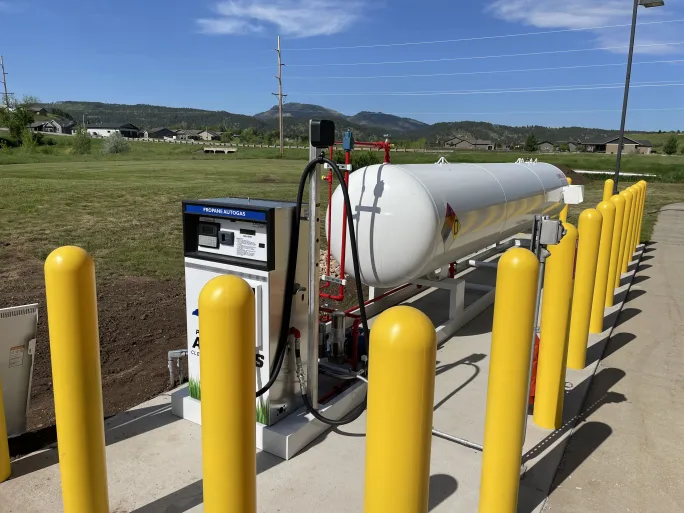
While the nonprofit agencies’ propane buses are the first in South Dakota, dozens of transit agencies around the U.S. operate them, making propane the industry’s leading alternative fuel.
Photo: ROUSH CleanTech
Funding the Transition
Both People’s Transit and Prairie Hills Transit have accessed readily available funding streams to support the purchase of the new buses.
Funding was primarily done with Section 5339 federal funding, Kludt said.
While the nonprofit agencies’ propane buses are the first in South Dakota, dozens of transit agencies around the U.S. operate them, making propane the industry’s leading alternative fuel.
Quick Answers
Western South Dakota is home to Mount Rushmore and the Black Hills, making it one of the most scenic places in America.
*Summarized by AI
More Blog Posts
Building a Winning FTA Grant Proposal: Why Propane Autogas is the Pragmatic Choice for Fleet Resilience
With $610 million available through the FY 2026 Buses and Bus Facilities Competitive Program and the Low or No Emission Grant Program, agencies must build a compelling case before the September 21 deadline that balances environmental compliance with operational feasibility.
Read More →
Velo-city Conference 2026: Latest Trends in Cycling as Part of Urban Mobility
The global cycling conference highlighted how cities are integrating bicycles into multimodal transportation networks, expanding cycle tourism and reshaping urban mobility.
Read More →
Kindness Isn’t Soft...It’s Strategic.
Mike Bismeyer — often known as “The Kindness Guy” — has spent more than 17 years in public transit and mobility, serving in industry leadership roles, speaking across North America, and advocating for stronger workplace cultures. But his message doesn’t come from theory. It comes from lived experience.
Read More →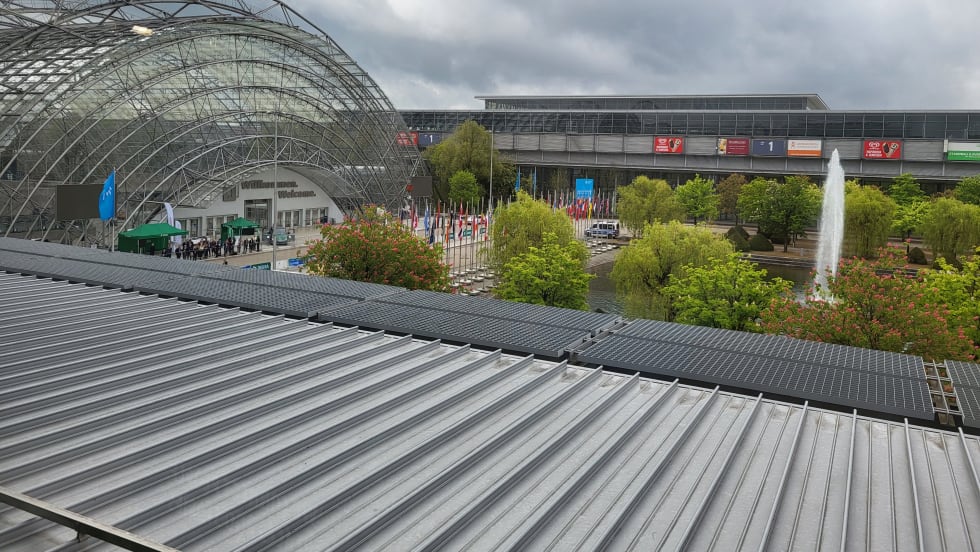
Inside ITF 2026: Transport Reacts to A Challenging World
Transport leaders from around the world gathered in Leipzig, Germany, for the 2026 International Transport Forum to discuss resilience, climate impacts, supply chains and the future of sustainable mobility.
Read More →
Every Ride Tells a Story — But You’re Not Just Selling the Ride
You’re selling the moment, the meaning, and the emotion behind it.
Read More →
How Digital Signage is Reshaping the Traveler Experience at Transportation Hubs
What was once a landscape of static signs has evolved into a responsive, immersive environment powered by real-time visual communication.
Read More →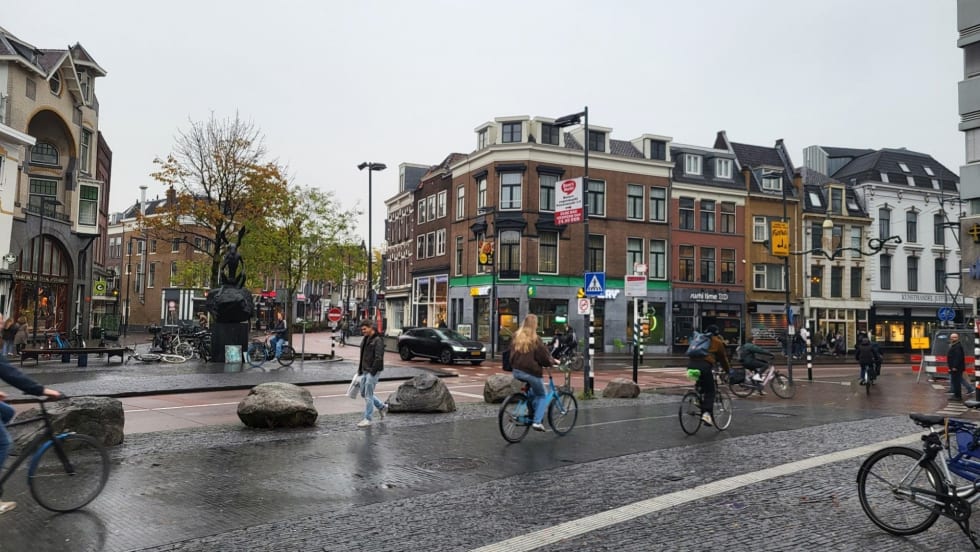
Latest Trends in Urban Mobility from Polis Conference 2025
Polis comprises cities and regions, as well as corporate partners, from across Europe, promoting the development and implementation of sustainable mobility. This year’s event had over a thousand attendees across various policy forums and an exhibition.
Read More →
Why Transit Leaders Require Better Tools for Operational Clarity In Today’s Tech-Fragmented Environment
Across North America and beyond, transit agency officials are contending with a perfect storm of operational headaches and strategic challenges that hamper daily service and long-term progress.
Read More →
The Powerless Brokers: Why California Can’t Build Transit
It is no secret that transit in the U.S. is slow and expensive to build.
Read More →
Why Transport Sustainability Should Focus on People Instead of Cars
Simply incentivizing electrification is not enough to make a meaningful impact; we must shift our focus toward prioritizing public transportation and infrastructure.
Read More →