




Speeding Ahead: California HSR Releases Final EIR to Finalize Project Alignment into San Francisco
Project Looks to Bring High-Speed Rail to California’s High Desert
The proposed 54-mile line would connect Palmdale to the Town of Apple Valley in under 30 minutes with reliable daily frequencies. The system would also enable riders to connect to Las Vegas via the Brightline West high-speed rail system in about 110 minutes.
September 8, 2022
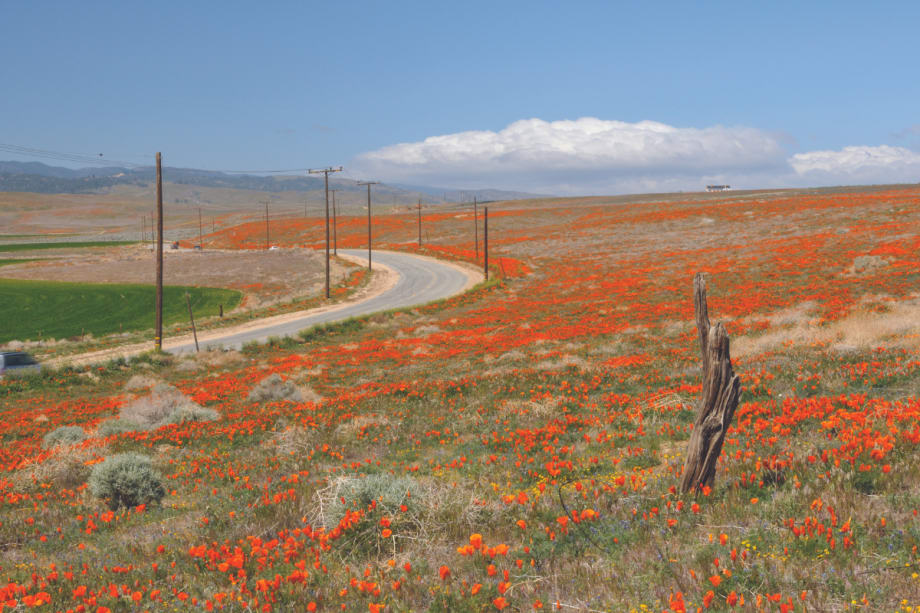
With the building of roads being an issue, the line is expected to serve 35,000 people per day to connect to work and other necessary travel.
Photo: HDC
7 min to read
Following some hiccups, high-speed rail in California continues to move closer to a reality. Proof of that point is what is being dubbed the High Desert Corridor (HDC) — an estimated $4.3 billion project, which is currently projected to launch in 2030, that will also connect to the California High-Speed Rail system, the Metrolink commuter rail system, and the Las Vegas High-Speed Rail project.
The proposed 54-mile line would connect Palmdale to the Town of Apple Valley in under 30 minutes with reliable daily frequencies on trains projected to be able to hit 220 miles per hour, although the actual speed is more likely to hit 185 miles per hour, according to HDC officials. The system would also enable riders to connect to Las Vegas via the Brightline West (formerly the DesertXpress or XpressWest) high-speed rail system in about 110 minutes.
“The High Desert Corridor Rail Project is a bold and critical component that supports one of my consistent priorities: transforming regional mobility for our residents and labor force,” says HDC Joint Powers Authority (JPA) Chair Kathryn Barger. "Based on the transportation goals of our state and federal governments, I believe there’s a lot of synergy when it comes to this project. It certainly checks all the boxes.”
Project Highlights
Palmdale and Apple Valley have a combined population of nearly one million people, with a total of two million jobs falling within the geographic region that comprise the high desert communities of both Los Angeles and San Bernardino counties. With the building of roads being an issue, the line is expected to serve 35,000 people per day to connect to work and other necessary travel.
"Residents have been flocking to this area for more than 30 years because it offers some of the most affordable housing in the region," says Barger. "This trend will continue well into the future. But as the region continues to grow, so will mobility challenges as many tens of thousands of individuals will engage in commutes to the greater L.A. basin for employment, education, and other opportunities."
Arthur Sohikian, executive director of the HDC JPA, explains the project was environmentally cleared in 2016 as a multimodal corridor that would include a highway connecting Interstate 15 to the SR138, SR18, and SR14 freeways, with a high-speed rail system in the median. In 2020, however, Caltrans determined a no build for the project. But that didn’t necessarily kill the project altogether.
“In 2018, the board of directors started to pursue the high-speed rail line, knowing that building a new highway project in the high desert area would be difficult to accomplish in today's world,” Sohikian explains. “With this new reality, the focus became the high-speed rail project, which coincides with Brightline West developing the high-speed rail project to Las Vegas.”
Sohikian adds in addition to providing connections from Palmdale to Apple Valley, the HDC high-speed rail project would serve as a connector to the California high-speed project to the west coming from Bakersfield to Palmdale, as well as provide a link to Brightline West on the eastern end at Victor Valley, which would take you on to Las Vegas or to Rancho Cucamonga.
“Our connection to Brightline West would be a station in the Town of Apple Valley in San Bernardino,” he says. “Keep in mind, the California high-speed rail project from Bakersfield to Palmdale has been environmentally cleared, so if California were to put money toward it, the project could go into final design and then into construction.”
The Benefits
Nearly all of the 54-mile route of the HDC high-speed rail project is within low-income communities in the high desert communities of Los Angeles and San Bernardino Counties.
Some highlights of the communities served by the line include:
About 90% of the population along the corridor between Palmdale and the Victor Valley is rural seeking mobility connections to Urban Centers.
The entire area of the project falls within the low-income communities and households as defined by AB 1550, with a significant portion also falling within the disadvantaged and low-income communities as defined by SB 535.
There are 15 opportunity zones along High Desert Intercity HSR Corridor. Nine opportunity zones in San Bernardino County and six in Los Angeles County.
“In the past couple of years, these underserved communities are being highlighted as criteria to achieve grant funding from states and the federal government,” Sohikian explains. “So, right now we feel fortunate and unfortunate — unfortunate that we have these underserved communities that need this assistance, but at the same time, fortunate that the governments are starting to realize we should invest in those communities that have not had traditional investment. Public Officials must all do better to provide mobility options to underserved communities.”
Sohikian adds in addition to the economic investment in transportation, which will shorten commutes and connect people with jobs, investment in the areas could provide over $12 billion in economic activity during project development and construction. Also, he says it could provide a level of attraction for some businesses looking to relocate.
“This high-speed rail line would serve many first line responders and essential workers to reduce their current three-hour commute to one hour, which is a life changer,” Sohikian says.
State of the Project
The HDC’s current FY22 budget is fully funded to achieve shovel-ready federal and state environmental clearances with a Record of Decision from the Federal Railroad Administration. The Project is funded in part by the voter-approved Los Angeles County Measure M Expenditure Plan with nearly $170 million in the current fiscal years and $1.866 billion in later years that could leverage federal, state, and private funds.
“Funding for Measure M is forecasted out to 2063,” says Sohikian. “Now, 2063 might seem very far away, but in today’s world of finance, we believe the financial analysis will show there is a way to leverage the taxpayer monies put up by Los Angeles County with matching federal and state dollars. There is also the potential for public-private partnerships, so, there are a lot of opportunities still to come.”
The environmental clearance process is scheduled to be completed by December 2022, with the next steps being to initiate preliminary engineering and purchase of right-of-way along the proposed alignment before eventually moving to construction.
Sohikian explains the project stakeholders are also in the process of reconfiguring the joint powers authority’s board after the current agreement dissolved in June.
“In March 2022, the County of San Bernardino voted to leave the current authority and focus on the Victor Valley Brightline West portion, so we are now reconstituting the board of directors,” he says. “Currently, the cities of Adelanto and Victorville in San Bernardino County and the cities of Lancaster and Palmdale in Los Angeles County, and Los Angeles County have approved joining the new JPA, Los Angeles Metro will vote on joining the new JPA on August 25.”
As for the public’s appetite for a high-speed rail project, it is an interesting time for a project with this many benefits to the communities that would be served to come along as other projects around the nation, especially in California, have hit a slew of roadblocks.
Sohikian says it remains to be seen whether that negative media attention will prohibit the HDC high-speed rail project from moving forward.
“It’s a great question, and I think brighter minds will be debating that and continue to debate that just as people will continue asking if high-speed rail can be successful in California,” says Sohikian. “Right now, we are trying to carry forward on what the L.A. County voters passed in 2016 with Measure M and create more multimodal corridors. With greenhouse gas emissions and other environmental concerns remaining at the forefront, it’s clear that people are losing their desire to expand our current freeway system and are looking for options, especially in areas where expansion of the current highway system is untenable.”
Environmental Benefits of the High-Desert Corridor project:
The high-speed rail project is a zero-emission rail technology.
The project ridership is estimated to start at 3.1 million riders annually and is projected to grow to 14 million riders annually by 2050 when the connections to the California HSR project and Brightline West to Las Vegas are completed, which will thereby reduce vehicle miles traveled from 371 million vehicle miles traveled (VMT) per year at the start to saving 1.4 billion vehicle miles per year by 2050.
The annual reduction in vehicle miles traveled will result in over 170,000 MTCO2e GHG emission reductions each year within and beyond the High Desert Communities.
According to the EPA’s Greenhouse Gas Equivalencies Calculator20, when this project is fully functional and connecting to the state and Las Vegas high-speed lines, the GhG reduction in CO2 this project will provide is equivalent to not burning 10 billion pounds of coal.
Environmental benefits are directly aligned with both California and Federal laws to reduce VMT and address global climate change.
Subscribe to Our Newsletter
More Rail

New York MTA Advances Final Contract for Second Avenue Subway Expansion
Contract Four is the largest in the Second Avenue Subway Phase 2 project and includes construction of station infrastructure, tracks, and signals for the subway expansion, MTA officials said. Work on Contract Four will begin in 2027.
Read More →
San Diego MTS Breaks Monthly Trolley Ridership Record
Agency officials said July’s ridership indicates MTS’s continued recovery from the pandemic.
Read More →
Report Examines NJ TRANSIT Reliability, Funding Challenges
The Garden State Initiative analysis examines the roles of Amtrak infrastructure, fleet management, and agency operations while recommending a more performance-based approach to improving reliability.
Read More →
Stadler, CapMetro Sign Long-Term Rail Fleet Support Agreement
Beginning in 2027, Stadler will provide on-site technical expertise, spare parts support, training, and obsolescence management to help extend the reliability and longevity of CapMetro’s GTW fleet.
Read More →
Biz Briefs: Alstom Lands Canadian Contract, LYT to Supply California TSP, and More
In METRO's latest installment, we take a look at recent news from Complete Coach Works, Beep, FlixBus, and more partnerships making headlines across the transportation sector.
Read More →
CATS Gold Line Marks 5 Years of Service, 2.8M Passenger Trips
With a six-mile expansion planned, the Charlotte streetcar is positioned to connect more neighborhoods and major transit hubs across the region.
Read More →
Why Simulating Pedestrian Movement Has Become Essential for Modern Rail Stations
Pedestrian microsimulation is helping rail planners identify bottlenecks, test station designs, and prepare complex transit hubs for growing passenger volumes.
Read More →
Amtrak Begins Major Construction at New York’s Sunnyside Yard
The new maintenance facility will support Amtrak’s Airo trainsets while improving maintenance efficiency and turnaround times in New York.
Read More →
Chicago Leaders Unveil Plans for O’Hare Airport Express Train
The privately developed project would offer a 15-minute trip between downtown and O’Hare’s Terminal 2, with trains operating every 15 minutes on a dedicated track. The service would use battery-electric trains and three existing freight rail rights-of-way.
Read More →
OCTA Maps Out 30-Year Strategy to Protect Coastal Rail Corridor
The draft feasibility report identifies strategies to protect the coastal rail line for decades as the agency continues near-term stabilization and sand placement efforts.
Read More →