



Rail Systems Turn to Improved Infrastructure, Tech to Combat Fare Evaders
To stem revenue losses from passengers not paying fares, two transit agencies are implementing new solutions to limit, and hopefully, eliminate fare evaders on their rail systems.

Keolis revealed it is creating a comprehensive strategy to recoup up to $24 million of the lost funds.
Photo: Keolis
To stem revenue losses from passengers not paying fares, two transit agencies are implementing new solutions to limit, and hopefully, eliminate fare evaders on their rail systems.
Keolis, rail service operator for the Massachusetts Bay Transportation Authority (MBTA), conducted a survey on MBTA’s system and discovered it was losing up to $35 million annually as a result of fare evasion.
In response, Keolis revealed it is creating a comprehensive strategy to recoup up to $24 million of the lost funds, said Peter Williams, who is heading up the initiative for the company. A critical element to the strategy is gating stations that account for a high percentage of journeys. The gates would only allow passengers access to the stations if they have a valid ticket. Keolis is attempting to match other railroad markets where fare evasion is typically less than 5% — the MBTA has fare evasion levels of up to 25%.
“The introduction of gates will mean that passengers will need to have gate-readable tickets, and therefore, the plan involves enabling passengers to buy these tickets more easily than at present,” said Williams. “The plan includes investment in ticket-issuing equipment for our conductors and the introduction of ticket-vending machines at more stations along with other measures.”
Regarding the $24 million in recouped funding, Williams said the number was based on the analysis of the nature of the fare evasion and the extent to which Keolis could address it by applying the gating strategy. Williams pointed to a Keolis commuter line in Lyon, France, as an example, where fare evasion was reduced from 14% to 6%.
The MBTA survey — conducted in early March — collected passenger’s journey information, which included whether or not they owned, or were planning to buy, a legitimized ticket.
The gathered data revealed between 15% and 20% of passengers were not paying the correct fare, equating to the loss of up to $35 million, he said. The value of fare evasion was calculated for all categories using annual journey numbers and average fare data.
Another rail system experimenting with ways to combat fare evasion is the Los Angeles County Metropolitan Transportation Authority (Metro). Metro is focusing on two technological innovations: video analytic software and handheld Mobile Phone Validators (MPV), according to Alex Wiggins, Metro executive officer, systems security and law enforcement.
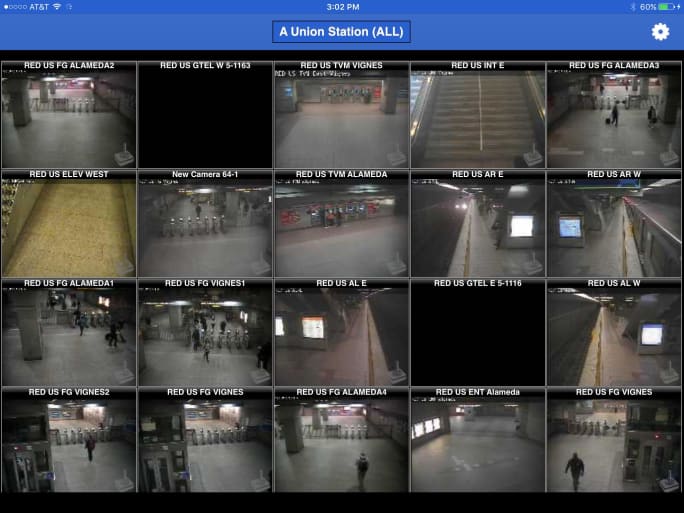
Metro is focusing on two technological innovations: video analytic software and handheld Mobile Phone Validators (MPV)
Photo: LA Metro
The video analytic software will enable Metro’s camera surveillance system to spot anomalies. So, in addition to being able to protect the public by spotting conflicts or suspicious packages, the software solution can also prevent fare evasion, Wiggins said. In areas with gates, the cameras would identify people who don’t use a TAP smart card, hop over turnstiles or walk through exit gates.
“We can, in real-time, use [the data] to intervene and have a fare inspector make contact with that individual,” said Wiggins. “But what we’re really looking for are patterns. So, where do we have the highest frequency of fare evasion [and] what time is it occurring, and then, we can dispatch resources to appropriately intervene and ultimately change behavior.”
Meanwhile, the MPV devices will be issued to all of Metro’s deputies and security personnel who conduct fare enforcement duty.
“The mobile phone validator allows us to essentially tap against an active TAP card and see, based on what’s read on the card, the last time that card was used to access our transit system,” said Wiggins.
When the MPVs have determined the passenger hasn’t tapped, it is able to deduct the fare directly from the card.
“What we’re really after is changing behavior rather than strictly enforcement. There are those cases where someone has essentially evaded a fare, and if there aren’t means for them to pay their fare, then we issue a citation as appropriate,” said Wiggins.
In an effort to change fare evasion behavior, the MPV can also utilize the LA Metro Transit Watch App, which enables patrons to communicate directly with Metro in real-time, if they want to report an incident in the field.
Both innovations are still in the pilot stage, but Wiggins said the MPVs are slated for introduction in the late summer or early fall as Metro moves into a new contract model with its law enforcement team. He also said that Metro is pleased with the video systems solution, and has asked his staff to begin acquiring the license to have the system cover major stations.
More Rail

Amtrak, CN Reach Agreements to Strengthen Passenger Rail Service, Safety
The agreement resolves a more than decade-long proceeding before the Surface Transportation Board concerning the terms and conditions for Amtrak services, such as the City of New Orleans, Illini/Saluki, and Wolverine.
Read More →
New York MTA Advances Final Contract for Second Avenue Subway Expansion
Contract Four is the largest in the Second Avenue Subway Phase 2 project and includes construction of station infrastructure, tracks, and signals for the subway expansion, MTA officials said. Work on Contract Four will begin in 2027.
Read More →
San Diego MTS Breaks Monthly Trolley Ridership Record
Agency officials said July’s ridership indicates MTS’s continued recovery from the pandemic.
Read More →
Report Examines NJ TRANSIT Reliability, Funding Challenges
The Garden State Initiative analysis examines the roles of Amtrak infrastructure, fleet management, and agency operations while recommending a more performance-based approach to improving reliability.
Read More →
Stadler, CapMetro Sign Long-Term Rail Fleet Support Agreement
Beginning in 2027, Stadler will provide on-site technical expertise, spare parts support, training, and obsolescence management to help extend the reliability and longevity of CapMetro’s GTW fleet.
Read More →
Biz Briefs: Alstom Lands Canadian Contract, LYT to Supply California TSP, and More
In METRO's latest installment, we take a look at recent news from Complete Coach Works, Beep, FlixBus, and more partnerships making headlines across the transportation sector.
Read More →
CATS Gold Line Marks 5 Years of Service, 2.8M Passenger Trips
With a six-mile expansion planned, the Charlotte streetcar is positioned to connect more neighborhoods and major transit hubs across the region.
Read More →
Why Simulating Pedestrian Movement Has Become Essential for Modern Rail Stations
Pedestrian microsimulation is helping rail planners identify bottlenecks, test station designs, and prepare complex transit hubs for growing passenger volumes.
Read More →
Amtrak Begins Major Construction at New York’s Sunnyside Yard
The new maintenance facility will support Amtrak’s Airo trainsets while improving maintenance efficiency and turnaround times in New York.
Read More →
Chicago Leaders Unveil Plans for O’Hare Airport Express Train
The privately developed project would offer a 15-minute trip between downtown and O’Hare’s Terminal 2, with trains operating every 15 minutes on a dedicated track. The service would use battery-electric trains and three existing freight rail rights-of-way.
Read More →