



Retrofitting Garages for Zero-Emissions Buses
Existing maintenance garages can be retrofit to handle electrics, but the infrastructure upgrades required can be significant.

Rendering of TriMet's Powell Bus Operations & Maintenance Facility, which at full buildout, will include approximately 278 electric buses.
Art courtesy Stantec

Rendering of TriMet's Powell Bus Operations & Maintenance Facility, which at full buildout, will include approximately 278 electric buses.
Art courtesy Stantec
The switch is on to electric buses. North American communities might lag behind those of other industrialized countries where electric buses are commonplace, but perhaps not for long. The shift to alternative fuels for buses began years back, but often in North America that switch was to LNG- and CNG-powered buses, which offered better greenhouse gas emissions performance than conventional gasoline or diesel buses.
Now, municipalities are reacting to the growing interest in sustainable practices from their constituents and ridership and looking for ways to harness new technologies to further reduce environmental impact. Many agencies across North America are phasing in, or looking to phase in, battery-electric buses (BEBs) and hydrogen fuel-cell electric buses (FCEBs) — collectively known as zero emissions buses (ZEBs) — as replacements for their aging buses, in some cases with plans to replace their entire bus fleets. We’re seeing this as a rising trend.
There are already more than 400 BEBs in North America at present, 150 of those operating in California. ZEBs offer undeniably outstanding performance in terms of on-the-road emissions, with any emissions being at the source of power to the grid. That’s a huge plus for communities going green.
What else makes ZEBs attractive? For municipalities, there’s a sense that less infrastructure change will be necessary to get them on the road. Long term, ZEBs offer operational cost savings that help justify the investment needed and make budgets less subject to fluctuations in fuel costs. A Columbia University study estimates that “electric buses cost about $300,000 more than diesel buses, [but] annual savings are estimated at $39,000 per year over the 12-year lifetime of the bus, excluding health care cost benefits. The resulting health benefit to the populous of the city from the reduction of respiratory and other diseases is estimated at $150,000 per bus based on EPA data.” Together, those equate to over $600,000 per bus savings, back to the service provider, not including inflation increases over that 12-year period. True savings could be between $750,000 and $1 million.
Operators and service people working on diesel buses are breathing diesel fumes for hours each day, which impacts their health negatively. Electric buses have no such effects. ZEBs are also quieter and passengers tend to find that makes a more pleasant ride.
While facilities and operations need to be able to support these new technologies, implementing BEBs doesn’t always necessitate new buildings. Existing maintenance garages can be retrofit to handle electrics, but the infrastructure upgrades required can be significant. The governments and communities that are ready to embrace this new technology must understand the aspects of retrofitting and the choices they need to make to prepare their current building facilities to handle BEBs.
Transit experts can help agencies strike a balance between depot charging, which is done at the garage or facility, and on-route charging. (Below)
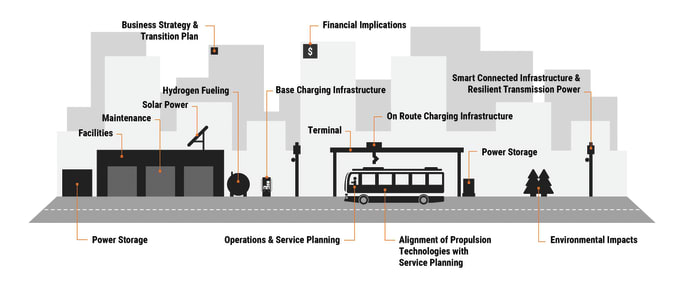
Here are eight factors to consider when retrofitting bus facilities for BEBs:
1. Charging system type
The biggest decision that will affect the space is the choice of charging system type. Overhead systems — in which a stationary pantograph makes contact with the bus from above, or a bus-mounted pantograph makes contact with overhead charging rails — are one option and work well with buses stored inside or under a canopy, but require equipment mounted on the roof or the bus, which may necessitate substantial structural modification to a building and roof structure or add cost and weight to BEB procurements. Floor-mounted systems require a pedestal for charging. Inductive systems are also a space-saving option, but both of these require modifications to the concrete slab. Inductive systems may use a pad that the bus can be driven over — similar to a cell phone charing pad — so that they can be inductively charged while being serviced.
There’s also consideration of electrical current type. Will the bus require AC or DC current? Both types of buses and charging systems are available from manufacturers. We believe the industry is settling on fast DC as the preferred current type, but that debate is ongoing as charging standards evolve.
2. Depot (Facility) versus On-Route charging
The big debate amongst BEB providers and transit agencies today is around battery range and where to charge. By taking a close look at route needs and facility constraints, transit experts can help agencies strike a balance between depot charging, which is done at the garage or facility, and on-route charging — fast charging done along the route. Depot charging requires facility modifications to accommodate the new equipment and may also increase electricity costs due to demand charges. On-route charging can be disruptive to public space and require higher peak power needs in the areas where it is installed. Route charging is also limited in the amount of time available to charge, as on-route dwell time translates into increased revenue hours, operational cost, and customer inconvenience.
3. Number of chargers needed
How many charging stations will be required in the space? This will depend on the number of buses in use, charging system type and arrangement of space. If just three to four service lanes are available and pad charging is in use, then it’s likely that only three to four chargers can be installed. Moreover, there are different rates of charging available. Is the bus sitting overnight for a standard depot charge or going to be charged quickly through a fast-charge connection? Charging infrastructure can also be phased in to accommodate an incremental bus fleet change-over, as long as a long-term plan and associated space needs are established initially.
4. Circulation and logistics
While circulation in existing facilities should suffice for the new buses, assuming current circulation is good and no significant change in vehicle size, some modifications may be required so that zero-emission buses can efficiently access charging, the service cycle, or parking. When buses are charging in the facility, they are essentially out of circulation, as opposed to a diesel bus, which is available immediately after fueling. Transit systems may need to assess their spare ratio to meet service needs. Storage and service circulation patterns will also need to be reviewed and possibly modified since ZEBs must be stored in proximity to charging stations, depending on the charging system type chosen.
5. Power infrastructure
Significant changes will be required both inside and outside in retrofitting garage facilities for ZEBs. ZEBs require additional equipment in the form of charging cabinets and upgraded power modifications to transformers, switchgear, backup power generation, and the service entry to function. Both inside the facility and out, conduit runs or underground service banks will most likely need reworking and upsizing. But, what about the grid? Charging an entire fleet of BEBs requires a lot of power. Can the grid support that without a significant transformer or utility service upgrade? In some cases, facilities need to be fitted with additional stationary battery storage to help buffer the charging demand on the grid.

Existing maintenance garages can be retrofit to handle electrics, but the infrastructure upgrades required can be significant.
6. Maintaining an operational facility
Customer service doesn’t shut down during retrofitting, so the transition to electrical bus facilities must be phased in, and safe access for workers during that time needs to be prioritized. Work conditions in these facilities must continue to meet federal regulations, as well as contractual and union or outside operator agreements. The greatest disruption tends to take place in areas where buses move — the service lane or garage — so an alternative circulation pattern will most likely be required. This is where charging station type selection comes into play; installation of an overhead system may be less disruptive, while adding charging below grade will require cutting slab and intense coordination.
7. Workforce training
Personnel must also be trained to service and operate the new electric buses and charging units while they are being phased in. A new workforce training and safety program may be needed to train mechanics to work on high voltage vehicles. Collective bargaining and work rules may be impacted by this change and authorities may need to renegotiate these agreements.
8. Timetable
Between procurement, design, construction, and turnover, a new facility for electric buses is often a three-year process. Renovation or retrofitting of an existing facility should be quicker, but still runs about 18 to 24 months minimum. Most agencies making this switch, however, tend to do it incrementally; they buy a few buses at a time as part of their annual fleet retirement plan. Incremental implementation can be easier, but doesn’t change the basic requirements mentioned above for ZEBs.
While ZEBs are currently more expensive to buy than diesels, there’s some help available with those start-up costs. There are government grants from the Federal Transit Administration, and various government entities in Canada that prioritize fleet upgrades and bus replacement. Edmonton, Alberta, for example, is on track to purchase dozens of electric buses with grant funding from both the province and the federal government. The Los Angeles County Metropolitan Transportation Authority, with 25 ZEBs arriving in 2019, plans to fully convert its 2,200-bus fleet by 2030. California’s Clean Air Resource Board (CARB) regulations impose a ZEB purchase mandate that begins in 2023. To understand the true value, the costs to convert must be calculated on the lifecycle of the vehicle, not just first costs.
So what’s the catch with electric buses? As with the introduction of any new technology into real world conditions, there’s a learning curve to navigate. There are challenges to be worked out around charging in extreme heat and cold, driving in hilly terrain at full passenger capacity, and planning for long-range routes.
That said, as BEB technology continues to improve, there will be increased interest in implementing them. The environmental and health benefits of BEBs are undeniable, and we expect that BEBs will eventually be deployed as a dependable, full fleet operating system.
Ken Anderson, based in Arlington, Va., is the Transit Sector leader for Stantec’s Buildings group. Stantec’s Transit Advisory Lead Sasha Pejcic is based in Toronto.
More Zero Emissions
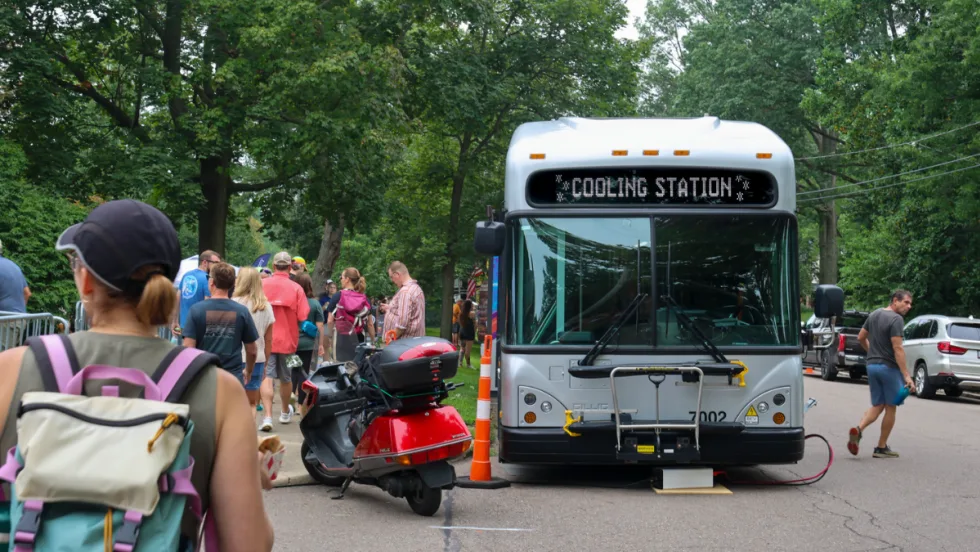
Ohio’s METRO RTA Turns Electric Buses into Mobile Power Sources at PorchROKR
See how three Gillig battery-electric buses powered festival stages while the agency’s new Park & Ride service carried approximately 1,000 attendees, demonstrating another potential use for transit agencies’ electric fleets.
Read More →
CALSTART and Forth Combine to Form Catalyst Mobility
The new name represents a renewed vision for the nonprofit focused on advancing clean, equitable, and affordable transportation solutions that move people and goods.
Read More →
Building a Flexible Path to Transit Electrification
John Hroncich discusses BAE Systems’ modular and scalable approach, lessons learned from decades of real-world operations, and how agencies can identify electrification strategies that fit their fleets.
Read More →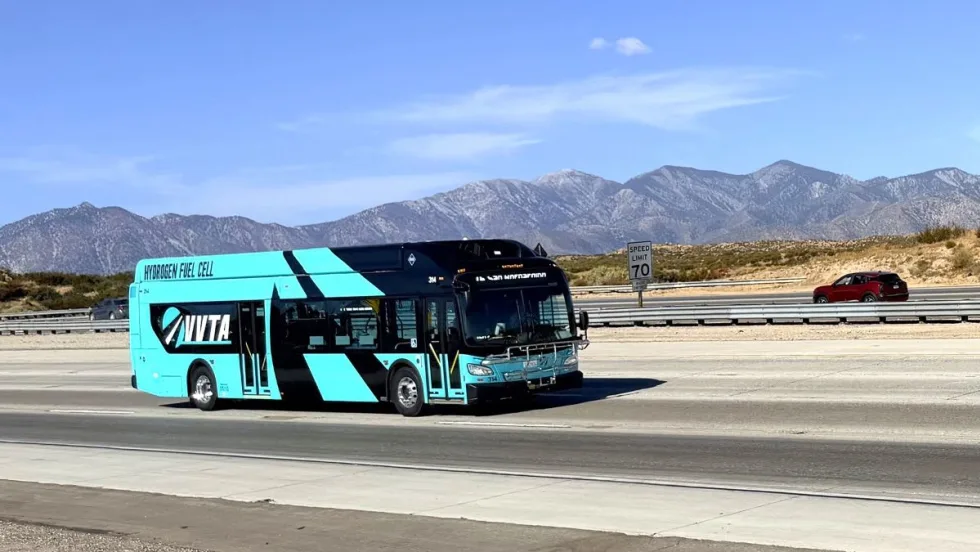
California's VVTA Begins Phased Rollout of Hydrogen Fuel Cell Buses
The agency is introducing 13 zero-emission buses into revenue service while evaluating performance across its urban, rural, and long-distance routes.
Read More →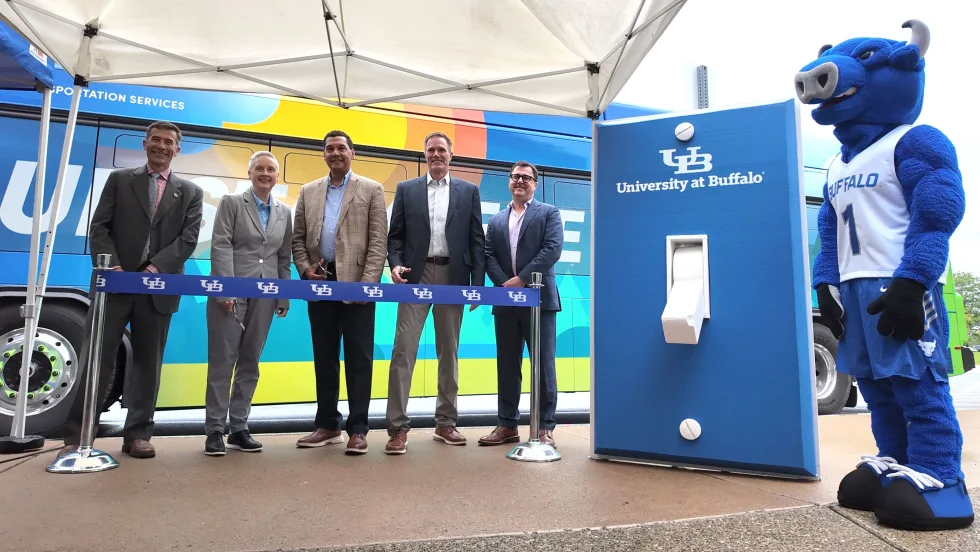
Inside Look: University at Buffalo Puts First 8 Electric Buses Into Stampede Service
UB, transportation solutions provider WeDriveU, and fleet electrification specialist Zenobē marked the deployment in the presence of students, university administrators, and local officials.
Read More →
Biz Briefs: OCTA Taps Clean Energy for Hydrogen Station, Stadler to Supply Via Rail Vehicles, and More
From manufacturers and suppliers to transit agencies and motorcoach operators, these updates offer a snapshot of the projects, partnerships and business moves driving the industry forward.
Read More →
AC Transit’s Cecil Blandon on Building the Next Generation of Transit Maintenance Leaders
The agency’s maintenance chief discusses leadership, workforce development, zero-emission technology, and preparing technicians for the future of public transportation.
Read More →
CTDOT Taps STV for Electric Bus Facility Design
The firm will work with CTDOT and RVT to define the facility layout, operational requirements, and long-term flexibility for RVT’s growing electric fleet.
Read More →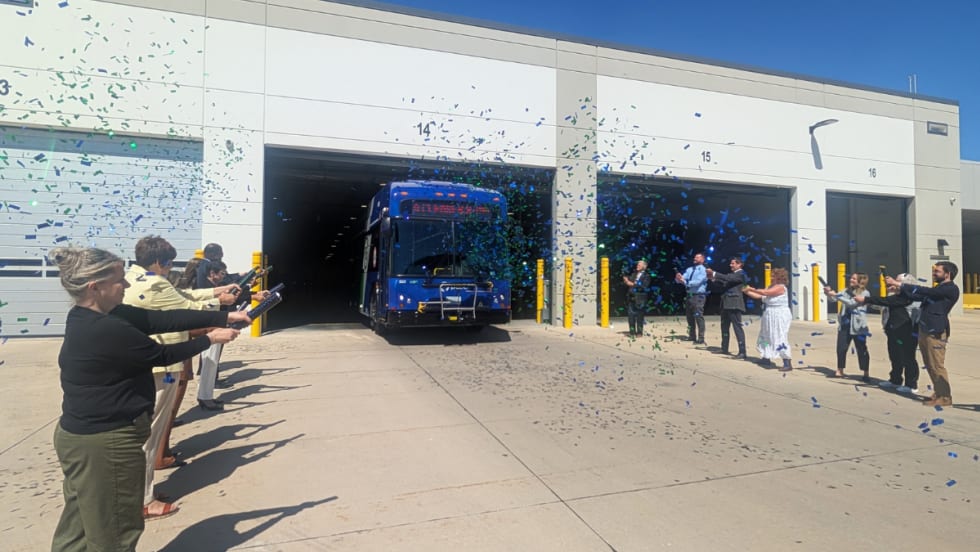
Chicago’s Pace Deploys 24 Hybrid-Electric Buses in Will County
The new buses reduce emissions and fuel consumption while advancing the agency's long-term goal of transitioning to a fully zero-emission fleet.
Read More →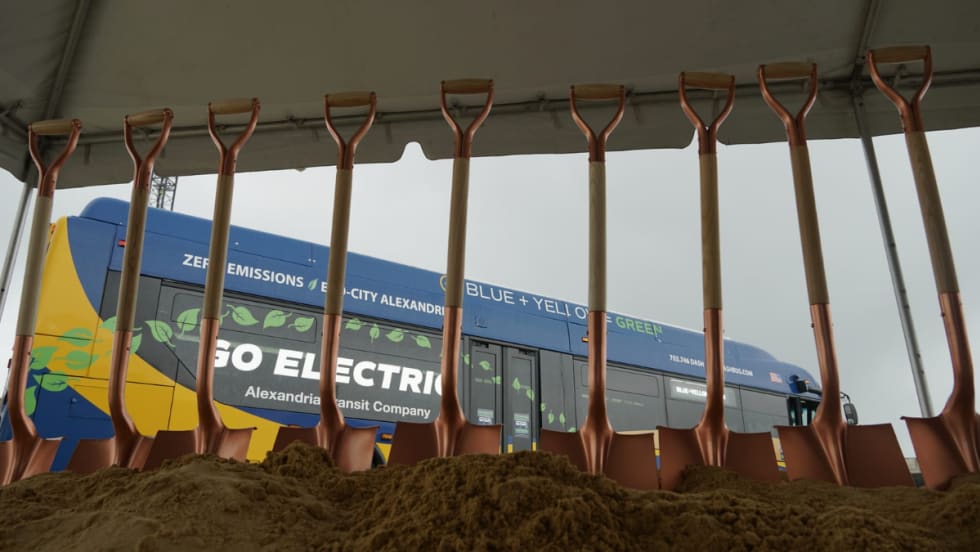
DASH Breaks Ground on First On-Route Electric Bus Chargers in D.C. Region
The fast-charging infrastructure will help extend electric bus range, improve fleet utilization, and support DASH's goal of transitioning to a fully zero-emission fleet.
Read More →