Senior, ADA Transportation Provider Finds Savings Through Electrification
South Carolina's EHC took a chance by investing in electric vehicles in the wake of soaring gas prices and found success after adding Ford E-Transit vans.
The EHC team’s search led them to the Clean Energy Department of South Carolina, which directed them to a Ford EV Tour event in North Carolina, where Ford was showing mock-ups of the still-in-development E-Transit vans.
Photo: Ford
6 min to read
While the COVID-19 pandemic was a time for simply finding ways to sustain transportation operations for many, for some it was a time to innovate and reevaluate the way they did business.
Enter Chris Russo, co-founder of South Carolina’s Elite Home Care, Day Centers, & Transportation (EHC), and his business partner, Andrew Martin. The business provides on-site and in-home care for senior citizens and disabled persons, along with transportation to and from its network of adult daycare facilities.
Ad Loading...
Russo and Martin foresaw rising fuel costs for their fleet and stepped up to get in front of the issue.
“We saw oil prices go down to negative dollars during COVID. When we started talking about it, we knew that whenever you see a big event like negative oil prices, we were going to see it bounce back in the other direction and soon enough we started seeing gas prices hit five, six dollars a gallon,” explains Russo. “When we saw that happen, it was the catalyst to start thinking about how we could change what we're doing in the future, so we reached out to anybody we could get information from about electric vehicles.”
The Road to EVs
The EHC team’s search led them to the Clean Energy Department of South Carolina, which directed them to a Ford EV Tour event in North Carolina, where Ford was showing mock-ups of the still-in-development E-Transit vans.
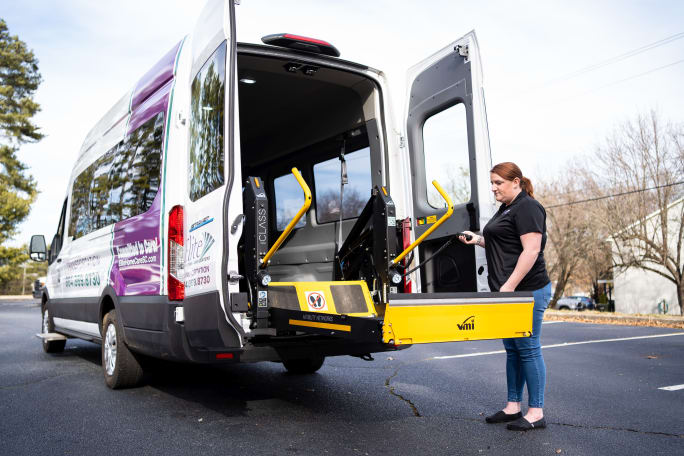
“The vehicle wasn’t even necessarily done, but we talked to the Ford team, who were telling us about their plans for the future,” says Russo. “After that, we stayed in contact with Ford, directly, as they were developing the E-Transit vans. Soon, they sold some to an upfitter, who we then reached out to so we could get seats and wheelchair lifts put in them.”
EHC was one of the first E-Transit customers in the U.S., ordering vehicles in the fall of 2021 and receiving them in early 2022. Since its EV adoption, EHC has transformed its business into a thriving community outreach group that serves primarily underprivileged patients.
Ad Loading...
“We have seen incredible value from our E-Transit implementation,” says Russo. “It’s mind-boggling. We are doing good things for the community and the environment but also seeing major fiscal benefits. In an environment of rising costs everywhere, we’ve seen EVs as a huge opportunity for us and other small businesses to be more cost-efficient.”
EHC was one of the first E-Transit customers in the U.S., ordering vehicles in the fall of 2021 and receiving them in early 2022.
Photo: Ford
The Benefits of the Ford E-Transit
After starting out with about five vehicles, EHC has increased its E-Transit fleet to about 45, which is slightly less than half of its 110-vehicle fleet, covering 10 separate locations. All told, the operation currently runs about 100-plus electric vehicles.
Russo explains while the investment comes with a slightly higher upfront cost than the typical gas version, the savings the operation has experienced have been worth it.
“We have been running them for almost two years now and the cost savings are phenomenal,” says Russo. “And, honestly, we thought that savings was going to come from not having to purchase gas, but it’s the low maintenance costs that have been the big difference maker.”
In fact, Russo says that EHC has gone from working with a vehicle maintenance team, to one person focusing on the fleet’s tires.
Ad Loading...
Putting EHC’s transition into greater focus, the operation is currently spending $55 a month on charging, per van, less than a single tank of gas. Russo says his combined savings per vehicle, per year, comes to about $6,500, factoring in fueling, maintenance, and everything else typically associated with running a fleet of vehicles.
“The way we came up with those numbers is we pulled our costs for the same month year over year and divided that out by how many vehicles we now have and were able to extrapolate that out to roughly 55 dollars a month,” explains Russo. “Because our fleet is growing, fuel was a tough cost to nail down. But because our margins continue to shrink overall, we have been able to expand the program and continue to buy more Ford E-Transits and more vehicles, in general.”
EHC’s savings are close to on par with what Ford suggests operations could experience with the E-Transit van. The company says that the scheduled maintenance costs for the E-Transit van are estimated to be 45% less than the average scheduled maintenance costs for a gas-powered 2022 Transit over five years/75,000 miles (whichever comes first). The estimated average maintenance costs per gas vehicle are $1,420, while the estimated average maintenance costs per electric vehicle are $769.
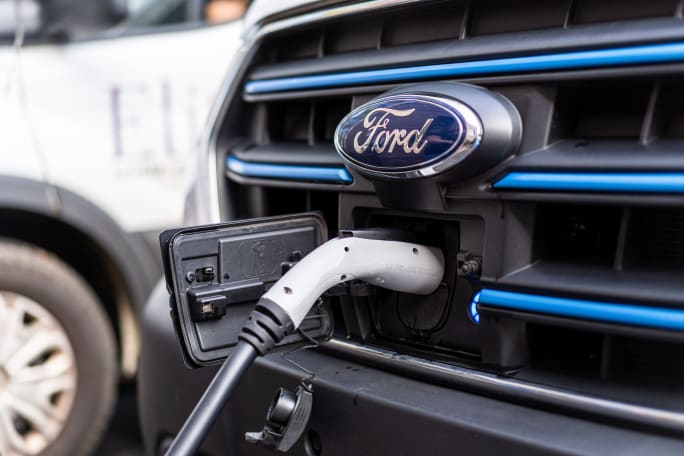
To help maximize each E-Transit Vans’ usage, EHC uses Ford Pro™ E-Telematics to access real-time data on range and charge status.
Photo: Ford
Charging Infrastructure, Maximizing Uptime
While implementing charging infrastructure and figuring out what the cost of energy to charge the vehicles is an unknown for many, Russo says the EHC worked closely with Ford to build a strategy.
“Fortunately, we have a great contact at Ford Pro, who was able to help us have the design work at each location done, figure out what the load each of our garages could take, and then design out backwards from there,” he explains. “So, once we had the utility come in to help us get more power into our buildings and we knew how much energy we could consume, we were able to determine how many vehicles and chargers we were able to house at each location.”
Ad Loading...
“Elite Home Care first became a Ford Pro Charging customer back in August of 2022, since then, they’ve continued to partner with us for a charging solution as they expand their electric vehicle fleet,” explains Danielle Shaheen, Ford Pro charging solutions sales manager. “They have procured Ford’s charging hardware along with charge management software to provide visibility of their charging sessions and health of the charger.”
Russo adds that while there is a learning curve to planning charging infrastructure and that issues have definitely come up along the way, he says ultimately it comes down to planning and letting the technology do its job from there. He also says that with EHC being the largest fleet using electric vehicles in South Carolina, the company has been invited by the state’s DOT on a couple of occasions to discuss how the operation was able to maximize the technology’s potential.
EHC charges its vehicles overnight, with Russo saying it takes about six to seven hours per vehicle. He also explains that the operation is getting about 140 miles per charge with seating and equipment on board, which is slightly higher than the estimated 126 miles per charge with no equipment on board.
“The key has been getting our drivers trained up so that they are getting the best use out of the vehicles,” Russo says. “Right now, we’re getting better mileage then what we were promised by Ford, as well as better than what we expected in many cases.”
To help maximize each E-Transit Vans’ usage, EHC uses Ford Pro™ E-Telematics to access real-time data on range and charge status. It also continues to work very closely with the Ford team even after the vehicles are delivered and put into use.
Ad Loading...
“I’m almost hesitant to say this because I’m sure they go out of their way for all their customers, but our contacts at Ford are like family — they’re only a phone call or text away and they know our people’s names and how to get a hold of them as well,” says Russo. “They have also been helpful in giving us advice on the right vehicle for the job and have been committed to making sure we are successful. We really couldn’t be more pleased with our partnership.”
See how three Gillig battery-electric buses powered festival stages while the agency’s new Park & Ride service carried approximately 1,000 attendees, demonstrating another potential use for transit agencies’ electric fleets.
The new name represents a renewed vision for the nonprofit focused on advancing clean, equitable, and affordable transportation solutions that move people and goods.
John Hroncich discusses BAE Systems’ modular and scalable approach, lessons learned from decades of real-world operations, and how agencies can identify electrification strategies that fit their fleets.
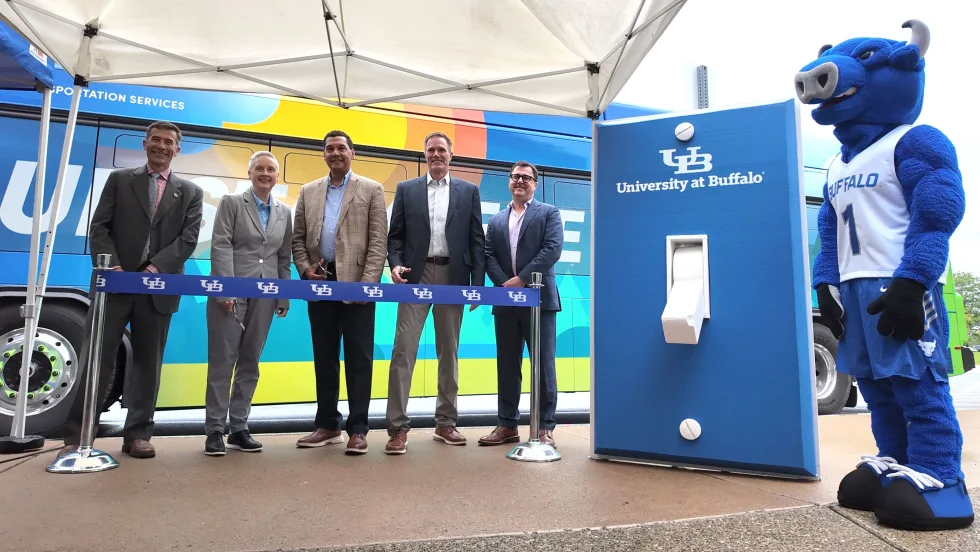
UB, transportation solutions provider WeDriveU, and fleet electrification specialist Zenobē marked the deployment in the presence of students, university administrators, and local officials.
From manufacturers and suppliers to transit agencies and motorcoach operators, these updates offer a snapshot of the projects, partnerships and business moves driving the industry forward.
The agency’s maintenance chief discusses leadership, workforce development, zero-emission technology, and preparing technicians for the future of public transportation.
The firm will work with CTDOT and RVT to define the facility layout, operational requirements, and long-term flexibility for RVT’s growing electric fleet.
The fast-charging infrastructure will help extend electric bus range, improve fleet utilization, and support DASH's goal of transitioning to a fully zero-emission fleet.