



Success of Regional Fare Collection Systems Hinges on Defining Objectives
The benefits of regionalized fare-collection systems are numerous, but participants first need to define their operating principles, establish a solid working team and take cues from financial modeling systems such as banks.
Although the concept of a regional fare collection system is still somewhat uncharted territory, some transit agencies are tackling it head on, while others are taking a wait-and-see attitude. The benefits, however, are clear. Participating transit agencies can share fare-collection costs and provide customers with a seamless payment system that reduces confusion and enhances the potential for increased ridership. “If everyone in the region is using one clearinghouse, for example, you only have to set it up once, which is more cost effective,” says Andrew Meiman, an associate with McLean, Va.-based consulting firm Booz Allen Hamilton. An even broader benefit for regional systems includes the cost savings accrued by going away from a paper and cash system to a smart card-based system. “You don’t have to count money anymore,” Meiman says. The whole cycle of paper-based fare media, which includes generating it, distributing it to vendors, collecting any unsold fare media, reconciling it and counting cash from the buses and ticket vending machines, can be eliminated. Shifting to a smart-card system can also reduce fare fraud. Counterfeit fare media, although perhaps not a significant problem for most agencies, can generate considerable loss of potential revenue. “There‘s a debatable amount associated with [fraud], but it’s real,“ Meiman says. “It could be a couple to several million dollars a year lost, depending on the size of the agency.” An additional advantage of regional smart-card systems: making the participating transit agencies more attractive to prospective partners. “There’s an opportunity to tap into the card marketplace,” Meiman says. “A model where a bank issuing its own smart card wants to put the transit application on its card could be realistic.” The increased size of a regional fare-card system also carries weight because partners such as banks and advertisers could reach more people. “Look at L.A. County, for example,” Meiman says. “With a half-a-million users, it is more attractive than, say, the MTA on its own.” (The MTA is used by approximately 400,000 people each day.) It’s all in the planning The planning phase of regional smart card programs, especially establishing the guiding principles, is crucial. “You can’t shortcut that process, no matter how much you want to jump in and write a specification,” Meiman says. Questions that may arise during this period include whether to outsource the project and whether to create a centralized or decentralized model. Regional fare-card systems are not a one-size-fits-all concept. “All of these different agencies are approaching this in their own way, and that’s OK. I think regions need to do what fits them,” Meiman says. “[Transit agencies] are definitely sharing best practices, but they are taking their own approach to make it a success in that region.” Form a committee Putting into place a structure to deal with the project is the next step. And it’s a crucial step because the various political interests in the region need to express their interests. “You need to put together a team that includes key representatives from all participating agencies to make sure that their voices are heard,” says Meiman. Forming a committee is exactly the road that the Los Angeles County Metropolitan Transportation Authority (MTA) took in the development of its regional fare system. Its “money” committee, formed in 1998, got its name due to the nature of its discussions, which included the movement of money, collection, funds settlement and funds pooling. “We didn’t want to write a technical specification in a vacuum,” says MTA Project Manager Jane Matsumoto. It was already understood that L.A.’s project was to be a multimodal, multi-agency system. “We engaged the municipal operators to participate with us in helping define not only the technical specifications with our consultant, but also exploring the regional operating rules and financial clearing system,” she says. Formation of a committee makes for a much more collaborative decision-making process, according to Matsumoto. Although conceptually, the money committee has made some decisions that will be advanced, general managers and executive management will most likely be the official steering committee of high-level policy decisions that are ultimately made, she says. Paula Faust, transit administration manager for Montebello (Calif.) Bus Lines, represents the municipal operation on the regional committee heading the project. “I don’t see how we could have moved forward without forming some sort of body that would be dealing with everything from the hardware purchase to the development of the design of the regional program,” Faust says. “It’s important for us at Montebello Bus Lines to retain our fare structure as our own,” she says. However, Faust adds that it is also important for decisions about card distribution, funds distribution, card-based management and branding to be handled cooperatively. “There has to be a lot of trust between operators,” Faust says. “Working on [the program] has been a good relationship builder.” MTA’s universal smart-card project, originally slated to be a magnetic card-based system, will begin a pilot program this year. The municipal operators — Montebello Bus Lines, Norwalk Transit, Santa Monica’s Big Blue Bus and others — have signed equipment contracts and will become operational at the end of 2004 through 2005. Testing the system Deploying regional pilot programs has helped transit agencies see where there is room for improvement. The San Francisco Bay Area Translink project is one of the emerging regional systems that has fine-tuned its system by setting up pilot programs. The Translink project got its start in the early 1990s when the Metropolitan Transportation Commission (MTC) was mandated by California legislation to facilitate coordination among all the agencies in the Bay Area. Translink was the brand name given to the payment process for the system. “Given the geographic challenges we have in this area, a lot of passengers find themselves transferring between these transit districts pretty regularly, and it’s clearly inconvenient for them to use multiple [fare] instruments,” says Russell Driver, project manager for Translink. During the early stages of the project, magnetic fare-card technology was used by Bay Area Rapid Transit (BART) and suburban bus operator County Connection (CC) in a pilot program. “It didn’t work out very well,” Driver says. But the program taught the MTC a lesson about the importance of an organizational plan for setting up a monetary clearinghouse. The two operations — BART and CC — lacked a set of rules to guide them how to do business together. “We spent all of our time and effort writing specifications for a device to go on a bus,” Driver says. “What we learned was, the rest of the stuff, the clearing operation, doesn’t just take care of itself.” Business practices Next, the MTC hired a financial consultant to develop a set of operating procedures and an organizational plan for setting up a clearinghouse. Upon developing a plan, the MTC decided to rethink the whole project, which led it to a smart card-based program. “We did a comprehensive assessment of what we were doing and why, and what all the operators wanted to get out of it and came out with Translink,” Driver says. While developing the financial rules for the Translink program, the MTC was advised to look to the banking sector as a model. “Don’t re-create the rules in terms of your business practices,” says Driver. “Build your program’s business rules on ideas that are already in use by banks, such as clearing transactions and dealing with multiple parties participating in the same settlement scheme.” From the assessment, it was decided to outsource Translink’s fare-collection program. “Accountability and audit ability are requirements for a system where data becomes cash for the participants,” Driver says. He adds that the MTC was fortunate enough to get a lot of advice from the banking sector and many forward-thinking operators participating in the program. Modify existing system Rather than invest in new equipment, some agencies working to regionalize fare collection are making changes to existing fare media to accommodate passengers traveling between modes. Chicago’s Regional Transportation Authority (RTA) — the financial planning and oversight agency for the Chicago Transit Authority (CTA), Metra and PACE suburban bus service — is developing a plan to modify existing fare media used on all three systems to create seamless travel. RTA is proposing to affix a flash pass to the back of CTA’s current electronic farecard, which will increase mobility for the patrons transferring between the three systems. “We are taking this one step at a time,” says RTA spokesman Dave Loveday. “We don’t want to invest in some large-scale expensive technology, where, say, only 10,000 people use it.”
More Management
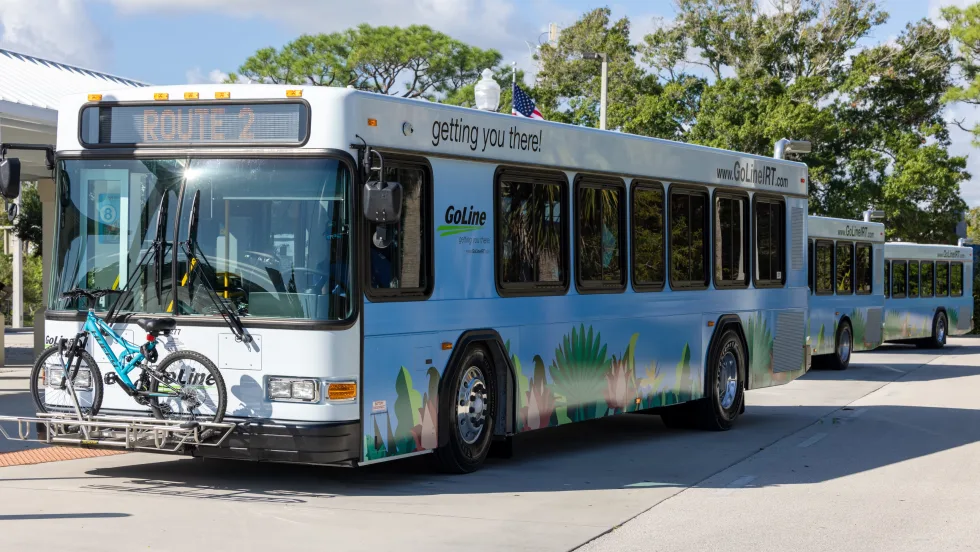
Indian River Transit’s Community-Focused Approach Earns National Recognition
Named APTA’s 2026 Outstanding Public Transportation System in its size category, Florida’s Indian River County transit system continues to grow ridership through fare-free service and a focus on evolving community needs.
Read More →
ENC Lands MATA Contract and More in Biz Briefs
In this edition of Biz Briefs, we spotlight the latest developments shaping the future of mobility.
Read More →
From Surviving to Thriving: Building Stronger Transportation Organizations
Bus Business Consultants founder Brian Dickson shares lessons on leadership, organizational health, and creating options for long-term success in a changing transportation industry.
Read More →

Everett Transit, Community Transit Outline Consolidation Agreement
The proposed agreement calls for a 50% increase in bus service in Everett, a new microtransit zone, continued paratransit service, and the transfer of Everett Transit operations to Community Transit.
Read More →
Strada360’s Steve Lassey on Turning Transit Data Into Better Decisions
From breaking down data silos to preparing for AI, Strada360 CEO Steve Lassey discusses how transit agencies can use technology to improve operations, customer information, and long-term decision-making.
Read More →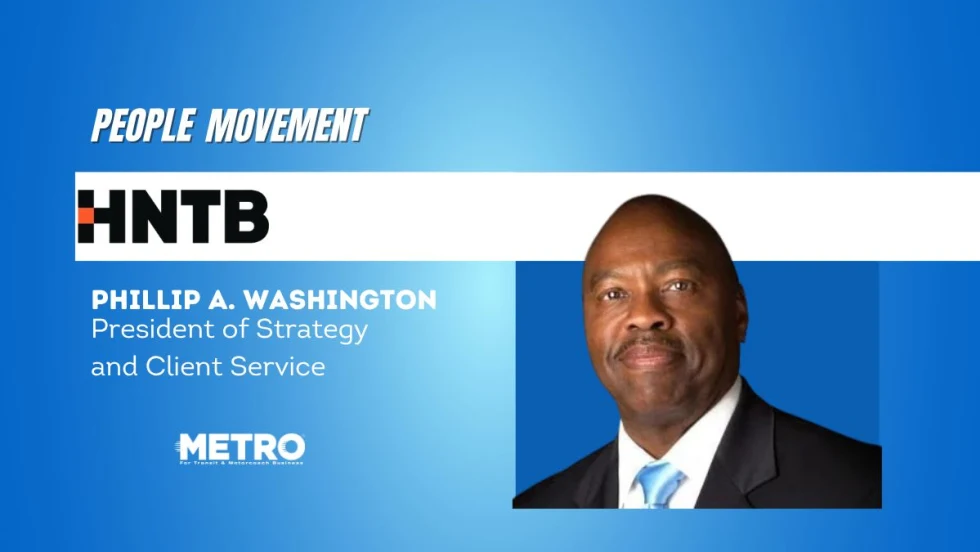
People Movement: Phil Washington Joins HNTB, Denver RTD Launches CEO Search, and More
In this edition, we also spotlight recent personnel moves at STV, the Eno Center for Transportation, and more, highlighting the people taking on new roles across the transportation industry.
Read More →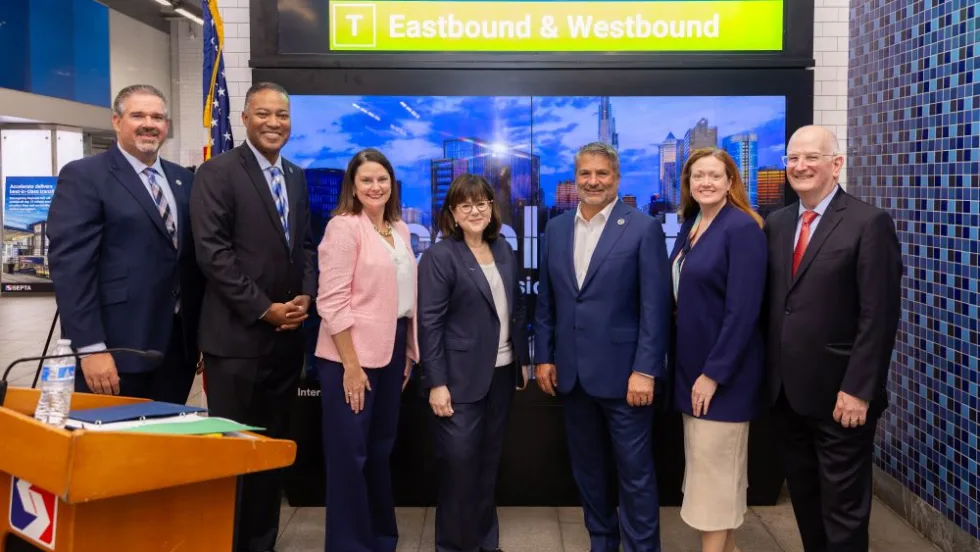
SEPTA Details Accelerate Vision for Transit System
The plan outlines investments in trolley modernization, new Metro and Regional Rail vehicles, accessible stations, and more frequent bus and rail service.
Read More →
FTA Ends Direct Oversight of MBTA Safety Actions
The federal agency closed its remaining special directive to the Massachusetts Department of Public Utilities following a safety review that began in 2022.
Read More →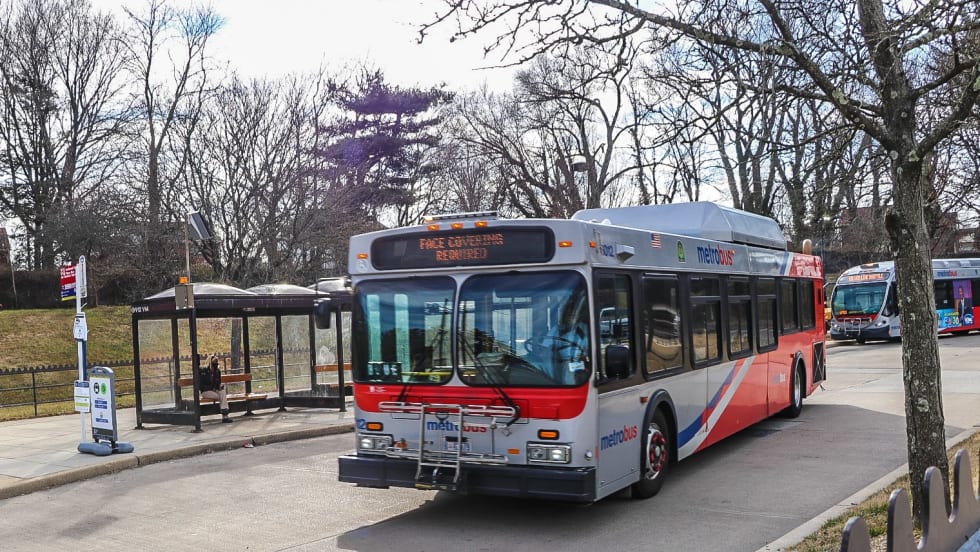
Report: Transit Bus Manufacturing Supports 34,100 Jobs, $5.1B in GDP
The “Buses Mean Business” report examines the transit bus manufacturing industry’s economic footprint, supply chain, and rising demand for vehicle replacements.
Read More →
LIT Marks 10-Year Milestone at Annual Summit
Hosted by the COTA from September 10 to 13, the Summit carried the theme “Celebrating 10 Years of Excellence, Leadership, and Impact,” with every part of the program honoring the people, agencies, and partners who built LIT over its first decade.
Read More →