



The ABCs of Air Brakes for Motorcoach Drivers
Earning an air brake endorsement doesn't mean that a driver fully understands the air brake system. Here's a primer that will help to fill in the gaps.
Air brakes are a wonderful, time-proven invention. Although they've been around for several decades, many new motorcoach drivers have no experience with them. This article is aimed at helping drivers understand the function and operation of air brakes. There are three basic circuits in all modern air brake systems:
The charging system that supplies air for the brake system
The service system that is used for normal braking
The emergency/parking system which, as the name implies, is used in an emergency and for parking. The air compressor The heart of the air brake system is the compressor, which is often directly coupled to the engine. It also can be engine mounted or belt driven. In all cases, the compressor turns any time the engine turns. Most compressors are fed oil directly from the engine's pressurized oil system. The majority of compressors also use the engine's cooling system. To regulate the air system pressure, a governor is used. At 120 psi, typically, the governor will cycle, lifting the compressor unloading valve(s). Compressing ceases even though the compressor is still turning. When the system pressure falls to approximately 100 psi, the governor again cycles. This allows the unloading valve(s) to seat, and the compressor brings the system pressure up to the governor's upper limit. In the unlikely event of a governor upper limit failure, where the compressor continues to pump, a "pop off" or safety valve, typically set at 150 psi, will relieve system pressure. Storing the air Air reservoirs are mounted in various locations and are generally plumbed together with one-way check valves. The reservoirs store the air pressurized by the air compressor and stand ready when called upon to supply air to the brake chambers. The first reservoir downstream of the compressor is called the wet tank because it catches water condensation and oil, byproducts of the compressor. This reservoir should be drained daily, assuring these byproducts are kept out of the air system components downstream. Air dryers and automatic drain valves may be found on many newer motorcoaches; however, daily manual draining ensures no contaminates migrate into critical components, such as brake valves and chambers. The service system The brake foot valve (left side of the throttle) technically comes in several versions. In all cases, however, it simply functions as a pressure regulator. When the foot valve is at rest, no service air flows to the brake chambers, and the brakes at each wheel are released (assuming the parking/emergency system is not activated). As the valve is depressed, regulated air pressure is supplied to each service brake chamber. The harder the foot valve is depressed, the higher the regulated pressure to the brake chambers. The service brake chambers found at each wheel simply convert air pressure that comes from the foot valve to a mechanical force. Within each brake chamber is a diaphragm. One side of the diaphragm is exposed to the air pressure from the foot valve (service air), while the other side is exposed to atmospheric pressure. As service air pressurizes the diaphragm, it pushes against a metal disc that has a metal rod attached to its center. The rod extends from the chamber and is connected to a lever. Mechanical force is generated as service air pressure against the diaphragm moves the disk and rod. This mechanical force via the lever arm rotates a shaft supported on bushings. The supported shaft's outer end has a cam attached, called an "S" cam. The "S" cam supports one end of each brake shoe within the drum, while the other end of the shoe is mounted to a non-rigid anchor. As the cam rotates via the mechanical force generated by the service brake chamber, the brake shoes are forced against the brake drum. Since the brake shoes are anchored at one end and the drums turn with the wheel, braking action occurs. This lever arm is called a slack adjuster and is the point where the brakes are adjusted. In summary, service air is applied to the brake chambers, converting air pressure to mechanical force. The mechanical force is then used to move the stationary brake shoes or pads against the brake drums or rotors. Since the drums or rotors are directly connected to the rotating wheels, braking occurs. Air superiority Several features make air brakes superior to hydraulic brakes. The first is that small leaks can be tolerated in an air brake system. The second is that the parking brake system also provides a fail-safe emergency system. (Some newer hydraulic brakes have a similar system). In addition, air brakes are used for more severe applications, such as mountainous terrain, where hydraulic brakes can be overtaxed. The air chambers found on the rear axle only have two chambers and two diaphragms. The chamber closest to the mounting studs is the service air chamber and receives air from the foot valve as explained previously. The second chamber is totally different in that an extremely powerful spring is located on the atmosphere side of the diaphragm, opposing the pressurized side of the diaphragm. This means that with no emergency air pressure, the double chamber will stroke, and the rear brakes will be applied (no service air needs to be present). Air to oppose the springs comes from the parking (emergency) circuit, not from the foot valve service air. Parking/emergency system The parking valve is typically located on the dash. With normal system pressure, pushing the valve "in" causes air to flow to the parking (emergency) side of the double air chamber, retracting the push rod against its applying spring and releasing the brakes. The parking/emergency system is spring applied and air released. The push/pull dash parking valve is unique in that once the supply pressure drops to the valve's internal setting (generally between 20 and 45 psi), the valve will automatically pop out, thus fully applying the rear spring brakes. In an emergency, the parking valve can be manually pulled out at any time, and rear braking will be experienced. In addition, the parking valve may be manually pulled out at any time in an emergency, and again, braking will be applied to the rear brakes. Understanding that the parking/emergency brake system uses the bus' rear brakes and that it takes air pressure to release them explains why a bus that has not been used for an extended period of time and has lost air pressure will have heavy brake drag until there is sufficient air pressure buildup to cause the rear brakes to fully release. All buses built in 1975 and thereafter have a dual brake system. One system operates the front brakes, while the other system operates the rear brakes. These systems can be readily identified by the presence of a single gauge with two needles. The maintenance department is required to check the brake adjustment every 3,000 miles. After a brake reline, brake adjustment must be checked every 500 miles until the shoes seat to the drums. Brake chamber stroke on automatic slack adjusters should also be verified every 3,000 miles. If you ever notice the brakes smelling hot after descending a grade, or if at any time they seem sluggish, turn in a trouble report to have the brake adjustment checked. Pre-trip safety All standard pre-trip forms include several routine but critical air brake system tasks and checks:
Drain wet tank.
Warning systems "on and off" pressures (55 psi minimum; 75 psi maximum).
Compressor build-up time (85 to 100 psi within 45 seconds with the engine operating at the manufacturer's maximum recommended rpm).
Air loss (2 psi maximum loss in one minute with service brakes released and 3 psi loss per minute with service brakes fully applied). As part of your daily pre-trip, drive the bus at 5 to 10 mph and apply the parking brakes. The bus should come to a quick, solid stop. This verifies that the spring brakes are functioning. Being diligent about pre-trips not only protects you and your passengers from harm, but may also reduce your from liability exposure. In the event of an equipment problem that leads to an accident, your pre-trip documentation may very well become your best friend.
More Management

Bus Tech Talk: Keeping Transit Technicians Ahead of the Technology Curve
In this episode of Bus Tech Talk, Complete Coach Works’ Business Development Manager Mark Hollenbeck and METRO’s Executive Editor Alex Roman sit down with Obed Mejia, Senior Technical Trainer for Bus Maintenance, at LA Metro to discuss how rapidly evolving bus technology is changing the maintenance shop — and the skills technicians need to keep pace.
Read More →
Michael Schneider Joins Paslay Group to Expand Transportation Practice
The longtime transportation executive will help Paslay Group grow its advisory and program management work across transit, highway, and other infrastructure sectors.
Read More →
People Movement: Connectpoint Expands Leadership Team, Stadler Names New Group CEO, and More
In this edition, we also spotlight recent personnel moves at Burns, UZURV, and more, highlighting the people taking on new roles across the transportation industry.
Read More →
More Than a Summer Job: Building the Next Generation of Transit Talent
The Delaware River Port Authority and PATCO have transformed their internship program into a hands-on professional development experience that introduces students to the breadth of transportation careers — and creates a pipeline for future employees.
Read More →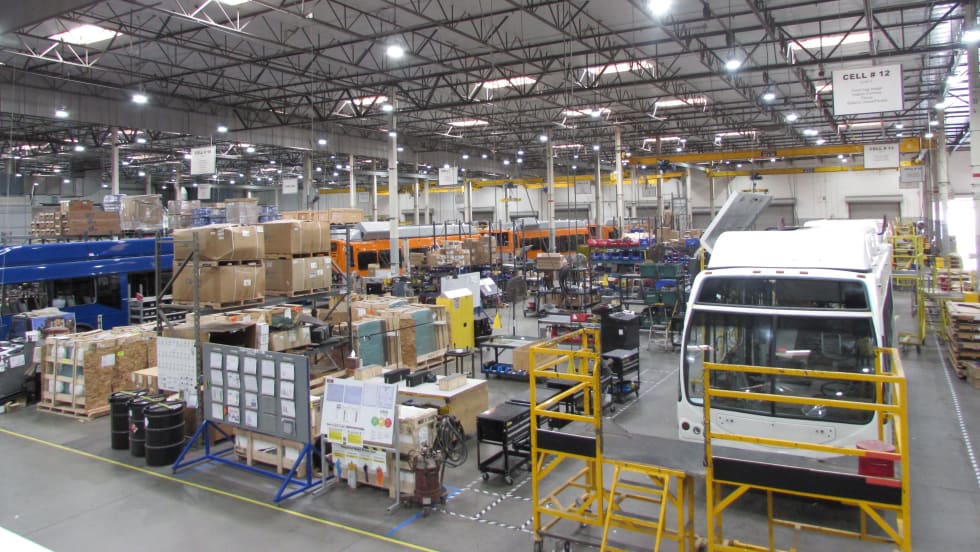
LA Metro Board Awards 220 Battery-Electric Bus Contract to ENC
The contract, which is the largest base award of battery-electric buses by a U.S. transit agency, will be built in Southern California, sustaining good jobs as LA prepares to welcome the world in 2028
Read More →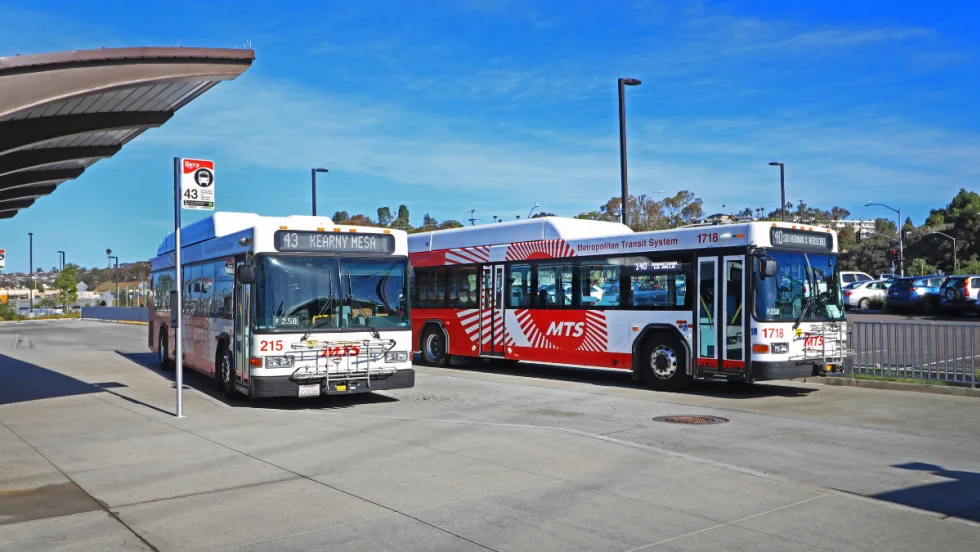
What’s Behind San Diego MTS’s Award-Winning Transit Strategy
Named one of APTA’s 2026 Outstanding Public Transportation Systems with 50 million or more annual passenger trips, California’s San Diego Metropolitan Transit System points to gains in ridership, safety, technology, and reliability as foundations of its success.
Read More →
Public Transit Conference Returning to GFX in 2027, Call for Papers Now Open
The Call for Papers is now open, allowing transit agency professionals and industry experts to help shape the PTC educational program by submitting session ideas for consideration.
Read More →
Indian River Transit’s Community-Focused Approach Earns National Recognition
Named APTA’s 2026 Outstanding Public Transportation System in its size category, Florida’s Indian River County transit system continues to grow ridership through fare-free service and a focus on evolving community needs.
Read More →
ENC Lands MATA Contract and More in Biz Briefs
In this edition of Biz Briefs, we spotlight the latest developments shaping the future of mobility.
Read More →From Surviving to Thriving: Building Stronger Transportation Organizations
Bus Business Consultants founder Brian Dickson shares lessons on leadership, organizational health, and creating options for long-term success in a changing transportation industry.
Read More →