



TNC Partnerships Can Boost Transit's Mobility Offerings, Save Money
Ride-hailing companies are fast becoming key partners in quest to offer transit customers more options in hopes of improving both ridership and connectivity.
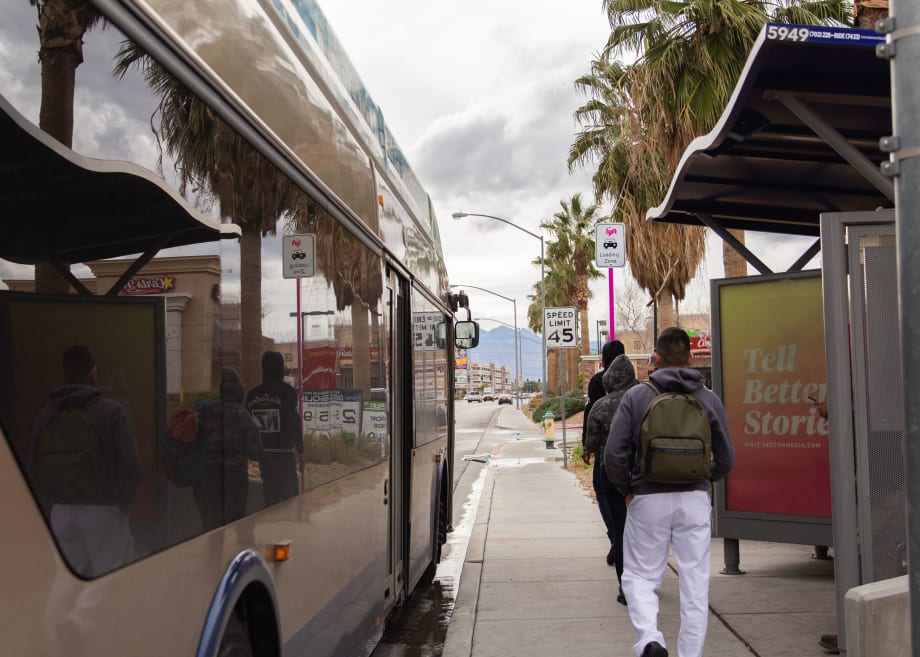
The RTC recently partnered again with Lyft for a six-month pilot program to enhance job access and encourage multimodal commuting for employees of the online sporting apparel company Fanatics.
RTC of Southern Nevada

Once viewed as a competitor, ride-hailing companies like Lyft and Uber are fast becoming key partners in public transit’s quest to offer its customers more options in hopes of improving both ridership and connectivity.
“There are some cities and routes where ridership is strong, but overall the traditional forms of mobility are being disrupted by new modes and new options,” says Tina Quigley, GM at the Regional Transportation Commission of Southern Nevada (RTC) in Las Vegas. “Transit needs to evolve as well, and I firmly believe that if we are not at the table and testing and deploying projects to find things that work, somebody else is going to define that evolution for us.”
Quigley says that while ridership is up in the agency’s general market corridors, it has taken a significant dip in its resort corridor, which has had a financial impact on the agency.
“We know that we need to take a look at the system to fine-tune it and find alternatives,” she says. “We also want to continue growing the system in our general market areas where we know we need it, while also trying to keep our costs contained and remaining flexible.”
With those goals in mind, the RTC has been experimenting with several programs, including a pilot with Lyft where the agency provides subsidized paratransit services to those that qualify.
“It normally costs us $34 per trip, but by partnering with Lyft we are offering better service to those customers at half the cost of our traditional paratransit services,” Quigley explains.
She adds that the agency is also in the early stages of expanding the program to its non-ambulatory passengers through a partnership with a local company called Tango.
“For us to continue to do the Lyft program, the FTA is requiring us to offer the same type of service for those that are dependent on wheelchairs,” she says. “That will be more costly than our partnership with Lyft, but in the end we should still see a savings.”
The RTC recently partnered again with Lyft for a six-month pilot program to enhance job access and encourage multimodal commuting for employees of the online sporting apparel company Fanatics, working in a warehouse district in North Las Vegas.
Under the RTC’s new Workforce Mobility Program, registered Fantatics employees will be able to use Lyft at a reduced rate to the employer for first- and last-mile service to and from 13 specified RTC bus stops along six transit routes.
The program came about after RTC studies found it wasn’t cost-effective for it to extend services so it could better serve the area.
“We needed to get creative,” says Quigley. “We knew that other agencies had partnered with TNCs to provide first- and last-mile services, so we began meeting with Fanatics and Lyft and were able to negotiate a three-way deal.”
Through the deal, Lyft is providing that first- and last-mile service at a reduced rate, with the RTC subsidizing $1 per trip while Fanatics subsidizes the remaining balance for each employee trip to and from the designated bus stops from its worksite.
Tips for forging partnerships
John Andoh, executive director for The COMET, says agencies should keep in mind the following tips when embarking on mobility-focused partnerships:
1. Be creative and open to looking at concepts that “think beyond the bus.”
2. Have flexible funds available in your budget to set up a pilot program.
3. Set that pilot program for a reasonable period of six months to a year and set up specific performance metrics you want the project to meet.
4. If the pilot meets those metrics, look at how you can permanently integrate them into your transit services.
Night-time, food market access
At Columbia, South Carolina’s The COMET, the agency has begun exploring options to be more innovative in finding ways to move customers more effectively and at a lower cost.
One solution the agency came up with essentially replaces its recently discontinued night service through a partnership with Lyft and Uber.
“When I got hired, night service had just been discontinued, which caused some controversy in the community,” says John Andoh, executive director of The COMET. “By partnering with Lyft and Uber, we have found a more cost-effective way of having night service for those that need transportation to get home from work or some type of evening activity.”
For the program, dubbed COMET@Night, the agency pays the first $5 for Lyft trips taking place between 9 p.m. and 3 a.m. if the customer uses a code, which is only advertised on The COMET buses so that it encourages riders to use the system during normal operating hours. To further ensure against abuse of the system, the agency changes the code for the program on a monthly basis.
“If we continued night service on an annual basis, it would cost us about $465,000, but by using Uber and Lyft, as well as our on-demand night-time ADA provider, we’ve budgeted $150,000 and are so far on par with that number,” says Andoh, who adds that the agency is prepared to put new parameters on the program if costs begin to soar.

“Paying on a per-trip basis, it could easily get out of control and you could easily blow that $150,000 budget in a month,” he explains.
The COMET has also begun another partnership with Uber and Lyft called COMET To the Market, which operates seven days a week and is designed to alleviate a food desert issue in the metropolitan Columbia area.
“We heard that people were spending upwards of two to three hours on the transit system to get to and from grocery stores,” says Andoh.
To remedy the situation, The COMET pays the first $5 both to and from grocery stores, with the customer paying for the remainder of the trip, which Andoh says recently averaged about $3 per trip.
RELATED: Report finds TNCs impacting transit ridership
Andoh says the agency plans on keeping COMET to the Market for the foreseeable future, but that it plans on assessing its night program again at the end of the year.
“If we find that COMET@Night is taking off and running on par with budget, we intend to keep it as our night-time program,” he explains. “But, since we have the data, we’re also going to track where the ridership for the program is, and if we see a lot of activity on a certain corridor, then we’ll reintroduce bus service instead of continuing to pay on a per-trip basis.”

TNCs…Friend or Foe?
While it’s possible that TNCs can still be viewed as competition for public transit agencies, there is still a place for partnerships to better provide mobility in cities across the nation.
“There are certain corridors where passengers are going to be attracted to on-demand, point-to-point service, especially depending on what the price point is,” says the RTC’s Tina Quigley. “Still, there are other areas where it makes sense to be partners because they can offer complimentary trips that complete transit.”
For their part, Lyft officials say they are committed “to effecting positive change for cities by promoting transportation equity through shared rides, bike-share systems, electric scooters, and public transit partnerships.”
To that end, Lyft officials say that they recognize the critical role public transit plays in not only getting people to where they are going, but also in connecting them to economic opportunity, and that the company plans on continuing working with public transit down the road.
“We look forward to continued partnerships with transit agencies around the country, as we explore how Lyft can help support local transportation needs,” says Lyft Communications Specialist Lauren Alexander. “Together, we’re working with agency partners to develop new approaches to first-, last-mile programs, suburban mobility, and introducing on-demand transportation to paratransit programs.”
More New Mobility

Biz Briefs: STV teams with Amtrak, Motorcoach Operators Boost Fleet and Land Contracts, and More
From manufacturers and suppliers to transit agencies and motorcoach operators, these updates offer a snapshot of the projects, partnerships and business moves driving the industry forward.
Read More →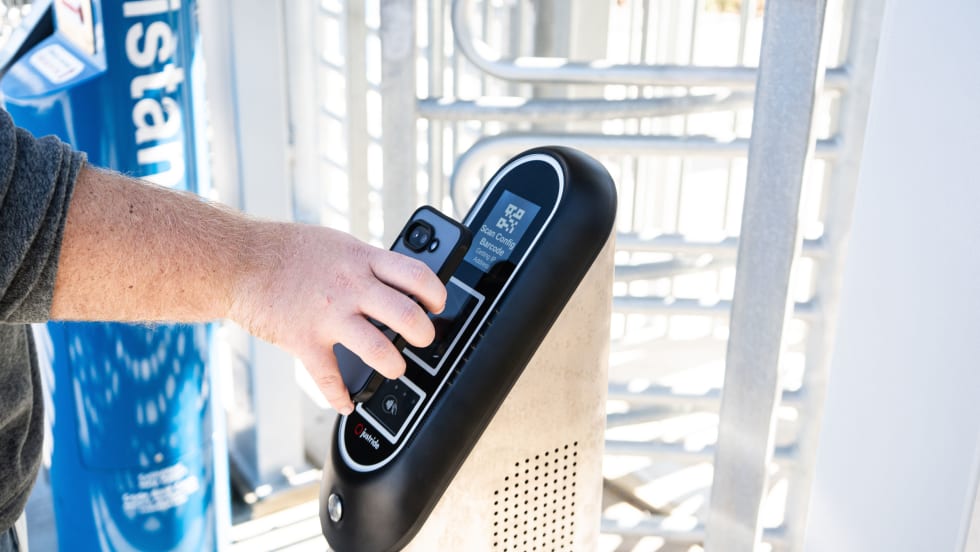
Biz Briefs: Masabi Teams with St. Louis Metro and More
In METRO's latest installment, we take a look at recent news from Transdev, Hitachi, and more partnerships making headlines across the transportation sector.
Read More →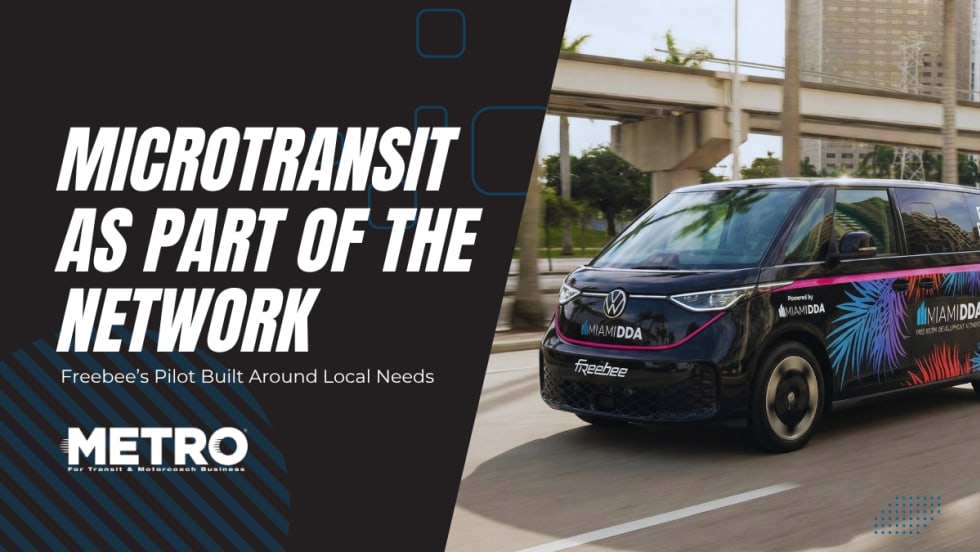
Microtransit's Next Test: Becoming Part of the Network
Freebee shows how electric microtransit is moving beyond pilots to fill network gaps, connect riders to transit, and prove lasting value.
Read More →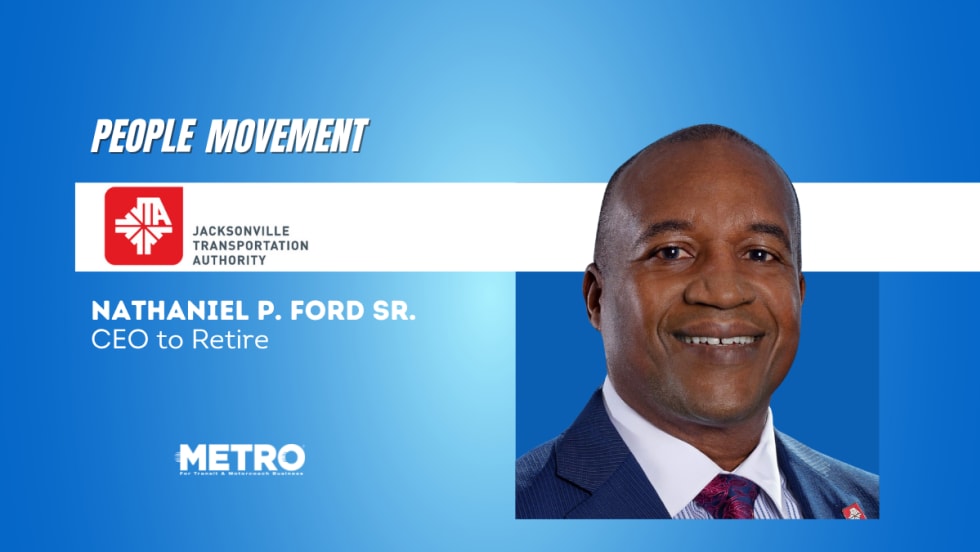
Ford to Leave JTA After More Than 10 Years as CEO
He plans to continue his work advancing innovative mobility solutions to improve the quality of life in communities across the nation. He did not announce specific plans.
Read More →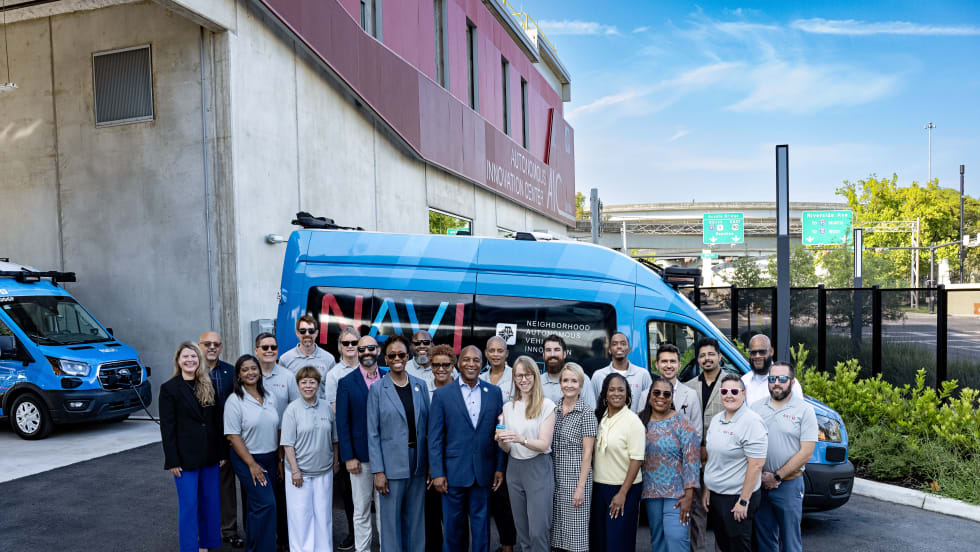
Florida's JTA Marks One Year NAVI Anniversary
During its first year of operation, NAVI has transported over 15,200 passengers and traveled more than 61,000 miles in autonomous mode without a safety incident caused by the autonomous driving system.
Read More →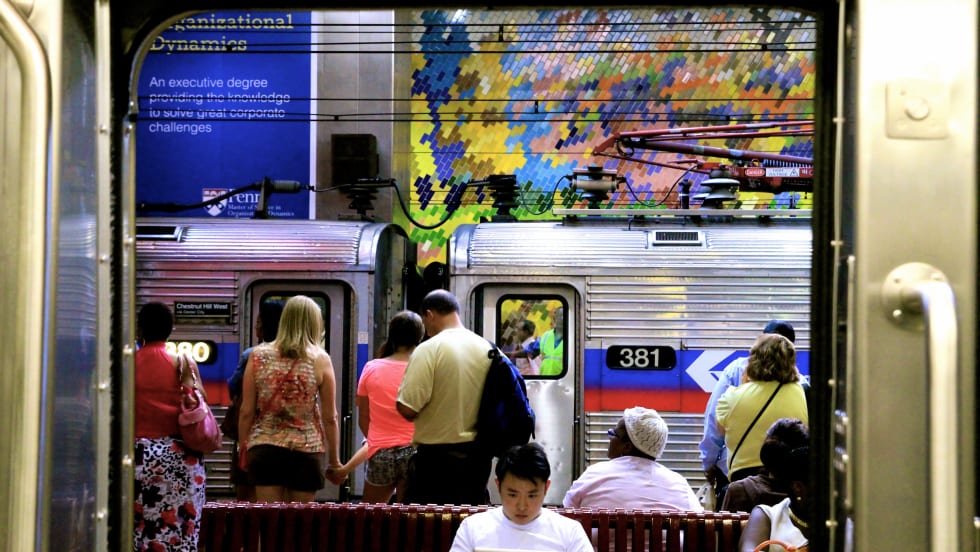
SEPTA Board Approves FY2027 Budget Amid Funding Challenges
The spending plan represents an increase of just 1.9% over the current year and includes investments in new buses, additional full-length fare gates, and other customer enhancements.
Read More →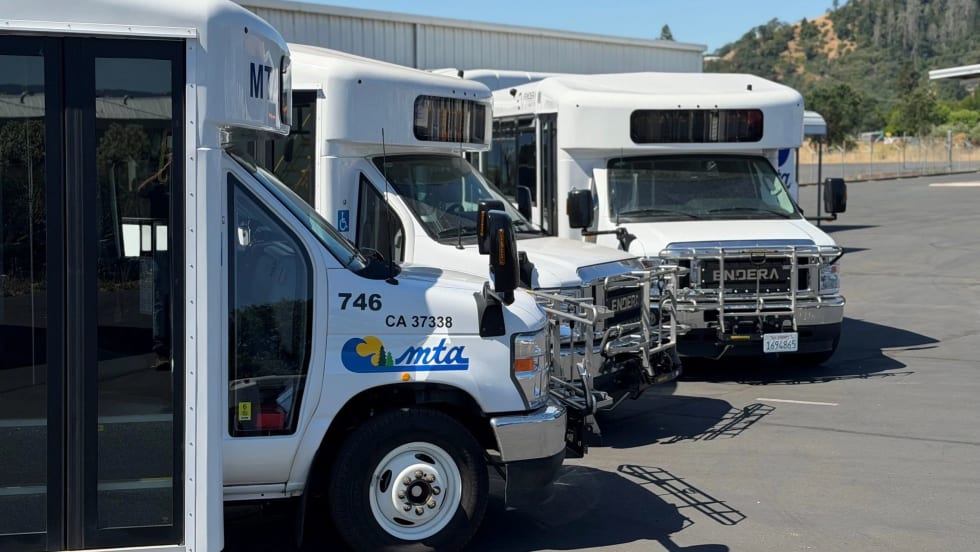
Biz Briefs: Endera Delivers to California, Safety Vision Teams with San Antonio's VIA, and More
From manufacturers and suppliers to transit agencies and motorcoach operators, these updates offer a snapshot of the projects, partnerships and business moves driving the industry forward.
Read More →
Modernizing Mobility with CharterUP CEO Armir Harris
From digital transformation to evolving customer demands, CharterUP's Armir Harris offers his perspective on the transportation industry's next chapter.
Read More →
Biz Briefs: Montréal Debuts Nova Electric Buses and More
In this edition of Biz Briefs, we spotlight the latest developments shaping the future of mobility.
Read More →
6 Transit Management Lessons for Colleges and Universities Facing Seasonal Demand Swings
College transportation demand swings wildly throughout the year. Fleet strategies are starting to catch up.
Read More →