



Edmonton Transit Extending Bus Services, Frequencies
As outlined in the ETS 2025 Annual Service Plan, these are just some of the ways ETS is working to make transit the first choice for Edmontonians and visitors.

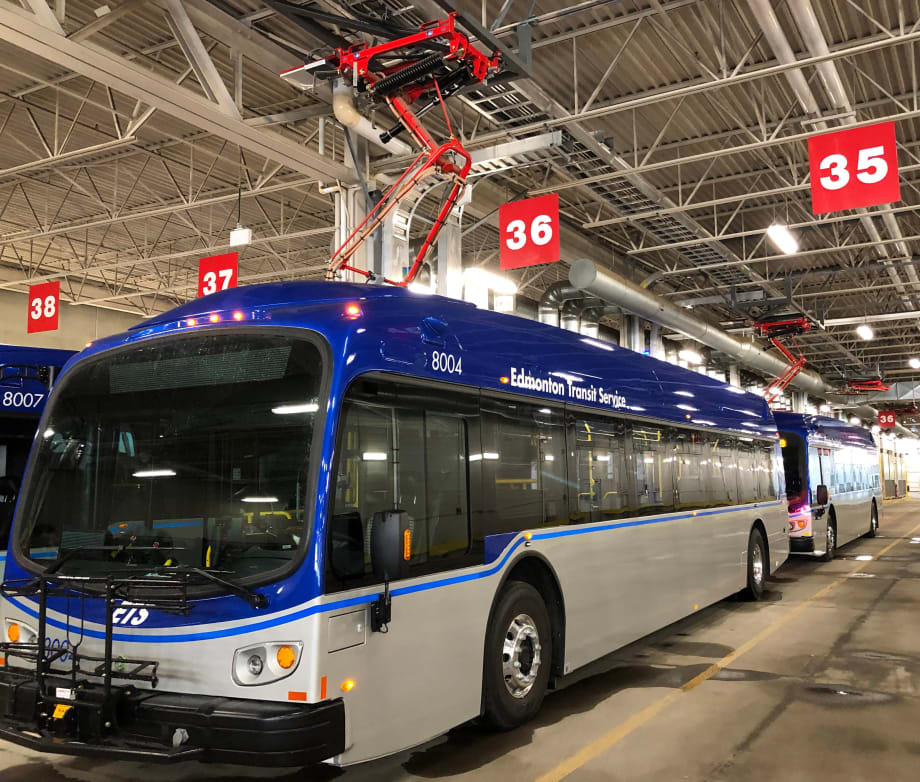
By reallocating service hours and resources, ETS can provide more equitable and accessible transit service across the city.
Photo: ETS
Canada’s Edmonton Transit Service (ETS) is planning to add 50,000 annual hours of bus service in 2025, some of which will be used to increase service frequency on the regional airport route 747.
As outlined in the ETS 2025 Annual Service Plan, these are just some of the ways ETS is working to make transit the first choice for Edmontonians and visitors.
Additional ETS Services
The additional service hours will result in changes to route frequency, more reliable service, and extended service hours on select routes. Twenty new buses will also be added to the fleet to accommodate this additional service.
The Annual Service Plan also highlights a new regular service route in the southwest. This route will replace existing On Demand Transit (ODT) service in Keswick and Glenridding Ravine, beginning in late April.
“All of these changes are intended to improve transit service by making it more reliable, convenient, accessible, inclusive and safe,” said Carrie Hotton-MacDonald, branch manager, ETS. “Hundreds of thousands of trips are completed each day across the network. Whether getting to work, school, appointments or social events, these service adjustments will help make it easier for Edmontonians to choose transit. New multi-day Arc passes and more frequency on the airport route are helping to make transit more appealing to visitors.”
Reoptimizing Service
By reallocating service hours and resources, ETS can provide more equitable and accessible transit service across the city.
In some cases, regular service will be reduced or eliminated in areas with low ridership, enabling frequency to increase on busy routes. For example:
Regular service in Riverdale, Belgravia/Windsor Park and Lendrum/Malmo will be replaced with ODT service in June. ODT provides more flexibility for riders as it operates during all service hours, while some regular service routes operate only during peak hours for these communities.
Some busy school routes will run more frequently. Some school routes with lower ridership will see service reduced, and routes with very low ridership will be cancelled or replaced with ODT in September.
Conventional service hours removed from low performing routes will be reallocated to routes with higher ridership to improve service.
More information about these changes will be made available by ETS in April and May.
“We’re taking a data-driven approach to putting our resources where they are needed most,” Hotton-MacDonald said. “ETS is one of the first transit agencies in Canada to publish Route Report Cards — comprehensive evaluations of each bus route in Edmonton, measuring on-time performance, ridership and service frequency related to transit service standards. These report cards provide greater transparency about how our routes are performing across the network.” Changes are also driven by budget, as well as the City of Edmonton’s transit service policy and service standards.
The City Plan calls for a future where 50% of trips are made by transit and active transportation.
More efficient transit service encourages a shift toward sustainable transportation, helping the City achieve its greenhouse gas emissions reduction targets.
More Bus

New York MTA Plans Largest Bus Fleet Upgrade in More Than a Decade
The agency is seeking manufacturers for 650 new CNG buses to replace aging vehicles, improve reliability, and advance its broader fleet modernization strategy.
Read More →
Building a Flexible Path to Transit Electrification
John Hroncich discusses BAE Systems’ modular and scalable approach, lessons learned from decades of real-world operations, and how agencies can identify electrification strategies that fit their fleets.
Read More →
Bus Tech Talk: Keeping Transit Technicians Ahead of the Technology Curve
LA Metro’s Obed Mejia discusses technician training, evolving maintenance technology, fleet replacement, and strategies for getting the most out of today’s transit fleets.
Read More →
Biz Briefs: RIPTA Unveils New Frontrunners, Clevland RTA Adds New Siemens, and More
In METRO's latest installment, we take a look at recent news from Siemens, Prevost, Dodge, and more partnerships making headlines across the transportation sector.
Read More →
People Movement: Holly Arnold Joins Transdev and More
In this edition, we also cover recent appointments and announcements at Pace, CamTran, MCI, and more, showcasing the individuals helping to shape the future of transportation.
Read More →
The High Cost of Transit Buses: Industry Leaders Look to Procurement Reform
Transit leaders and policymakers examine how standardized bus designs, streamlined procurement, and predictable funding could help agencies stretch budgets and deliver better service.
Read More →
The Business Voice Behind Public Transportation
As chair of APTA’s Business Members Board of Governors, Ray Melleady explains how more than 850 business members are partnering with transit agencies to advance funding, innovation, and industry-wide collaboration.
Read More →
From Surviving to Thriving: Building Stronger Transportation Organizations
Bus Business Consultants founder Brian Dickson shares lessons on leadership, organizational health, and creating options for long-term success in a changing transportation industry.
Read More →
Finding the ‘Happy Medium’: Optimizing Maintenance Without Sacrificing Reliability
The key to maintenance optimization isn’t doing less work—it’s doing the right work at the right time on the right assets.
Read More →
LA Metro, City of West Hollywood, and Partners Advance Smarter Bus Lane Enforcement
The award-winning partnership combines AI-powered detection with human oversight to improve bus reliability, accessibility, and enforcement efficiency.
Read More →