



Transit partners with ridesharing services to create multimodal options
Not long ago, companies like Uber and Lyft were considered a threat to public transportation, but now, many cities and transit agencies are starting to work with these ridesharing services to create more multimodal options for their customers.
SORTA
PSTA
Not long ago, companies like Uber and Lyft were considered a threat to public transportation, but now, many cities and transit agencies are starting to work with these ridesharing services to create more multimodal options for their customers.
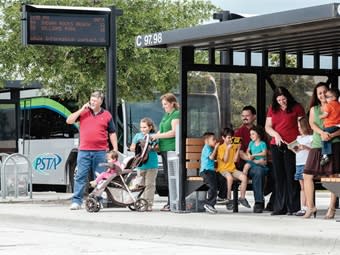
The Pinellas Suncoast Transit Authority (PSTA) in St. Petersburg, Fla., realized the need for a partnership when they were looking to make service adjustments. Brad Miller, CEO of PSTA, said that the agency identified some bus routes with low ridership and decided to target those communities.
“Some of the [bus stops] don’t have sidewalks at all,” he said. “Some of them are low-income areas that have to walk very long distances out to the main line.”
In response, PSTA created “The Direct Connect” program, which covers half the price of all trips made through Uber or United Taxi (up to $3) that start or end at a transit stop. In doing so, Miller explained the agency expects to save at least $100,000 by paying for individual Uber rides, instead of running a fixed-route bus through those areas.
“We wanted to commit to our community and be a mobility agency, connecting people in any way possible,” Miller said. “We are still going to serve everybody in all parts of the county, but that just may not be with a 40-foot bus.”
The pilot program began at the end of February and is currently in place in two zones within the county. Miller said feedback has been positive so far and that the agency is already planning to bring in Lyft as well. He hopes to expand the program to more areas and, eventually, to PSTA’s paratransit program.
Christine Mitchell, GM for Uber Tampa Bay, was involved in the deal with PSTA and said that the company is eager for partnerships that help benefit the community.
“One of our cultural values at Uber is celebrating our cities and really partnering with the cities where we operate to help them solve their biggest challenges,” she said.
Similar programs have popped up throughout the nation, particularly in Florida. In Altamonte Springs, Fla., for instance, the city began to subsidize 20% of all trips beginning or ending within city limits and 25% of all trips beginning or ending at a SunRail commuter station. This came about after a proposal for a bus line connecting to the station was rejected by Orlando, Fla.’s LYNX transit system.
In Gainesville, Fla., the city targeted its large senior citizen community, offering free technology tutorials and lower fares.
Also in Gainesville, the student government for the University of Florida created a Safe Rides program that covered 50% of fares for late-night rides within the campus area.
SORTA
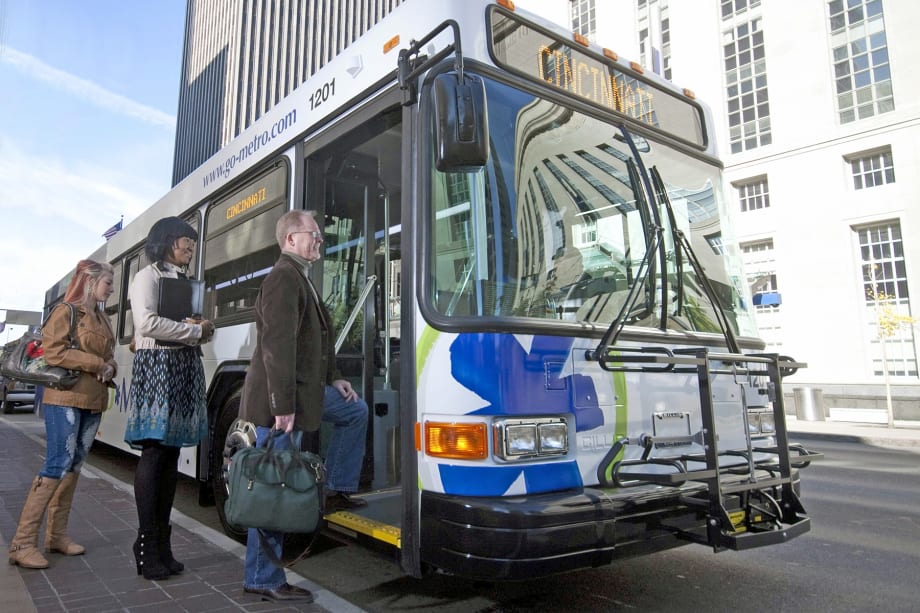
In Cincinnati, the Southwest Ohio Regional Transit Authority’s Metro looked for a solution that spread awareness of the service, while complementing their other services. To do that, the agency has begun offering a free ride to first-time Uber users.
“We are seeing an uptick of riders who do not want to own a vehicle in Cincinnati,” said Brandy Jones, external affairs manager for Metro. “They want to ride the bus and our bikesharing services here, and now that we’ve added Uber to the mix, they’re just excited that they have a multimodal way of getting around without having to own a vehicle, if they don’t want to.”
There are a few factors that have contributed to this shift in attitude. Early partnerships with cities like Dallas and Atlanta have shown potential for such programs, and recently, the American Public Transportation Association released a study showing that Uber and Lyft users were more likely to use public transit frequently.
Although many of these programs seem to show promise, it is still too early to tell how effective these partnerships will be long-term. However, these agencies seem optimistic that Uber and other ridesharing services will continue to play a positive role based on the feedback they’ve received from passengers.
“I think it is the way of the future that we as transit professionals should be looking at,” PSTA’s Miller said. “I think it’s got some great applications, and we’re really happy with it so far.”
More New Mobility

From Hardware to Digital Partner: Luminator Charts Its Next Chapter
CEO Magnus Friberg discusses Luminator’s shift toward becoming a digital partner, the growing importance of software and interoperability, and how AI can help agencies improve operations and passenger experience.
Read More →
Biz Briefs: Alstom Lands Canadian Contract, LYT to Supply California TSP, and More
In METRO's latest installment, we take a look at recent news from Complete Coach Works, Beep, FlixBus, and more partnerships making headlines across the transportation sector.
Read More →
CharterUP’s Armir Harris on Technology, AI, and the Future of Group Mobility
In a recent episode of METROspectives, CharterUP Founder/CEO Armir Harris discussed the company’s evolution from an online charter bus marketplace into a technology platform supporting public- and private-sector mobility and much more.
Read More →
Jacksonville’s NAVI Project Charts a New Course for Autonomous Public Transportation
Through its NAVI program, JTA is showing how autonomous vehicles, intelligent infrastructure, and coordinated operations can work together to deliver everyday public transportation.
Read More →
Biz Briefs: Luminator Marks Milestone and More
From manufacturers and suppliers to transit agencies and motorcoach operators, these updates offer a snapshot of the projects, partnerships and business moves driving the industry forward.
Read More →
New Tricks for Old Bureaucracies: Joshua Schank on Making Transit Innovation Stick
Former LA Metro Chief Innovation Officer Joshua Schank discusses why good ideas aren't enough, how transit agencies can overcome resistance to change, and why today's challenges demand more innovation.
Read More →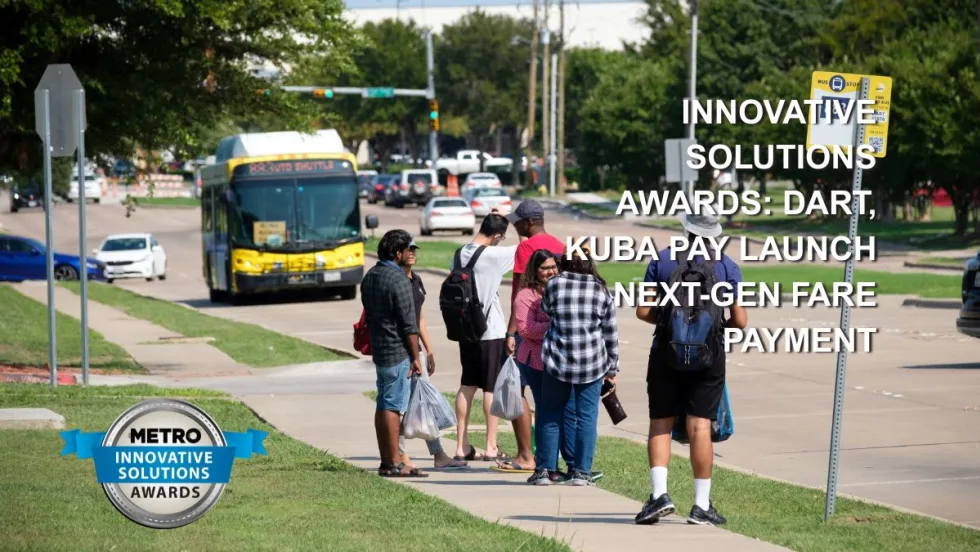
How DART's GoPass Is Redefining Regional Mobility
Serving 14 transit agencies, GoPass simplifies multimodal travel by allowing riders to plan, pay for, and manage an entire trip through one app.
Read More →
Biz Briefs: OCTA Taps Clean Energy for Hydrogen Station, Stadler to Supply Via Rail Vehicles, and More
From manufacturers and suppliers to transit agencies and motorcoach operators, these updates offer a snapshot of the projects, partnerships and business moves driving the industry forward.
Read More →CharterUP Expands Into New Mobility and Autonomous Transportation
Vice President of New Mobility Stephen Joos discusses how CharterUP is leveraging its nationwide transportation network, technology platform, and autonomous vehicle partnerships to expand into workforce mobility, campus shuttles, and transit solutions.
Read More →
METRO Magazine Announces 2026 Innovative Solutions Awards Winners
Projects Recognized for Advancing Mobility Through Technology, Accessibility, Workforce Innovation, and Operational Excellence
Read More →