



U.S. High-Speed Prospects Hit Rough Terrain
Constricted by funding problems and local politics, high-speed rail projects across the United States face uncertain futures. Federal funding is key to success, proponents say.
As South Korea celebrates the opening of its first high-speed rail line, a 185-mile route connecting Seoul and Daegu, advocates in the United States have reason to be pessimistic about high-speed rail’s prospects in this country. While Asia ramps up its construction of high-speed rail networks, the U.S. continues to struggle to lead a similar charge.
Although Amtrak offers high-speed service in the Northeast with its Acela line, many other attempts to establish state-sponsored high-speed rail in the U.S. are being thwarted by an economy and political climate that still have local, state and federal officials queasy about investing large sums of money on long-term projects.
“What high-speed rail needs in this country is a dedicated source of funding,“ says Charles Quandel, chair of the High Speed Ground Transportation Association (HSGTA) and vice president and national director of high-speed rail and intercity rail transportation for HNTB Corp. in Chicago. “Until this dedicated source is found, it will be difficult to move these projects ahead.”
Specifically, Quandel says the federal government needs to back the development of infrastructure for regional rail systems, as it has for the nation’s airport and highways. The benefits, he says, are worth the investment. “Once you build that infrastructure, you don’t need additional federal funds to maintain it,” he says. “The projections that we have seen for all of these systems is that the operational revenues will fund ongoing maintenance of the facilities, plus the cost of operations and management.”
Close to fruition
Quandel says there are several Chicago-based projects that could be deployed in the near future. One of them, the Chicago-to-St. Louis corridor, could be deployed almost immediately, he says, if federal funding is approved. “The Chicago-to-Madison [Wis.] and Chicago-to-Detroit lines could also move ahead,” he says.
Other projects that are tantalizingly close to fruition — the Florida corridor connecting Orlando and Tampa, the Portland-to-Seattle corridor and the corridor connecting Washington, D.C, and Charlotte, N.C.
Construction of the Chicago-St. Louis corridor has seen its progress slowed by uncertainty over the reauthorization of TEA 21 and the 2005 fiscal year budget recently presented by Illinois Gov. Rod Blagojevich.
“The feds just refuse to put together a policy to make it happen,” Richard Harnish, executive director of the Midwest High Speed Rail Association, told reporters. “Once the money is there, it can happen in a matter of two or three years, but we need to make a commitment to do it.”
Florida faces challenges
In Florida, the high-speed rail system approved by voters three years ago has seen its ups and downs. Earlier this year, opponents in the state legislature tried to send the measure back to the voters, but couldn’t muster enough support among colleagues in Tallahassee.
Other challenges still remain, however. Gov. Jeb Bush, a strong opponent of the high-speed rail initiative, is backing a campaign to collect voter signatures to put the measure back on the ballot.
In addition, the Florida High Speed Rail Authority (FHSRA) has requested $72 million to begin construction, but the House has only budgeted $32 million. It also stipulated that the funding must come from new road construction money rather than gasoline tax revenues. High-speed rail advocates say this action was meant to pit them against the road builders. “This was done to kill the appropriation, but it won’t work,” Rep. Dennis Ross told The Ledger in Lakeland, Fla.
In the meantime, FHSRA officials say negotiations with the Fluor Bombardier team that last fall was named preferred bidder to design, build, operate, maintain and finance the Orlando-to-Tampa line could be concluded in June or July. According to Bombardier officials, the contract is worth $4.3 billion over 30 years.
Delay in Golden State?
In California, a proposed high-speed rail project that would span 700 miles and connect Los Angeles and San Francisco is in danger of being pushed to the back-burner for 18 months. In early April, state lawmakers were weighing a measure that would delay a $10 billion bond issue to fund the project.
The bond issue was scheduled to go before voters on Nov. 2, but an effort
to push the vote back to 2006 was being made at press time. Supporters of the project likely will not be disappointed if the vote is postponed. Californians
recently approved $27 billion in bonds, making it unlikely that another large bond issue would be successful in November.
Local politics, too, have created some challenges. Which route to use to connect San Francisco to California’s central valley has become a source of conflict, pitting local municipalities against one another in a high-speed rail turf war. If proponents of a route that was previously eliminated from consideration have their way, more environmental studies will be required with concomitant delays.
Formula for success
In the long run, the battles to gain approval and then construct a high-speed rail line are all preliminary. Key to the eventual success of the rail lines will be their ability to attract a critical mass of passengers, many of whom currently use cars or planes to get to and from their destinations.
Prying people from their cars and airplanes won’t be easy, as high-speed rail hasn’t been truly tested in the U.S. But Europe and Asia, on the other hand, have experienced long-term success.
At the opening ceremony for the high-speed rail line in Seoul, South Korean Prime Minister Goh Kun said the operation is a symbol of “national completeness” and will contribute to the country’s basis for prosperity.
Quandel says regional high-speed rail in the U.S. would build on that thought. “What we’re promoting is the building of a new industry for this country,” he says, explaining that it would create permanent new jobs, not just construction labor.
Tasty T-Bone in Texas
While lengthy campaigns to bring high-speed rail to other parts of the country continue, the Lone Star State is waging its own fight to create something called the “Texas T-Bone.” This proposed network would connect Dallas/Fort Worth, San Antonio and Houston with a 500-mile T-shaped rail corridor. To lobby for this plan, a non-profit group called Texas High Speed Rail and Transportation Corp. was created in 2002. Comprising mainly city and county officials from around the state, the group is currently asking Congress for $25 million to study the project’s feasibility. Bolstering its primacy, the organization says Texas’ population is expected to more than double to 50 million people by 2040. In addition, the proposed rail network would connect the 70% of Texans who live in metropolitan Dallas/Fort Worth, Houston, San Antonio and Austin. Here’s how a recent editorial in the Dallas Morning News laid out the scope of the endeavor: “After you land at Paris’ Charles de Gaulle Airport, you can transfer to a train, which can take you at speeds as high as 186 miles per hour to Lyons, Rennes and other French cities. There’s nothing like that in Texas, but there should be.”
More Management

NITA Proposes $5B Operating Budget, $9.7B Capital Program for 2027
The proposed budget includes funding for expanded transit service, safety initiatives, fleet upgrades, and infrastructure improvements across CTA, Metra, and Pace.
Read More →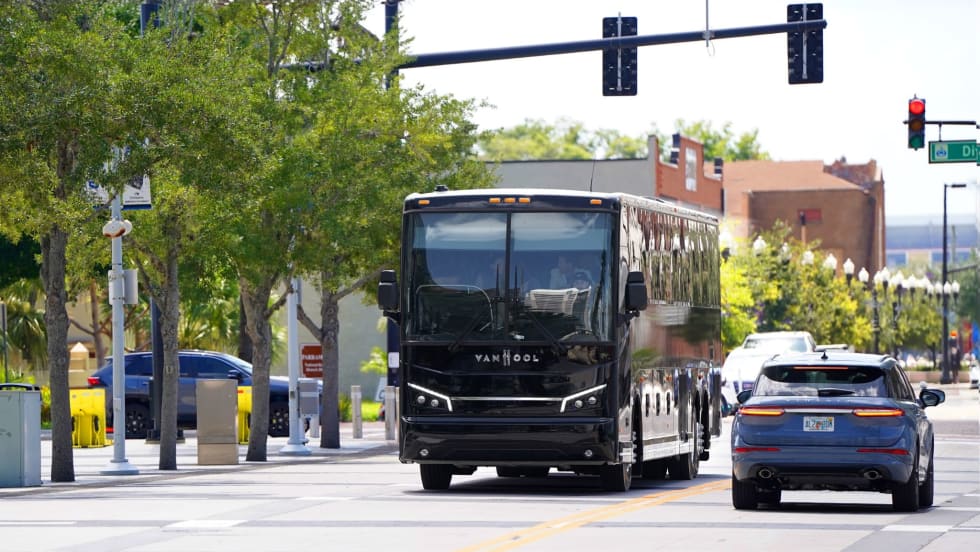
Financing, Fleet Replacement Requires a More Strategic Approach
Executives from ABC Companies and MCI discuss how rising costs, changing market conditions, and post-pandemic challenges are prompting motorcoach operators to rethink financing strategies, fleet replacement cycles, and long-term planning.
Read More →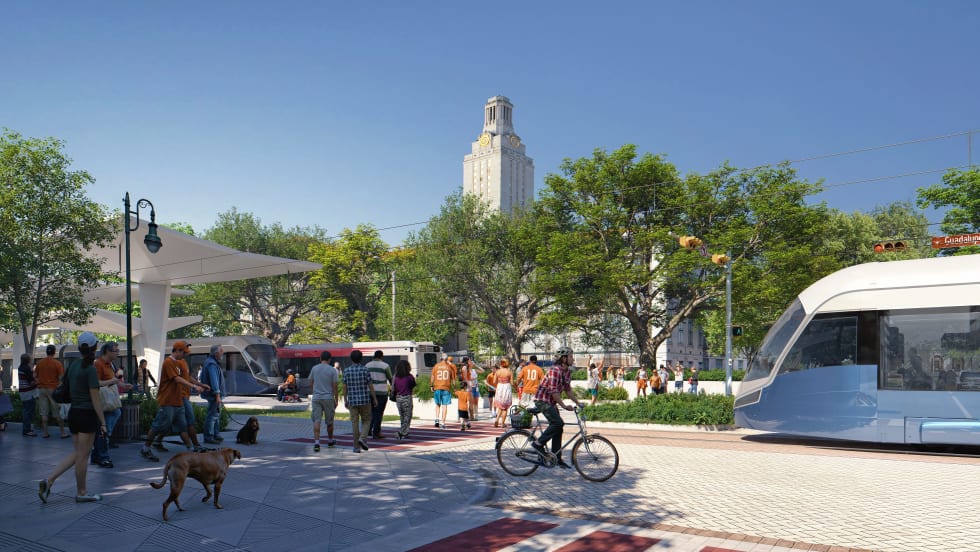
Bringing Austin’s First Light Rail System to Life
Austin Transit Partnership CEO Greg Canally discusses the city's nearly 10-mile light rail project, its collaborative approach to project delivery, the importance of community engagement, and the milestones ahead as construction approaches in 2027.
Read More →
ETA CEO John Maglio on Transit Technology, Innovation, and Building Agency Trust
ETA founder and CEO John Maglio explores the evolution of transit technology, the importance of reliable systems, and how stronger partnerships can help agencies improve operations and the passenger experience.
Read More →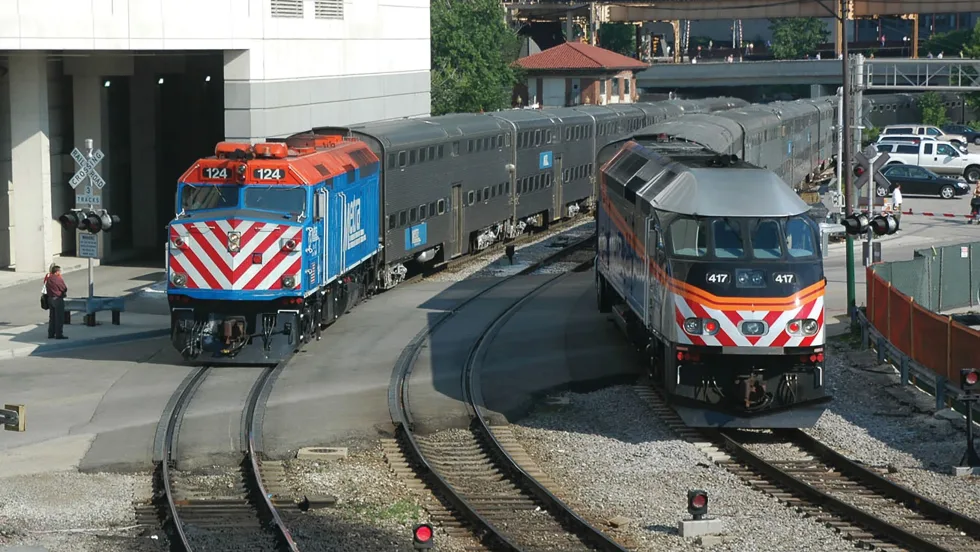
Metra Draft Plan Outlines Costs, Service Improvements for Regional Rail
The Systemwide Network Plan identifies infrastructure needs and potential investments to expand all-day, bidirectional rail service across the Chicago region.
Read More →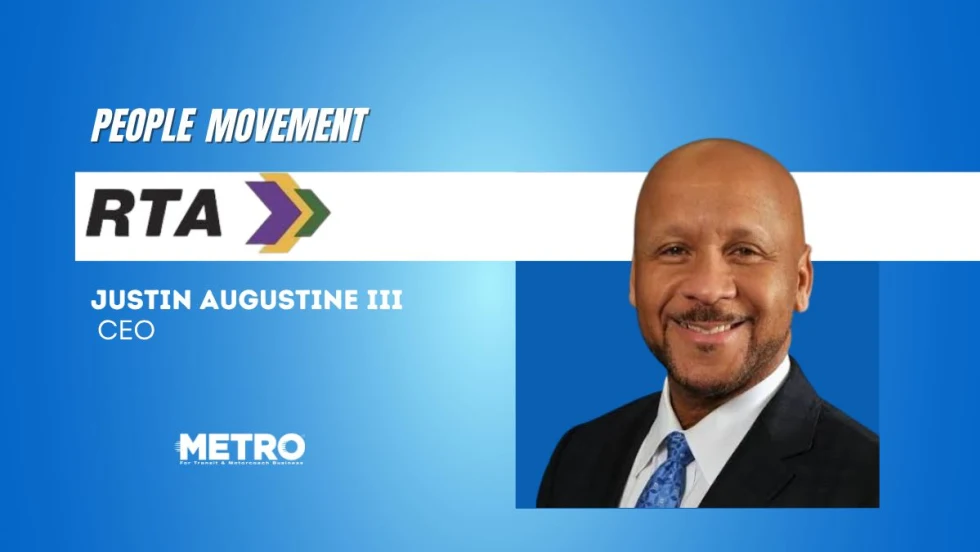
New Orleans RTA Names Augustine III as New CEO
In this edition, we also spotlight recent personnel moves at HDR, PATH, STV, and more, highlighting the people taking on new roles across the transportation industry.
Read More →
How Transit Agencies Are Using Free Rides to Improve Voting Access
Transit agencies are using fare-free service, trip-planning tools, and targeted rides to improve voting access. See what other agencies can learn from these efforts.
Read More →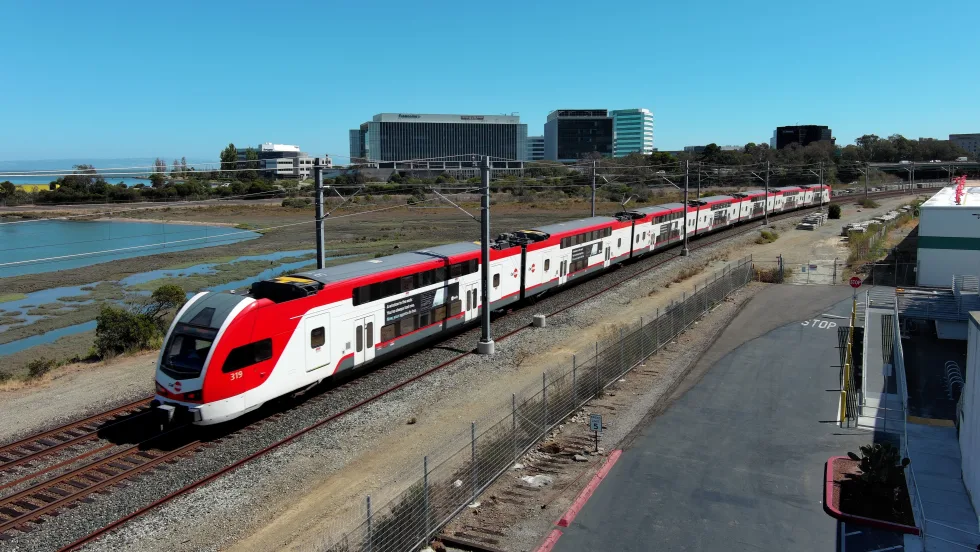
Caltrain’s Electrification Drives a New Era of Ridership Growth
The railroad’s shift to electric service has brought more frequent trains, stronger customer satisfaction, and increased ridership, earning it APTA’s Outstanding Public Transportation System award.
Read More →
Chicago, Charlotte Transit Agencies Expand Rider Support Programs
CTA launched crisis intervention teams as CATS prepares to deploy fare ambassadors, expanding customer assistance and security efforts across both systems.
Read More →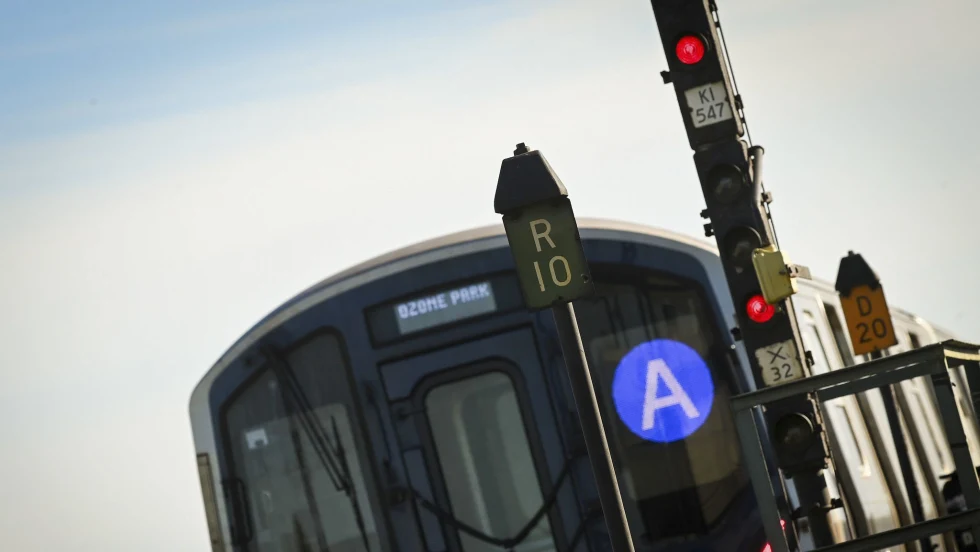
New York MTA Launches Historic $1.9B Signal, Track Modernization Project
Funded in part by congestion pricing revenue, the project will replace nearly century-old signals along the A and C lines in Brooklyn and Queens.
Read More →