



UITP Brings Modern Mobility Message to Montréal
Key topics to be covered include autonomous vehicle technology and new transport services and their potential to redefine how transit authorities plan and improve public transport.
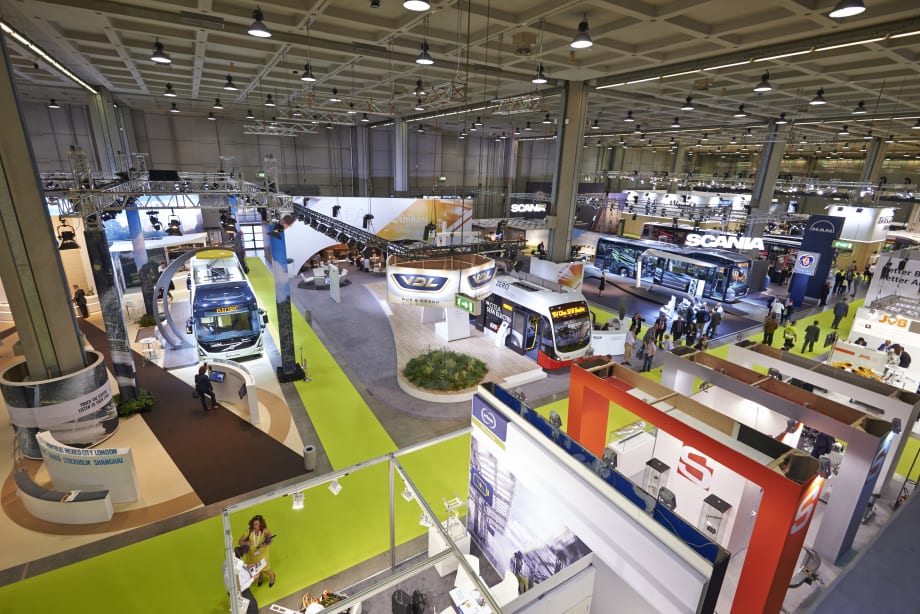
Nearly 300 companies will present their latest innovations for the transport market.
Photo courtesy UITP
Nearly 300 companies will present their latest innovations for the transport market.
Photo courtesy UITP
The UITP Global Public Transport Summit, being held May 15 to 17, 2017 in Montréal, will focus on the slogan “Lead the TRANSITion,” reflecting the rapid changes underway in urban mobility. One of the key topics being covered is how autonomous vehicle technology and new transport services have the potential to redefine how transit authorities plan and improve public transport.
The event will feature a keynote by Eno Center for Transportation President/CEO Robert Puentes. His speech will focus on “How to manage and lead the transition in a fast-changing mobility landscape.” Additionally, nearly 300 exhibiting companies will present their latest innovations, products, and solutions for the public transport market, including some world debuts of vehicles and products. A dedicated North American Pavilion will also be featured.
To find out what topics are trending in the transportation arena, we asked UITP’s Secretary General Alain Flausch to weigh in on Montréal, mobility trends, and what to expect from the Summit.
What can we look forward to at the 2017 UITP Global Public Transport Summit?
At the Summit, we will see the international public transport community, transport ministers, mayors, industry CEOs, and urban visionaries all come together to debate and explore the strategic vision of this dynamic sector. The slogan of the 2017 edition, ‘Lead the TRANSITion,’ reflects the rapid changes that are currently underway in urban mobility. When we are facing such rapid urbanization, increasing digitalization, improvements in green technology, and the arrival of new mobility players, our message is that the public transport sector cannot afford to stand on the sidelines and have its future determined by others.
One of the key topics that will be covered at the Summit is therefore to look at how autonomous vehicle technology and new transport services have the potential to not only completely redefine how authorities plan and improve public transport, but also how public transport is taking the lead in the deployment of autonomous mobility services. The Summit will focus on trends in digitalization and the constant innovation that are together driving the need for new skills in the sector. To continue serving the needs of customers, as well as stay competitive, public transport operators and manufacturers must adapt to — and even take part in developing — these new technologies, whilst dealing with challenges in cybersecurity.
The public transport sector is driving innovative solutions, such as alternative propulsion systems, that are allowing for ever-greater energy efficiency. During the Summit, a diverse range of industry leaders, including vehicle manufacturers and transport operators, will show how they are embracing these technologies and share cutting-edge industry techniques. Throughout the program, we’ll look at the challenges of urban mobility in developing economies and there will be an entire day dedicated to exploring the North American public transport renaissance.
Meanwhile, the exhibition will offer a real showcase for the very latest developments and innovations that the public transport industry has to offer. Numerous exhibitors are set to officially unveil their world premieres and there will also be a dedicated North America pavilion, providing a showcase of what the region has to offer.
What’s happening in North American public transport?
Of the many ongoing projects, light rail transport really seems to have taken off in terms of popularity. Today, cities like Los Angeles are returning to light rail as a way to address growing urbanization. L.A.’s increasingly pedestrian-friendly downtown is accessible by public transport and has many other mobility projects in progress.

Flausch
Beyond L.A., some 30 cities in the U.S. and Canada are working on light rail projects, such as preserving existing lines, extending networks or creating brand new systems. Two notable projects are the Valley Line light rail project in Edmonton and the Evergreen Line extension in Vancouver. This renewed focus on rail in North America is combined with a growing interest in innovation and industry best practices, as well as the maintenance and safety of aging, legacy infrastructure.
What does the future of urban mobility look like?
Over the last couple of years, we have seen the rapid emergence of what we call ‘new mobility players’ onto the scene. Whether it’s ride-selling services, free-floating car-sharing, demand-responsive shuttles, or even autonomous cars. What’s clear is that the traditional ‘private versus public transport’ distinction is becoming increasingly blurred. The question now is how we best integrate these news services into a holistic, shared-mobility offer.
Despite what the car industry may say about autonomous cars, public transport will remain unbeatable for carrying large amounts of people on key corridors at peak hours. There is a space and a demand for these new services in our cities, and if we can successfully integrate urban and transport planning, then we can steer the growth of public transport in complementarity with these services in a productive way.
We can also expect greater efforts to ramp-up the electrification of public transport as we work toward the objective of low- or zero-carbon urban mobility; public transport is already 40% to 50% electric, so there is still a way to go, particularly with buses. As the recent COP22 climate event illustrated, there is increasing recognition from policymakers for public transport to play the ‘backbone’ role in providing low- or zero-carbon mobility.
Finally, the buzzword of the day, ‘digitalization,’ is also opening exciting new doors for public transport. The massive increase in data that is now available to public transport companies is allowing us to increasingly enhance customer service, whether it’s developing new apps or smart ticketing solutions. It’s also allowing us to be smarter: big data will allow us to better match supply and demand and to enhance our own operations. This is a major trend and will affect how public transport interacts with its customers, other transport modes, and urban services.
More Management

LIT Marks 10-Year Milestone at Annual Summit
Hosted by the COTA from September 10 to 13, the Summit carried the theme “Celebrating 10 Years of Excellence, Leadership, and Impact,” with every part of the program honoring the people, agencies, and partners who built LIT over its first decade.
Read More →
People Movement: Dan Dipert Coaches Adds Third-Generation Leader, Keolis Names New Valley Metro VP/GM, and More
In this edition, we also cover recent appointments and announcements at the Wabtec, SilverRide, HNTB, and more, showcasing the individuals helping to shape the future of transportation.
Read More →
METRO Opens Submissions for 2026 Motorcoach Awards
Nominations are now being accepted for METRO Magazine’s Operator of the Year and Innovative Operator of the Year awards.
Read More →

New York MTA Advances Final Contract for Second Avenue Subway Expansion
Contract Four is the largest in the Second Avenue Subway Phase 2 project and includes construction of station infrastructure, tracks, and signals for the subway expansion, MTA officials said. Work on Contract Four will begin in 2027.
Read More →
Transit Agencies Highlight Safety Gains at National Summit
Leaders from 15 major transit systems shared crime-reduction results and safety initiatives while discussing the role of continued federal support.
Read More →
NITA Names New Leadership, Expands Reduced-Fare Program at First Board Meeting
The new regional transit authority appointed its first board chair and interim executive director while extending reduced fares across CTA, Metra, and Pace for eligible riders.
Read More →
Beyond the Checklist: A Structured Approach to Transit Maintenance
Reliability-Centered Maintenance helps transit agencies move beyond routine checklists to focus limited resources on the assets and failures that have the greatest impact on safety, reliability, and service.
Read More →
APTA 2026 Nominating Committee Selects Leadership Slate, Names Chair and Vice Chair Nominees
Leadership changes will help shape the association’s priorities and its representation of the transportation industry during the 2026–2027 term.
Read More →
DART Launches Major Security, Fare Enforcement Initiative
The 90-day demonstration will deploy coordinated security teams at five light rail stations while testing controlled access and gathering data to guide future investments.
Read More →
Advancing Fare Collection Through Technology and Innovation
Learn about delivering 1300 gates at 91 stations while managing fare evasion. Explore the large scale deployment, solution customization and real-world results that affect the region. Prepare for deployment in your region now.
Read More →