



Safety: Are 'Bad' Microbes Getting a 'Free Ride' on Your Transit System?
Upholstery-Free Seating Options Pave the Way In Transit
Features transit agencies should be focusing on when shopping for seats include comfort and style, ease of use and maintenance, as well as ergonomic design.
by Kelsey Nolan, Assistant Editor
January 5, 2015
Freedman Seating’s GO ES 6 bus seat has an integrated three-point external seatbelt, making the seats lightweight.
Photo: Freedman Seating
5 min to read
There are a number of factors involved in successfully choosing seats for bus, rail, motorcoach or drivers. Making the right choice can not only boost ridership for transit agencies, but eliminate costly and time-consuming headaches.
The present focuses are narrowed down to ridership comfort and the ability to clean seats quickly and efficiently, which have resulted in an industry shift toward non-upholstered seats and inserts.
Comfort and Style
Rider comfort is one of the main focuses for transit agency choice of seating. Additionally, seating style can be a driving force in customer satisfaction of a passenger or driver seat.
According to Sonny Gordon, business development manager for American Seating, the first key feature is comfort. The second is style. Having both more comfortable seats and better aesthetics can help to boost ridership. “Riders just will not accept a lack of comfort,” Gordon explains.
He goes on to say that an elevated style will help attract a wider variety of commuters, from the urban professional to lower income patrons. That is why American Seating offers a variety of finishes for customers to choose from. On top of that, providing ADA securement is of growing importance, because as the Baby Boomers age, their need for accessible easy-to-use transit is becoming more and more necessary.
Ray Melleady, managing director for USSC Group, explains comfort is also a necessity when choosing driver seats because operators are sitting for several hour increments.
USSC’s G2A seat, for heavy-duty transit applications, was developed using pressure mapping and applied ergonomics to create comfortable cushion and back support. The newest feature is a sliding cushion to accommodate taller drivers and to relieve pressure and improve blood circulation. The seats have a 500 pound lift capacity and can hold 650 pounds, with all controls easily located on the operator’s right side.
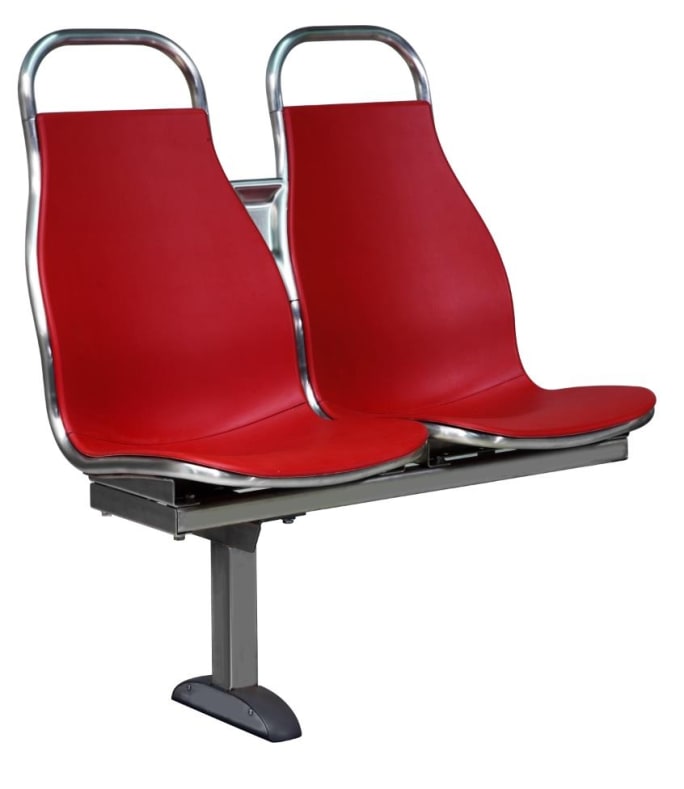
American Seating’s new, non-upholstered onserts and inserts, address the vandalism and cleanliness issues with an easy-to-clean surface that requires less maintenance and are more hygienic than fabric.
Photo: American Seating
Finally, an adjustable three-point seatbelt accommodates different sized drivers. “Drivers are far more likely to wear their seatbelts if they are comfortable,” Melleady says.
Having an aesthetically pleasing style and a comfortable seat only go so far, however, if the seats are too heavy for the vehicle. Weight-reduction should also be considered, Gordon explains, but not at the expense of compromising the performance or integrity of the seat. At American Seating, engineers continually look at ways to reduce weight in its seats and therefore cut costs without compromising the performance.
Dan Cohen, VP, sales and marketing, for Freedman Seating and 4ONE, explains that customers always need to be cognizant of weight because it may limit other vehicle additions, not to mention it can affect braking and fuel economy. The GO ES 6 bus seat from Freedman Seating was designed with weight reduction in mind. The product has an integrated three-point external seatbelt, making the seats lightweight. Plus the seatbelts are easily removed for any maintenance issues that arise.
Reducing Cost and Trouble
In an effort to continually reduce costs and meet a lowered budget, seating choices can save agencies money as they try to do more with less. Ease of use, maintenance and cleaning are necessary components to any seating choice, and manufacturers have considered all the ways to provide that for customers.
Gordon states vandalism can be a major issue for transit agencies, which leads to additional repairs and maintenance. Providing seating with vandal-resistant materials can help reduce costs and energy. Cleaning is considered one of the most time consuming activities for agencies, Gordon says. Having easy-to-clean inserts and shells helps transit agencies with this time consuming task.
“Having fabric, vinyl or leather that is easily cleaned between operator utilization and mitigates the exchange of germs is extremely important,” Melleady agrees. “There is a lot of movement toward a cosmetic or plastic insert that can be easily wiped down as opposed to an upholstered insert. For many clean is the new comfortable.”
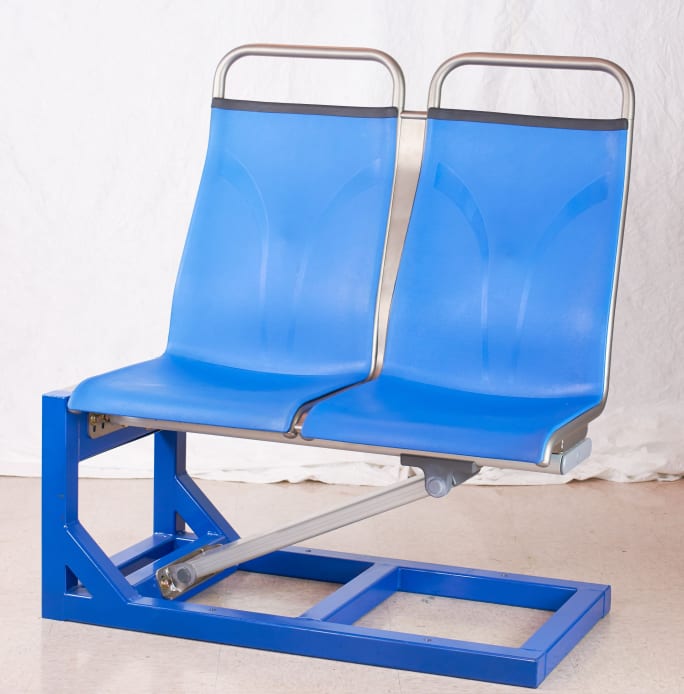
The Aries Next Gen, from 4ONE, was developed in response to end-user input about what they’d like to see in the transit sector.
Photo: 4ONE
4ONE offers a wide range of “easy to clean” molded inserts for all of its transit seating applications.
American Seating’s new, non-upholstered onserts and inserts, added to the Vision, Metropolitan and 6468 line, address the vandalism and cleanliness issues with an easy-to-clean surface that requires less maintenance and are more hygienic than fabric. The seats also include a textured surface to prevent passengers from sliding around. However, the seats maintain a slim profile and the molded in-drain holes help contribute to the ease of maintenance.
Melleady says that making durable and long-lasting products to reduce replacement costs is also important when vehicles, and therefore driver seats, are in-service 16 out of 24 hours in a day. He explains that transit agencies expect seats that last, and so the USSC group has designed its operator seating options with a 12-year lifecycle expectation.
Ease of use is important for drivers as well. Melleady says that USSC’s operator seats are ergonomically designed to easily transition to and from the fifth percentile female (the smallest) up to the 95th percentile male (the largest). And, though the company builds out each seat on a standard chassis, USSC offers a number of different options based on end-user preference.
Heeding Customer Feedback
Melleady expects a continued emphasis from customers on safety and comfort. And though these things currently exist, there will be a focus on greater integration of technology — whether that’s cooling and heating, anti-fatigue components, ergonomics or design features. One example is making outlets on buses and rail more readily available.
Gordon says that as American Seating continues to research both end-users and riders, the company will address needs as they arise. For example, Gordon says that as the average population weight increases, the need for wider seats has become apparent. So, American Seating began offering the widest seats in the industry.
The Aries Next Gen from 4ONE, Cohen explains, was not developed in a vacuum but rather in response to end-user input about what they’d like to see in the transit sector. Melleady says it is bestselling stainless steel seat in North America and built for the full life of the vehicle.
Cohen explains that it has the best hip-to-knee spacing in the industry and the cosmetic plastic insert improves cleanliness. The stainless steel back panel gives a more aesthetically pleasing look. And, the manufacturers eliminated all gaps between seats to cut down on trash being disposed. And finally, the aluminum support structure reduces the weight of the system on the newly revised Aries.
“Customers should make sure to work with companies who have done the work to ensure that not only are [customers] getting a safe product, but they are getting a safe product as it is integrated into the vehicle.” Cohen explains.
He adds customers should make sure that any existing products meet the standards of tomorrow, today so that the need to replace as laws and standards change is lessened.
Subscribe to Our Newsletter
More Bus

New York MTA Plans Largest Bus Fleet Upgrade in More Than a Decade
The agency is seeking manufacturers for 650 new CNG buses to replace aging vehicles, improve reliability, and advance its broader fleet modernization strategy.
Read More →
Building a Flexible Path to Transit Electrification
John Hroncich discusses BAE Systems’ modular and scalable approach, lessons learned from decades of real-world operations, and how agencies can identify electrification strategies that fit their fleets.
Read More →
Bus Tech Talk: Keeping Transit Technicians Ahead of the Technology Curve
LA Metro’s Obed Mejia discusses technician training, evolving maintenance technology, fleet replacement, and strategies for getting the most out of today’s transit fleets.
Read More →
Biz Briefs: RIPTA Unveils New Frontrunners, Clevland RTA Adds New Siemens, and More
In METRO's latest installment, we take a look at recent news from Siemens, Prevost, Dodge, and more partnerships making headlines across the transportation sector.
Read More →
People Movement: Holly Arnold Joins Transdev and More
In this edition, we also cover recent appointments and announcements at Pace, CamTran, MCI, and more, showcasing the individuals helping to shape the future of transportation.
Read More →
The High Cost of Transit Buses: Industry Leaders Look to Procurement Reform
Transit leaders and policymakers examine how standardized bus designs, streamlined procurement, and predictable funding could help agencies stretch budgets and deliver better service.
Read More →
The Business Voice Behind Public Transportation
As chair of APTA’s Business Members Board of Governors, Ray Melleady explains how more than 850 business members are partnering with transit agencies to advance funding, innovation, and industry-wide collaboration.
Read More →
From Surviving to Thriving: Building Stronger Transportation Organizations
Bus Business Consultants founder Brian Dickson shares lessons on leadership, organizational health, and creating options for long-term success in a changing transportation industry.
Read More →
Finding the ‘Happy Medium’: Optimizing Maintenance Without Sacrificing Reliability
The key to maintenance optimization isn’t doing less work—it’s doing the right work at the right time on the right assets.
Read More →
LA Metro, City of West Hollywood, and Partners Advance Smarter Bus Lane Enforcement
The award-winning partnership combines AI-powered detection with human oversight to improve bus reliability, accessibility, and enforcement efficiency.
Read More →