



Vancouver transit systems achieve ridership gains from Olympic Games
TransLink SkyTrain ridership was up 54 percent during the first week of the Olympic Games.
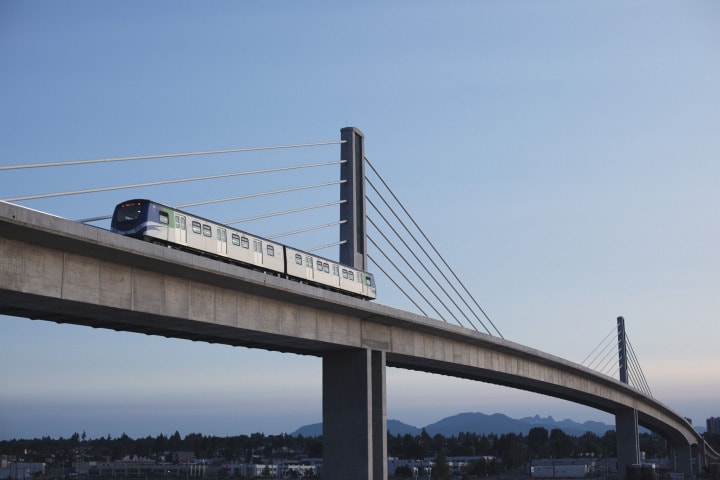
Courtesy TransLink
During the first week of the 2010 Olympic Winter Games, an average of more than 1.6 million people a day used Vancouver, British Columbia transit systems, such as the TransLink bus, SkyTrain, SeaBus and West Coast Express. The various systems were able to effectively work together to accommodate the unanticipated crush of attendees.
Preliminary daily averages show that TransLink bus ridership was up 34 percent to 975,000; SkyTrain increased 54 percent to 369,700; SeaBus spiked 200 percent to 48,000; and the West Coast Express was at 19,538 - up 78 percent from February 2009.
There were numerous times each day when crowds at many different locations were exceptionally heavy.
SkyTrain's Expo and Millennium Lines ran longer trains at rush-hour service levels, and the Canada Line used every available train at times to meet the demand. The West Coast Express, working in cooperation with the Canadian Pacific Railway, added trains at midday and late at night, bringing in an additional car to extend the length of certain trains.
TransLink ran peak hour service for most of the days. All 160 buses were stationed strategically around the region so they could be called into service when needed. "We probably put in between 2,000 and 2,500 additional hours of service into the system for that three-week period," said TransLink's Ken Hardie, head of communications.
Effective on-the-ground decision-making by transit supervisors also allowed Coast Mountain Bus Co. to call in additional buses from the fleet of on-demand coaches - the equivalent of 180 40-foot buses - when and where needed. SeaBus used all three of its vessels, 14 hours a day, to keep waiting times to a minimum.
During the closing ceremonies, the agency also planned for extra service to be dedicated to passengers coming off the ferries and heading into town. The downtown crowd built throughout the day to approximately 150,000 people. Everyone jostled for position at their favorite bar or restaurant to take in the gold medal hockey game and, after Canada's win, they all took to the streets, Hardie said.
"It was a very pleasant day...around 3:00 in the afternoon we actually had to pull buses out of downtown Vancouver altogether, because they couldn't move," Hardie said. In order to prevent equipment from getting trapped in the downtown crowd, TransLink had to temporarily suspend all bus service, but continued to maintain the SeaBus passenger ferries from North Vancouver as well as the SkyTrain headed into downtown. "We managed to get the buses back in between 6 p.m. and 7 p.m. Then, we started to reintroduce very high levels of service to get that crowd cleared out, which was finally done by about 2:30 in the morning," Hardie said.
Despite the challenge, the experience turned out to be extremely positive, Hardie said. "We went in understanding that transportation has always been under the microscope as being one of the potential weak links of any Olympics. To be honest, our hope was that we would simply stay under the radar and there would be nothing that drew negative attention to us. But...we got a lot of positive attention. People understood the dynamics of what was going on."
TransLink used social media, including Twitter and a blog, during the games, enabling them to keep in touch with attendees at street level, continually informing them of schedule changes and re-routes. "We were able to adjust services and communicate those adjustments quite effectively, which really contributed to a high level of satisfaction from the public. They seemed to be extremely pleased not only with the effort, but with the result," Hardie said.
In addition, the agency sent their office staff into the streets to be hosts and queue managers to keep people informed, and worked closely with the local mass media.
More Bus

New York MTA Plans Largest Bus Fleet Upgrade in More Than a Decade
The agency is seeking manufacturers for 650 new CNG buses to replace aging vehicles, improve reliability, and advance its broader fleet modernization strategy.
Read More →
Building a Flexible Path to Transit Electrification
John Hroncich discusses BAE Systems’ modular and scalable approach, lessons learned from decades of real-world operations, and how agencies can identify electrification strategies that fit their fleets.
Read More →
Bus Tech Talk: Keeping Transit Technicians Ahead of the Technology Curve
LA Metro’s Obed Mejia discusses technician training, evolving maintenance technology, fleet replacement, and strategies for getting the most out of today’s transit fleets.
Read More →
Biz Briefs: RIPTA Unveils New Frontrunners, Clevland RTA Adds New Siemens, and More
In METRO's latest installment, we take a look at recent news from Siemens, Prevost, Dodge, and more partnerships making headlines across the transportation sector.
Read More →
People Movement: Holly Arnold Joins Transdev and More
In this edition, we also cover recent appointments and announcements at Pace, CamTran, MCI, and more, showcasing the individuals helping to shape the future of transportation.
Read More →
The High Cost of Transit Buses: Industry Leaders Look to Procurement Reform
Transit leaders and policymakers examine how standardized bus designs, streamlined procurement, and predictable funding could help agencies stretch budgets and deliver better service.
Read More →
The Business Voice Behind Public Transportation
As chair of APTA’s Business Members Board of Governors, Ray Melleady explains how more than 850 business members are partnering with transit agencies to advance funding, innovation, and industry-wide collaboration.
Read More →
From Surviving to Thriving: Building Stronger Transportation Organizations
Bus Business Consultants founder Brian Dickson shares lessons on leadership, organizational health, and creating options for long-term success in a changing transportation industry.
Read More →
Finding the ‘Happy Medium’: Optimizing Maintenance Without Sacrificing Reliability
The key to maintenance optimization isn’t doing less work—it’s doing the right work at the right time on the right assets.
Read More →
LA Metro, City of West Hollywood, and Partners Advance Smarter Bus Lane Enforcement
The award-winning partnership combines AI-powered detection with human oversight to improve bus reliability, accessibility, and enforcement efficiency.
Read More →