



Learn More: A Conversation with the UMA’s Scott Michael
What Every Operator Should Know Before Selling a Motorcoach Business
With more operators nearing retirement and investor interest on the rise, now is the time to plan your exit strategy. Here’s how to prepare your business for a successful sale that avoids leaving money on the table.
by Robert Bezede, Harmony Succession Partners (HSP)
January 1, 2026
As more motorcoach operators approach retirement, succession planning has become essential to ensure business continuity and maximize company value.
Photo: METRO
9 min to read
Succession planning has become one of the most pressing challenges in the motorcoach industry. A significant number of operators across North America are approaching retirement without a clear transition strategy.
Over the past six months, our team at Harmony Succession Partners (HSP) has engaged with four motorcoach companies and spoken with many more that are planning to exit in the next one to three years. This reflects a nationwide reality; baby boomers control over 10 million small and mid-sized U.S. businesses, representing an estimated $10 trillion in assets. Unfortunately, most lack an internal succession plan.
As mergers and acquisitions (M&A) advisors with experience in the motorcoach industry, we frequently speak with owners who believe there are few, if any, buyers for their business and that the best exit outcome is to sell to their local competitor or liquidate their equipment. However, with proper preparation and sufficient runway, having a successful exit is realistic in today’s marketplace.
The industry has emerged post-COVID leaner and more efficient, with fewer competitors and more substantial profit margins. For many, their businesses look stronger today than they have in the last decade, creating conditions that are attracting a new wave of financial buyers for motorcoach companies.
In the past year, we have seen two notable new financial players enter the sector, each with an aggressive acquisition strategy.
In the US, Florida-based private equity firm Trivest Partners acquired Texas-based Star Shuttle Service in May 2024 and has since acquired two additional groups, Roadrunner Charters and Cline Tours, more than doubling its operations in the last 12 months.
In Canada earlier this year, our firm advised Great Canadian Holidays and Coaches on its sale to Fortress Coach Partners, a consortium of financial investors that also acquired Tisdale Bus Lines, creating a regional leader and attracting strong interest from financial buyers.
So how can you prepare your business for sale and focus on the key areas that will increase your business’s value to prospective buyers?
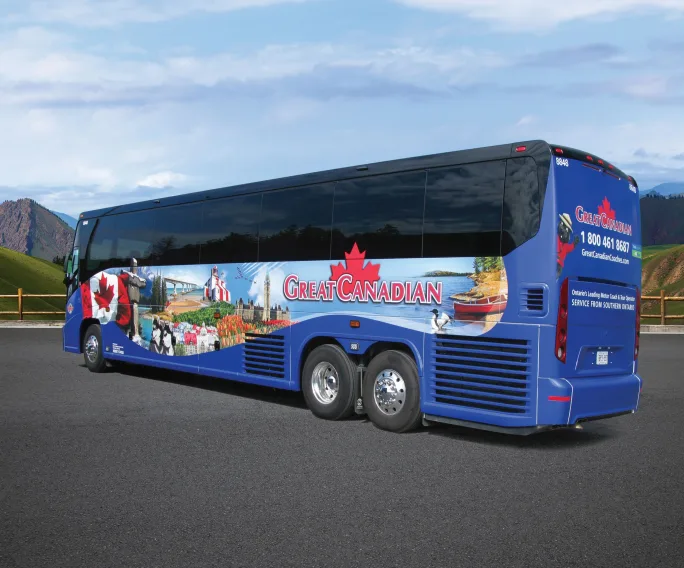
Working with experienced M&A advisors can help owners navigate valuation, deal terms, and transition planning — turning a complex sale into a well-executed exit strategy.
Photo: MCI/Great Canadian Holidays and Coaches
Motorcoach Valuations & Key Drivers of Value
Knowing your business's value is the first step in preparing for a sale. If you are learning for the first time what your business is worth from a potential buyer, you will likely find yourself on the back foot of that price negotiation.
Like most businesses, profitable motorcoach companies are valued based on their normalized profit or “EBITDA,” which means earnings before interest, tax, and depreciation, in the last 12-month period.
Buyers place a much higher weighting on what your performance is today versus what it was several years ago, so your most recent earnings are the most important when it comes to valuation.
While valuations can vary based on the strength of the business and the competitive tension between buyers, created by a professional M&A advisor, motorcoach EBITDA valuations, on average, fall within the 4x to 6x range. Whether your business falls at the top or bottom end of this range will depend primarily on the factors below.
Age of Fleet: The age of the fleet is a critical driver of value, indicating the potential need for near-term capital investment that would factor into the overall valuation a buyer is willing to pay. An average age of five to seven years is perceived as more conducive to keeping maintenance costs and customer service issues to a minimum, mainly because one to two of those years resulted in significantly less mileage on the vehicle due to the pandemic. Larger consolidators in the motorcoach sector are transitioning to a shorter replacement cycle, capitalizing on strong used equipment values to reinvest capital, keep their fleets newer, and improve margins.
Scale: Scale remains a primary driver of valuation premiums in the motorcoach industry. Because it generally requires the same level of effort and due diligence to complete a small transaction as a larger one, buyers tend to favor companies of sufficient size to contribute meaningfully to their growth objectives. Operators generating less than $1 million in annual profit typically encounter a limited pool of buyers and would benefit from scaling beyond this level to attract broader market interest. Businesses earning between $1 million and $7 million are generally viewed as strong bolt-on opportunities for consolidators or local investors. In comparison, those exceeding $7 million draw the most significant interest from international buyers, private equity firms, and strategic acquirers seeking scalable platforms.
Revenue Mix: The quality of your business’s revenue drives the sale price premium buyers are willing to pay. Not every dollar of profit is created equal; it is crucial to choose the right type of business. Revenue quality is defined by (i) diversified customer base where your largest customers account for no more than 20% of your annual sales; (ii) diversified end markets where your customer base are in non-cyclical markets like schools, non-emergency medical, collegiate and professional sports teams, churches, corporate partners, military and government entities; (iii) multi-year customer contracts with built in price increases ensuring a higher predictability of year over year revenue; (iv) balanced multi-day fleet utilization rather than a heavy concentration on weekends or one-off events; and (v) a healthy profit margin (+25%) when factoring in direct and overhead costs. In short, the more sustainable and profitable your customer base is, the more valuable your valuation multiplier will be.
Management: The less dependent a motorcoach operation is on its owner and the stronger the middle management team is in running the day-to-day operations, the more valuable your business is. Similar to the aging business owner demographic, the motorcoach sector is facing a management succession challenge, with key roles such as dispatch, service & repair, and sales seeing the retirement of experienced leaders with few successors in place. Buyers place a premium on mid-career management teams with substantial operational experience, decision-making authority, and a data-driven approach to management. In contrast, management groups approaching retirement without a clear succession plan for that key role can negatively impact the valuation of your motorcoach business.
Skilled & Licensed Mechanics: Similar to the shortage of capable middle managers, the number of licensed mechanics able to work on servicing motorcoaches is in short supply in today’s market. It is not uncommon to see owners in the shop with their hands dirty, or a single mechanic working overtime to manage a fleet that would keep two to three full-time workers busy. Garage capacity has become a key bottleneck to growth and a pathway to unlocking greater profitability in a growing fleet. Consolidators are keen to acquire companies with the capacity to absorb more work in their existing shops, supported by a strong culture and the ability to recruit, train, and retain younger mechanics.
Density: Motorcoach companies that achieve market density, typically through clustering of numerous garage locations in a region, are better positioned to attract interest from larger national consolidators. Buyers value the strategic advantage of establishing a sizable regional footprint and the operational synergies that come with being the dominant player in a given market. Density also improves operational efficiency by increasing equipment availability and reducing reliance on higher-cost third-party maintenance providers, thereby driving higher overall profit margins.
Deal Terms Dictate Deal Price
While price is important, the terms under which you receive it are more critical.
While every seller’s goal is to receive 100% of the purchase price upfront in cash, this is rarely the case in most M&A transactions.
Generally, sellers of motorcoach companies should expect between 70% to 90% of the purchase price to be in cash, with the remainder paid later through seller financing. In this typical arrangement, the seller effectively lends the buyer a portion of the purchase price to be repaid over several years after the sale, subject to specific terms.
We often recommend that sellers have sufficient runway to maintain flexibility during M&A negotiations. Especially for private equity buyers who are out of the industry, they will be heavily reliant on the team in place to run the business.
The strongest signal a seller can send to a prospective buyer is the owner’s willingness to remain invested beyond the customary six- to 12-month transition period. This approach not only signals confidence in the company’s future performance but also reduces the buyer’s perceived transition risk, often leading to higher valuations.
On the other hand, an owner seeking a quick exit and unwilling to hold back a portion of the purchase price transfers most of the transaction risk to the buyer. Unless the business is powerful, which is rare, buyers will typically adjust their offer downward to compensate for the added transition risk.
The most common form of seller financing is a “seller note,” in which the seller allows the buyer to pay part of the purchase price over time, typically with interest, secured by the business.
The interest rate charged to the buyer is slightly higher than the prevailing interest rate on the acquisition debt provided by banks. However, a stronger signal that can be more attractive to financial buyers, especially if the seller is open to staying involved for several years, is retaining minority equity in the company post-sale.
The more “skin in the game” a seller is willing to provide (or, in some cases, share with key staff) the more likely a buyer will get comfortable with investing in that business and be willing to pay more.
In any transaction involving equity, we ensure that a “put option” is included in the shareholder agreement, giving the seller sole discretion to sell back the equity in the future, thereby providing a clear path to full liquidity.

Post-pandemic market shifts and rising investor interest have created new opportunities for well-prepared motorcoach businesses to attract strategic buyers.
Photo: ABC Companies/Roadrunner
Build Your Deal Team Years in Advance
One of the biggest mistakes we see business owners make is waiting too long to begin preparing for a sale and assembling the advisors they need to manage the process.
Often, a flirtatious conversation with a buyer can quickly turn into an offer, leading to a hurried, confused scramble to find the right advisors. Hiring the right team takes time, and it can save you millions of dollars if you pick the right partners early enough and develop a game plan before you need one.
Generally, the first step is to find an M&A advisor who understands the motorcoach industry and can provide a preliminary valuation of your business. This exercise will not only offer numerous answers but will also likely reveal different areas that you can focus on to improve your business years in advance.
Once a valuation is complete, the next step is to ensure you have the correct tax structure in place.
It is almost always easier to save a dollar in taxes than it is to grow the value of your business by that same dollar. Establishing a tax plan will require some time and investment in a qualified tax accountant. Ensure you have a tax plan in place at least two to five years before you intend to sell, as many effective planning strategies require a minimum holding period to qualify. Starting too late can limit your options and increase your tax bill upon sale.
The last piece of the puzzle is a skilled M&A lawyer. This is often where owners slip up, turning to the same lawyer who’s handled their contracts for years. Loyalty is understandable, but selling your business is a high-stakes event that demands a specialist. It’s like asking your family doctor to perform brain surgery; both are great at what they do, but only one is trained for that specific level of complexity.
We often observe that when general commercial lawyers become involved in M&A transactions, they create additional headaches and unnecessarily increase costs. Ensure that you find an M&A lawyer who handles 10 or more M&A deals per year of similar size. Their specialized experience will significantly expedite the deal, ensure you are adequately protected, and save you money.
Now may be the right time to start exploring your next move. Begin planning early, give yourself the runway to prepare, and surround yourself with the right advisors to help you maximize the value of the most important sale of your career.
Quick Answers
With many operators nearing retirement and an increased interest from investors, the current market conditions present favorable opportunities for selling a motorcoach business.
*Summarized by AI
Subscribe to Our Newsletter
More Motorcoach

Roman Cornell on ABC Companies’ Evolution and the Future of Passenger Transportation
The company’s CEO discusses carrying forward a third-generation family legacy, ABC’s continued evolution in passenger transportation, support for increasingly complex fleets, and how technology and continued investment could help operators improve uptime.
Read More →
From Surviving to Thriving: Building Stronger Transportation Organizations
Bus Business Consultants founder Brian Dickson shares lessons on leadership, organizational health, and creating options for long-term success in a changing transportation industry.
Read More →
Report: Canadian Motorcoach Industry Generates $4.4B in Economic Impact
The 2025 Motorcoach Economic Impact Report finds motorcoach travel supported nearly 25,000 jobs and generated $980 million in federal, provincial, and local taxes.
Read More →
Prevost Opens Expanded Chicago-Area Service Center
The $8.1 million Elk Grove Village investment nearly triples facility space while adding service capacity, parts storage, and customer amenities.
Read More →
People Movement: Dan Dipert Coaches Adds Third-Generation Leader, Keolis Names New Valley Metro VP/GM, and More
In this edition, we also cover recent appointments and announcements at the Wabtec, SilverRide, HNTB, and more, showcasing the individuals helping to shape the future of transportation.
Read More →
METRO Opens Submissions for 2026 Motorcoach Awards
Nominations are now being accepted for METRO Magazine’s Operator of the Year and Innovative Operator of the Year awards.
Read More →
Biz Briefs: Alstom Lands Canadian Contract, LYT to Supply California TSP, and More
In METRO's latest installment, we take a look at recent news from Complete Coach Works, Beep, FlixBus, and more partnerships making headlines across the transportation sector.
Read More →
Biz Briefs: RIPTA Unveils New Frontrunners, Clevland RTA Adds New Siemens, and More
In METRO's latest installment, we take a look at recent news from Siemens, Prevost, Dodge, and more partnerships making headlines across the transportation sector.
Read More →
People Movement: Holly Arnold Joins Transdev and More
In this edition, we also cover recent appointments and announcements at Pace, CamTran, MCI, and more, showcasing the individuals helping to shape the future of transportation.
Read More →
ABA Report: Motorcoach Travel Generates $161.6B Economic Impact
The 2025 analysis finds motorcoach travel supported nearly 900,000 jobs and generated $28 billion in federal, state, and local taxes.
Read More →