



U.S. Zero-Emission Bus Adoption Surpasses 8,000 Vehicles
CALSTART’s latest Zeroing in on ZEBs report shows continued nationwide growth despite supply-chain challenges. The group’s Deputy Director of Transit, Mike Hynes, talked to METRO about how agencies are adapting procurement strategies, fleet plans, and more.

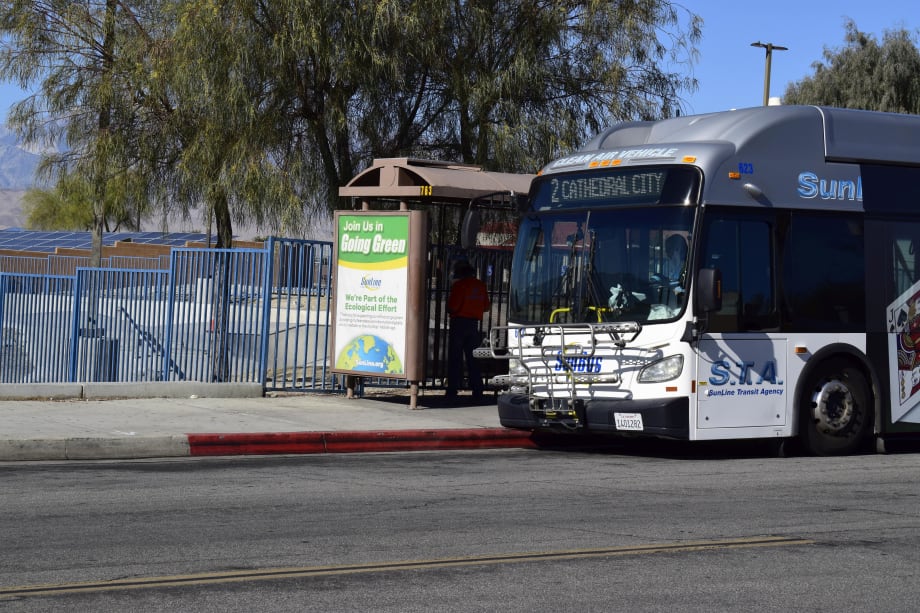
During the reporting period, fuel cell electric bus adoption reached 855 vehicles nationwide, with growth driven by new vehicle introductions and fleet expansions in states with existing hydrogen programs, as well as investments in fueling infrastructure.
SunLine Transit
- The adoption of zero-emission buses in the U.S. has surpassed 8,000 vehicles, according to CALSTART’s latest report.
- Despite facing supply-chain challenges, there is continued nationwide growth in the implementation of zero-emission buses.
- Agencies are adapting their procurement strategies and fleet plans to accommodate the increasing number of zero-emission buses, as discussed by CALSTART's Deputy Director of Transit, Mike Hynes.
*Summarized by AI
Zero-emission bus adoption is steadily expanding across the US despite persistent supply-chain challenges and procurement delays, according to CALSTART’s latest Zeroing in on ZEBs report.
The annual market analysis tracks the number of transit ZEBs funded, ordered, delivered, or deployed nationwide as of July 2025.
Zeroing in on Key Findings
Key findings in this year’s report include:
- As of July 2025, a total of 8,116 full-size ZEBs have been funded, ordered, delivered, or deployed, representing 16% growth over the July 2024 count. Nearly 1,400 small ZEBs have been adopted nationwide, representing 20% of year-over-year growth.
- Full-size ZEB adoption remains geographically widespread. California continues to lead the nation with 1,933 battery-electric buses and 690 fuel cell electric buses, followed by New York (829), Washington (521), Florida (519), and Massachusetts (292). Notable year-over-year increases were observed in California, Washington, Indiana, Wisconsin, and Illinois.
- Battery-electric buses remain dominant — 7,261 full-size vehicles have been adopted nationwide, representing a 13% increase from the previous reporting year — but fuel cell buses gain traction as agencies diversify their zero-emission mix.
- Fuel cell electric buses surged 49% nationwide, outpacing overall ZEB growth. During the reporting period, fuel cell electric bus adoption reached 855 vehicles nationwide, with growth driven by new vehicle introductions and fleet expansions in states with existing hydrogen programs, as well as investments in fueling infrastructure. California remains the largest market, followed by Nevada (52), New York (15), Illinois (14), and Ohio (14).
- More than 1,000 new ZEBs were added despite supply chain and manufacturing constraints.
Background on the Report
The report defines zero-emission buses (ZEBs) as Class 3 and higher battery-electric or hydrogen fuel-cell transit buses. Full-size ZEBs include Class 7 and 8 buses measuring 30 feet or longer, while small ZEBs refer to Class 3–6 transit buses shorter than 30 feet.
The analysis draws on more than three decades of CALSTART’s work in advancing clean transit, combining extensive data collection with insights from industry experts and other credible sources.
Designed as a practical resource for transit agencies, universities, and private-sector innovators developing vehicle and charging infrastructure technologies, the report offers data and analysis intended to support economic development, job growth, and the continued expansion of clean transportation across the U.S.
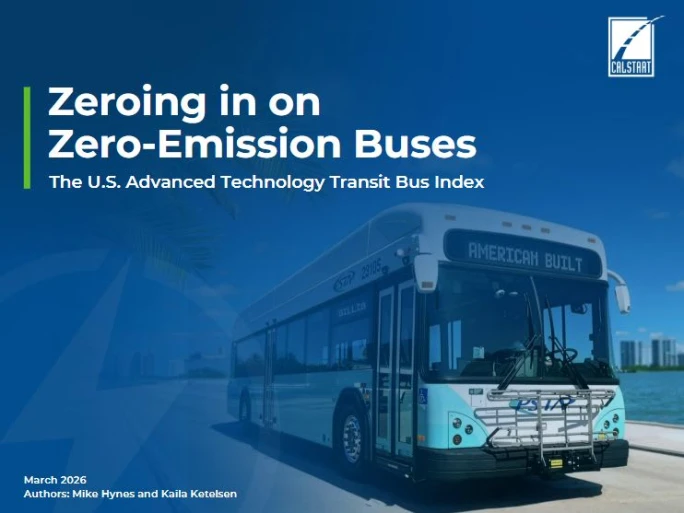
The analysis draws on more than three decades of CALSTART’s work in advancing clean transit, combining extensive data collection with insights from industry experts and other credible sources.
CALSTART
State of ZEBS and More with CALSTART’s Mike Hynes
Mike Hynes, deputy director of transit at CALSTART, told METRO that it is a positive step that the U.S. transit industry continues to make measurable progress in adopting ZEBs, even as agencies navigate ongoing procurement and manufacturing challenges.
“At more than 8,000 zero-emission buses, a 16 percent increase year-over-year, the data shows that adoption continues across a wide range of agencies and operating regions,” Hynes said. “The milestone also shows that ZEBs are moving beyond early pilots and becoming part of long-term fleet modernization strategies, even as agencies continue to manage procurement challenges and manufacturing constraints.”
However, transit agencies continue to face a constrained supply environment, the report found, with limited manufacturing capacity and extended vehicle production timelines remaining major factors shaping how agencies plan their fleet transitions.
“Transit agencies are operating in a constrained manufacturing environment with limited suppliers, long vehicle lead times, and competition for production capacity,” Hynes said. “In response, many agencies are taking a more strategic approach to procurement, using tools such as statewide contracts, joint procurements, and continued use of blended funding sources to stretch limited resources and keep projects moving forward.”
These collaborative procurement approaches are helping agencies manage delivery timelines while maintaining project momentum, Hynes said.
“These approaches not only help manage delivery timelines but also demonstrate how agencies are working collaboratively to reduce costs and serve as responsible stewards of taxpayer dollars,” he added.
The report also highlights a shift in how transit agencies are approaching zero-emission fleet planning. Rather than adopting a single propulsion technology across an entire system, agencies are increasingly evaluating vehicle technology based on specific operational needs.
“Transit agencies are taking a more strategic approach to fleet modernization, assessing their operational needs first and then determining which propulsion technologies best fit those requirements,” Hynes said. “Instead of pursuing a single technology across an entire system, many agencies are planning transitions route-by-route and facility-by-facility based on service characteristics and infrastructure readiness.”
This tailored approach allows agencies to gain experience with both battery-electric and hydrogen fuel-cell buses while aligning vehicle choices with route conditions and infrastructure availability.
Policy changes at the federal level may also influence how agencies sequence future procurements and infrastructure investments, Hynes explained.
“Recent federal policy changes may lead some agencies to revisit deployment timelines and reassess how they sequence vehicle purchases and infrastructure investments,” he said. “In some cases, agencies may pause or adjust procurement plans temporarily while they evaluate funding availability and project readiness, particularly for charging infrastructure.”
Despite these adjustments, Hynes noted that the overall trend toward zero-emission transit fleets remains strong.
“At the same time, adoption continues across a wide range of states and transit systems, reinforcing that zero-emission buses are becoming part of long-term fleet modernization strategies rather than a limited set of early-adopter projects,” he said.
Looking ahead, maintaining industry momentum will depend on stable funding programs, increased domestic manufacturing capacity, and continued technical support for transit agencies implementing new technologies.
“Maintaining momentum will depend on progress in three key areas: stable funding, enhanced domestic manufacturing capacity, and ongoing technical support for transit agencies,” Hynes said. “Reliable funding enables agencies to plan multi-year fleet upgrades, while increasing manufacturing capacity can help shorten delivery times and satisfy rising demand.”
He added that practical guidance will remain essential as agencies expand deployment of advanced propulsion technologies.
“Agencies will still need practical assistance with infrastructure planning, procurement, and deployment as advanced propulsion technologies expand across the industry,” Hynes said. “Organizations like CALSTART collaborate with agencies and industry partners to help turn innovation into implementation.”
Quick Answers
Surpassing 8,000 zero-emission buses is significant as it highlights the progress in adopting eco-friendly public transportation solutions, which can lead to reduced carbon emissions and improved air quality.
*Summarized by AI
More Zero Emissions

Report: Transit Bus Manufacturing Supports 34,100 Jobs, $5.1B in GDP
The “Buses Mean Business” report examines the transit bus manufacturing industry’s economic footprint, supply chain, and rising demand for vehicle replacements.
Read More →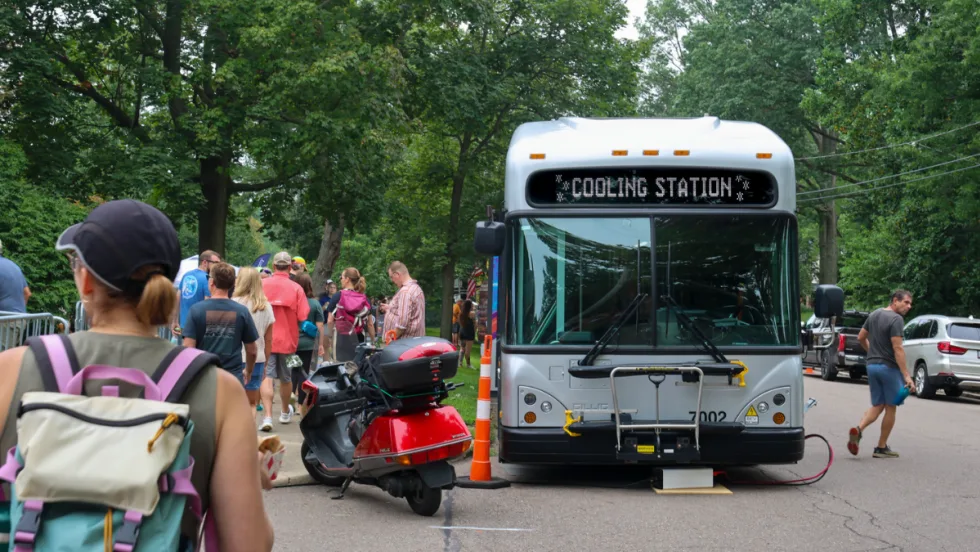
Ohio’s METRO RTA Turns Electric Buses into Mobile Power Sources at PorchROKR
See how three Gillig battery-electric buses powered festival stages while the agency’s new Park & Ride service carried approximately 1,000 attendees, demonstrating another potential use for transit agencies’ electric fleets.
Read More →
CALSTART and Forth Combine to Form Catalyst Mobility
The new name represents a renewed vision for the nonprofit focused on advancing clean, equitable, and affordable transportation solutions that move people and goods.
Read More →
Building a Flexible Path to Transit Electrification
John Hroncich discusses BAE Systems’ modular and scalable approach, lessons learned from decades of real-world operations, and how agencies can identify electrification strategies that fit their fleets.
Read More →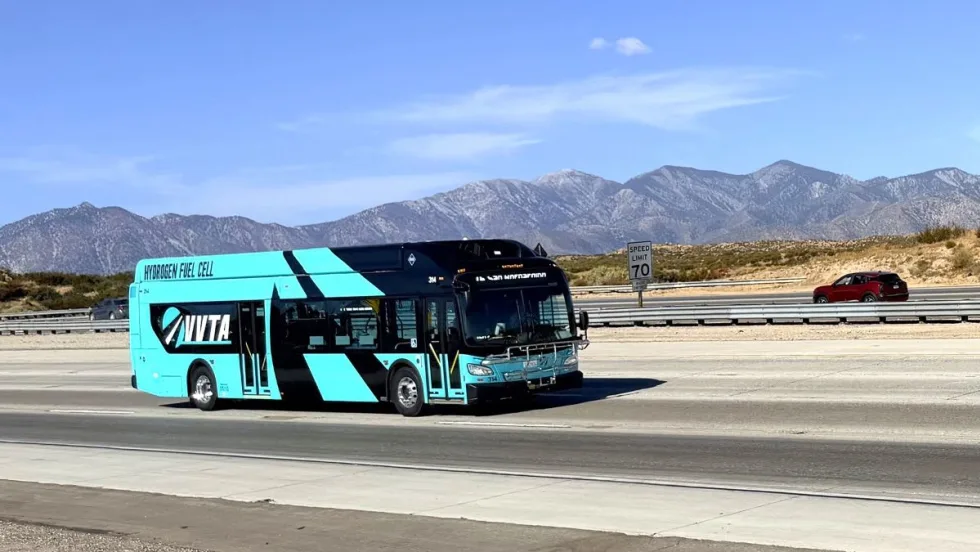
California's VVTA Begins Phased Rollout of Hydrogen Fuel Cell Buses
The agency is introducing 13 zero-emission buses into revenue service while evaluating performance across its urban, rural, and long-distance routes.
Read More →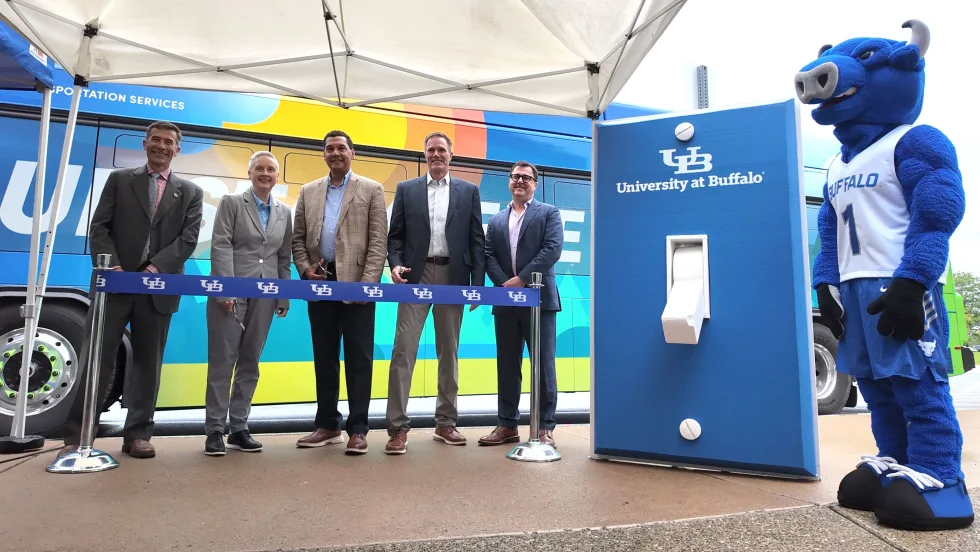
Inside Look: University at Buffalo Puts First 8 Electric Buses Into Stampede Service
UB, transportation solutions provider WeDriveU, and fleet electrification specialist Zenobē marked the deployment in the presence of students, university administrators, and local officials.
Read More →
Biz Briefs: OCTA Taps Clean Energy for Hydrogen Station, Stadler to Supply Via Rail Vehicles, and More
From manufacturers and suppliers to transit agencies and motorcoach operators, these updates offer a snapshot of the projects, partnerships and business moves driving the industry forward.
Read More →
AC Transit’s Cecil Blandon on Building the Next Generation of Transit Maintenance Leaders
The agency’s maintenance chief discusses leadership, workforce development, zero-emission technology, and preparing technicians for the future of public transportation.
Read More →
CTDOT Taps STV for Electric Bus Facility Design
The firm will work with CTDOT and RVT to define the facility layout, operational requirements, and long-term flexibility for RVT’s growing electric fleet.
Read More →
Chicago’s Pace Deploys 24 Hybrid-Electric Buses in Will County
The new buses reduce emissions and fuel consumption while advancing the agency's long-term goal of transitioning to a fully zero-emission fleet.
Read More →