



Schools emerge as profitable market for luxury buses
With the industry shifts and fragmentation, it is often necessary to diversify into new markets to remain viable and profitable.
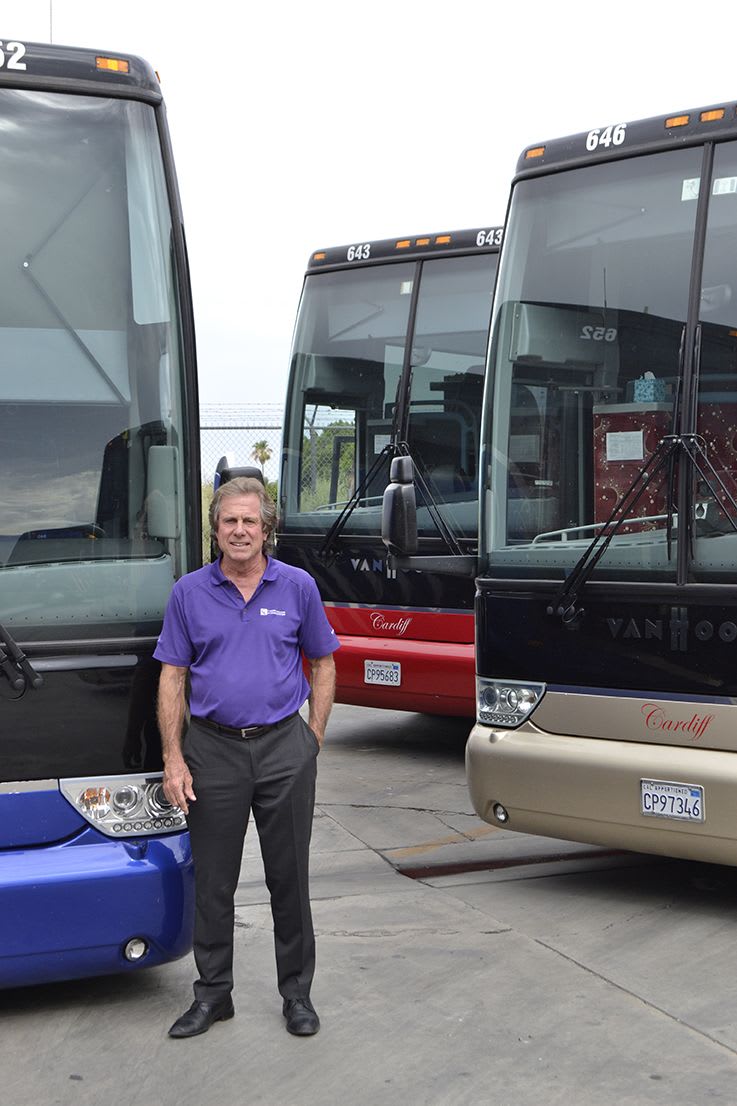
At Cardiff Limousine & Transportation in Palm Desert, Calif., owner Gary Cardiff has taken the luxury transportation model and have made it work for both private and public schools
At Cardiff Limousine & Transportation in Palm Desert, Calif., owner Gary Cardiff has taken the luxury transportation model and have made it work for both private and public schools
With the shifts and fragmentation in every area of the transportation industry, it is often necessary to diversify into new markets to remain viable and profitable.
Combining luxury transportation and private and public schools is a win-win for the students and the operators.
“It’s more than just a school bus experience,” observes Joe Gillis, CEO of Portland, Ore.-based Northwest Navigator Luxury Coaches. “We provide luxury, convenience, and safety.”
Northwest Navigator Luxury Coaches currently operates four 27- to 35-passenger minicoaches and a Thomas Bus for its school contracts, which consist primarily of elite private institutions in the Portland area.
The company’s vehicles offer a nice interior, comfort (including air conditioning), seat belts, and device plug-ins so students can charge their devices or tap into the movies offered on board.
Meeting the Luxury Challenge
While there is little doubt that there is a market for luxury pupil transportation, operators need to keep in mind that its more than just purchasing a nice vehicle, and advertising that you have an air-conditioned vehicle.
Gillis notes that, because you’re transporting children, a safe and well-maintained vehicle is only a small part of the equation. Perhaps more important is having a driver with a clean record who is properly trained.
“It’s not just about transportation, it’s about safety and quality,” he says.
Gillis notes that while operating in the private sector means that he’s not required to perform some of the same background checks as a public school bus operator, he has raised the bar on his own hiring practices — which will disqualify a driver with any sort of criminal record.
Operators also need to make sure that they are following their local and state ordinances or SPAB requirements related to their vehicles and personnel. Not doing so could cause legal and business headaches that could go right to the bottom line.
In addition, operators need to make sure their drivers are properly licensed, their vehicles all have DOT numbers, and the operation remains in compliance with hours of service (HOS) and other regulations.
The operator also needs to make sure it emphasizes customer service, Gillis noting that “When we fail, we try to make it right. It’ll get around quickly if poor the service was poor.”
Because of the greater expectations of luxury transportation — particularly from parents — operators must emphasize service, reliability, and safety in their day-to-day operations.
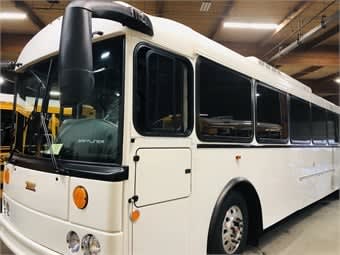
While there is little doubt that there is a market for luxury pupil transportation, operators need to keep in mind that its more than just purchasing a nice vehicle.
Northwest Navigator Luxury Coaches
Private Luxury + Pupil Safety = Profitability
At Cardiff Limousine & Transportation in Palm Desert, Calif., owner Gary Cardiff has taken the luxury transportation model and have made it work for both private and public schools. He runs buses for private and public school pupil groups, especially for school events and field trips.
At private schools, teachers often have budgets for enrichment and educational outings where students travel on Cardiff’s luxury motorcoaches to destinations such as Sea World in San Diego or to arts and cultural museums in the Los Angeles region.
Graduation nights throughout May and June are also big business now since they involve day trips instead of just an evening out, Cardiff says.
“Rarely do private schools have their own buses for their sporting events and enrichment trips,” he says. “They have to call a [state] certified company with over the road motorcoaches.”
As a California bus operation, the company must be certified under state rules, known as SPAB (school pupil activity bus). Any vehicle, whether a van, minibus, or motorcoach that carriers nine or more passengers, must also be SPAB certified. “When private or public schools don’t want to ride on (regular) school buses, they use SPAB-certified buses,” Cardiff says.
SPAB rules require every driver to complete 20 hours of classroom instruction and 20 hours driving training, pass a written California High Patrol test and a CHP driving test, and pass fingerprint and background checks. Every year, each SPAB driver must complete another 10 hours of continuing education.
On the vehicle side, every vehicle used for pupil transportation must undergo a rigorous annual CHP inspection, and Cardiff sets up a certified mechanic inspection every 3,000 miles or 45 days, whichever comes first, per SPAB rules. Inspectors thoroughly evaluate the safety and mechanical equipment of the bus.
That means Cardiff buys only the highest quality buses. Private and public schools mostly request 56- to 57-passenger motorcoaches, which at Cardiff Transportation include Van Hool and Prevost models. The large coaches handle about 90% of the company’s school-related business, with the remaining 10% using 27-passenger Grech Motors minibuses or Sprinter vans.
During some weeks of the year, all of the SPAB-certified motorcoaches in Cardiff’s 74-vehicle fleet are sold out for school-related trips
“All of our buses are all newer models with the same general body style,” Cardiff says.
Worth the Effort
While private bus transportation for pupils invokes many rules and recordkeeping requirements, this evergreen client niche tied to seasonal and school year cycles produces steady, reliable, and profitable work for operators that can be planned out well in advance.
Northwest Navigator’s Gillis sees adding a luxury pupil transportation to the mix as worth the effort.
“People just love it, they see the difference when you pull up,” he says. “It’s a new market and if you do well, other schools will find out. It’ll open up the market for you.”
More Bus

New York MTA Plans Largest Bus Fleet Upgrade in More Than a Decade
The agency is seeking manufacturers for 650 new CNG buses to replace aging vehicles, improve reliability, and advance its broader fleet modernization strategy.
Read More →
Building a Flexible Path to Transit Electrification
John Hroncich discusses BAE Systems’ modular and scalable approach, lessons learned from decades of real-world operations, and how agencies can identify electrification strategies that fit their fleets.
Read More →
Bus Tech Talk: Keeping Transit Technicians Ahead of the Technology Curve
LA Metro’s Obed Mejia discusses technician training, evolving maintenance technology, fleet replacement, and strategies for getting the most out of today’s transit fleets.
Read More →
Biz Briefs: RIPTA Unveils New Frontrunners, Clevland RTA Adds New Siemens, and More
In METRO's latest installment, we take a look at recent news from Siemens, Prevost, Dodge, and more partnerships making headlines across the transportation sector.
Read More →
People Movement: Holly Arnold Joins Transdev and More
In this edition, we also cover recent appointments and announcements at Pace, CamTran, MCI, and more, showcasing the individuals helping to shape the future of transportation.
Read More →
The High Cost of Transit Buses: Industry Leaders Look to Procurement Reform
Transit leaders and policymakers examine how standardized bus designs, streamlined procurement, and predictable funding could help agencies stretch budgets and deliver better service.
Read More →
The Business Voice Behind Public Transportation
As chair of APTA’s Business Members Board of Governors, Ray Melleady explains how more than 850 business members are partnering with transit agencies to advance funding, innovation, and industry-wide collaboration.
Read More →
From Surviving to Thriving: Building Stronger Transportation Organizations
Bus Business Consultants founder Brian Dickson shares lessons on leadership, organizational health, and creating options for long-term success in a changing transportation industry.
Read More →
Finding the ‘Happy Medium’: Optimizing Maintenance Without Sacrificing Reliability
The key to maintenance optimization isn’t doing less work—it’s doing the right work at the right time on the right assets.
Read More →
LA Metro, City of West Hollywood, and Partners Advance Smarter Bus Lane Enforcement
The award-winning partnership combines AI-powered detection with human oversight to improve bus reliability, accessibility, and enforcement efficiency.
Read More →