



2019 Women in Transportation Profiles: Lane Transit District's Aurora Jackson, Metro-North Railroad's Catherine Rinaldi, and HNTB's Kimberly Slaughter
Successful ways to attract, retain women in the transportation industry
Promote the desired perceptions of the organization, connect early with students, provide flexible workplaces, and a welcoming culture.
by By Jodi Godfrey and Dr. Robert Bertini
January 6, 2020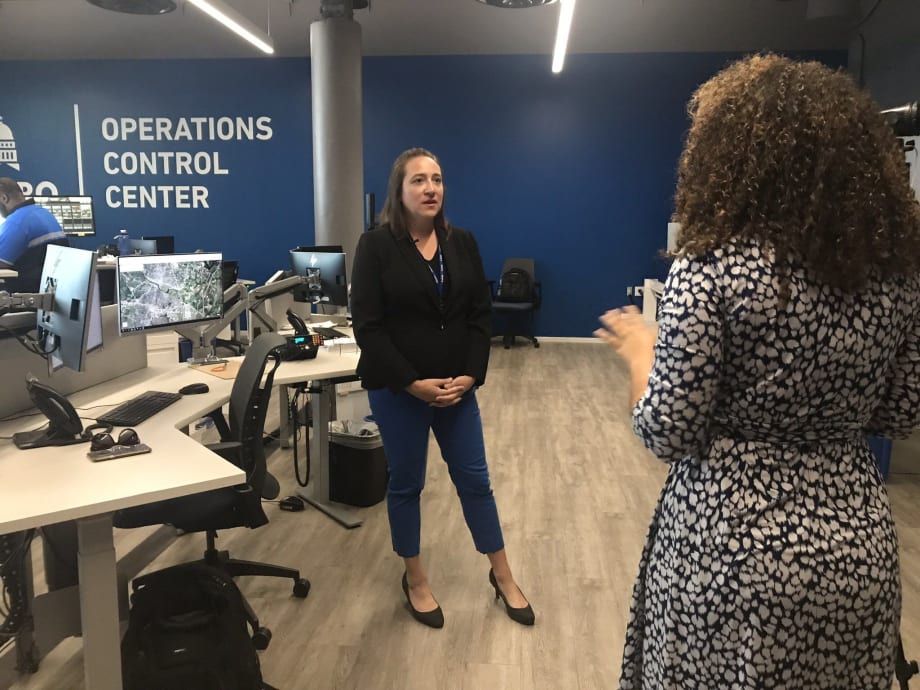
CapMetro
9 min to read
Jennifer Golech, Director of Bus Operations & Service Coordination for Capital Metro, speaks to a reporter. CapMetro
The transportation industry has historically been, and remains, classified as non-traditional by the Bureau of Labor Statistics with women accounting for less than 25% of the transportation occupations. As of 2018, the U.S. Census Bureau’s American Community Survey reported women’s share of transportation occupations increased to 14.7%, from the 12.1% that women accounted for in 2000. This includes transportation supervisors and material moving workers, aircraft and traffic control operations, motor vehicle operations, rail, water, and other transportation occupations.
Meanwhile, females are obtaining bachelor’s degrees (or higher) at higher shares than males consistently since 2012, when 29.1% of both males and females had obtained at least a bachelor’s degree. As of 2018, 33.1% of females and 31.9% of males have at least a Bachelor’s degree. Additionally, as of 2018, women account for 47.3% of the labor force in the U.S.
>> With a growing rate of female educational attainment, coupled with an increased participation in the labor force, non-traditional occupations, such as those in the transportation industry, will benefit from deliberate efforts to attract and retain women.
Most importantly, many of the suggested methods to attract women to the transportation industry, will also benefit from the attraction and retention of a greater diverse talent pool. This is especially significant as the importance of equity and inclusiveness continues to increase in our society. Diverse solutions will undoubtedly require a diverse workforce to find the best, most inclusive solutions to transportation challenges.
The recommendations that are included, highlighted from the Mineta Transportation Institute Report “Attracting and Retaining Women in the Transportation Industry,” stem from successful measures that were identified through an annotated bibliography. Many organizations in non-traditional occupations have made successful improvements in their attraction rates through measures that deliberately promote the desired perceptions of the organization, connect early with students, provide flexible workplaces, and a welcoming culture.
Understanding goal congruity, whether communal or agentic, is essential for organizations to get the most out of their labor force, while also promoting mental health through deliberate alignment with personal goal congruity.
Finally, once an organization has successfully attracted an ideal diverse workforce, the last recommendations are focused on methods to improve the retention of that talent pool, such as clear succession plans, opportunities to mentor, and inclusive policies and cultures.
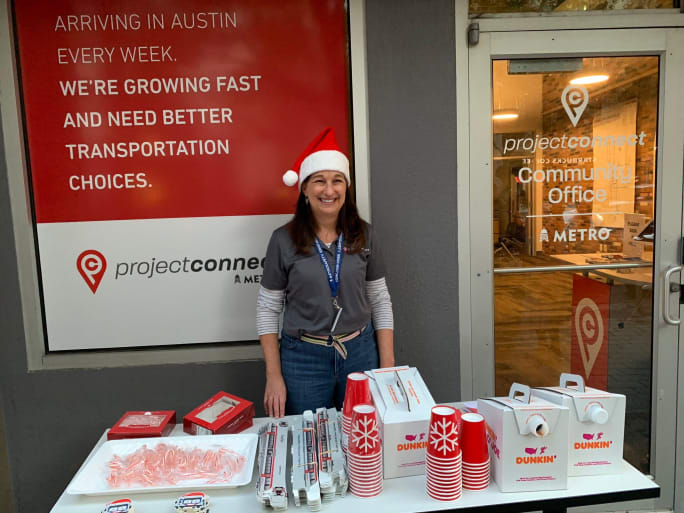
Community Engagement Manager, Jackie Nirenberg, staffs Capital Metro's Project Connect booth. CapMetro
Mentor — Early and Often
A repetitively emphasized theme in literature on successful techniques to attract women to the science, technology, engineering, and mathematics sector is connecting with young women, early and often.
This can be accomplished in many ways including sponsoring field trips, educating school counselors about opportunities for women in engineering, sponsoring summer internships, and establishing mutually beneficial connections within local universities to connect your organization with the newest talent entering the workforce1.
Organizations will benefit from encouraging as many employees as possible to participate in mentorship opportunities that allow connections with the youth and promote the transportation industry as a desirable career option for their consideration.
Promoting and investing in minority focused scholarships and internship programs like the FHWA Summer Transportation Internship Program for Diverse Groups2, the National Summer Transportation Institute Program,3 the Garrett A. Morgan Transportation Technology Education Program, and the National Academy of Science’s Engineer Girl program4 is beneficial for both the supporting organizations and the students.
Additionally, transportation organizations should use social media platforms to connect with younger generations, to form their deliberate public perception using easily accessible tools.
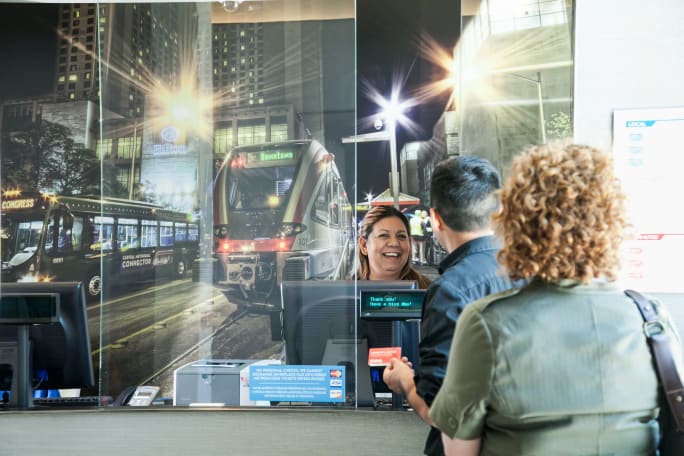
A Capital Metro employee greets customers at Capital Metro’s Transit Store. CapMetro
Perceptions Are Important
Individual perceptions are used to make judgement decisions whether those perceptions are based on facts, rumors, or personal experience. In order for organizations to successfully improve a diversity-oriented culture, deliberate actions should emphasize the desired perceptions.
There are many ways to promote commitment to diversity, which starts with a diverse hiring panel. Presenting a gender-balanced and diverse hiring panel is one way that an organization can show their immediate dedication to diversity while also ensuring hiring decisions are not unintentionally biased. In order to accomplish this goal, organizations should ensure their hiring panels are representative of the employees they are trying to attract.
Beyond the hiring panel composition, it is important that organizations focus on intentionally promoting themselves to create the organization’s desired perceptions. If an organization is not deliberately shaping their own perception, they are allowing others to define their own perceptions. Through deliberate advertising and successful diversity promotion initiatives, organizations have the ability to define the public’s perception.
One way to promote preferred perceptions is through an organization’s commitment to personal goal congruity.
>> In order to understand the effectiveness of cultural diversity efforts in place, organizations should conduct, or participate in recurring surveys of their employees. Providing employees with the opportunity to candidly share feedback related to both the culture of the organization and their personal feelings of fulfillment allows for holistic organizational improvement. Sharing practices that have proven to be effective is just as important as sharing practices that were ineffective, so surveys should be developed in a way that allows for the collection of all types of input.
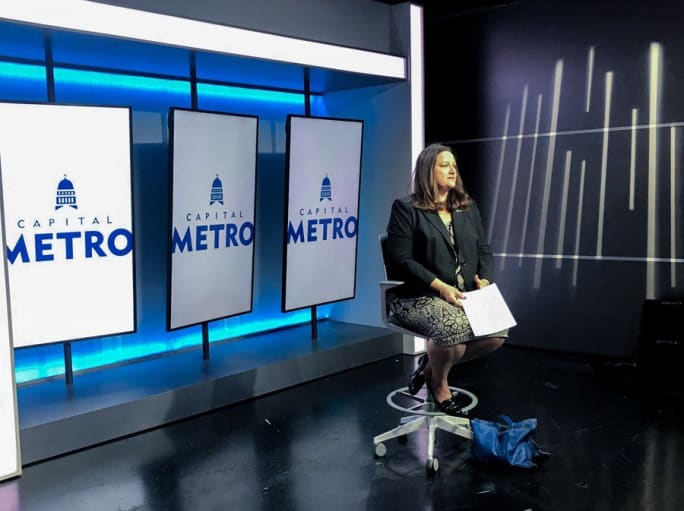
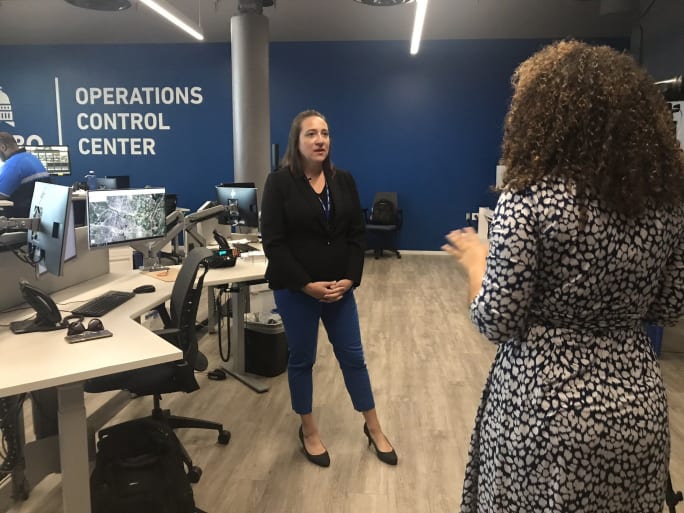
Capital Metro Chief Operations Officer, Dottie Watkins, sits for an interview at FOX7. CapMetro
Goal Congruity
Various studies have shown that, stereotypically, females are attracted to communal goals while males are attracted to agentic goals5 ,6 ,7. Agentic goals are goals of independence and status, while communal goals are typically focused on working with and helping others in the community. While anyone in the transportation industry understands the undeniable connection with communal goals8, it is necessary to alter the perception of the industry to match the reality. Importantly, there has been experimental evidence that shows the correlation between women’s interest in STEM fields, and that fields ability to fulfill communal goals.
>> Therefore, one way that transit agencies can specifically improve their ability to attract a diverse applicant pool is through the promotion of the community improvement opportunities that employment at their agency provides.
>> There are also ways that agencies can promote agentic goals and individual prestige, which should be included in the agency’s practices to ensure the attraction of the best candidate no matter their personal motivator.
>> The goal of diversity is not to make one gender or ethnicity favored over another, but to include all genders and ethnicities equally. Well-defined and attractive policies will attract the best talent, which will inevitably result in diversity.
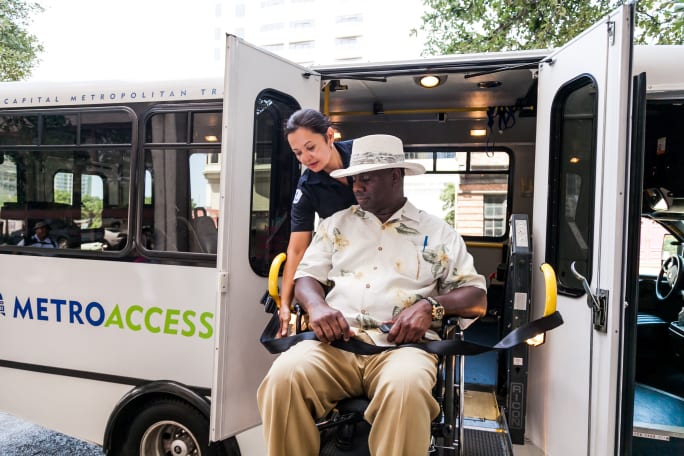
One of Capital Metro’s MetroAccess operators helping a customer on the bus. CapMetro
Policies Are Necessary
Promoting and retaining women in the industry, once you have successfully attracted them, requires deliberate, fair, and consistent policies are implemented within your organization. It is important to consider that a policy is not effective, or implemented as intended, if it simply sits on a shelf, or in a rulebook that is only reviewed during new hire training. If the policies are not uniformly applied consistently for all employees, then there is an opportunity for those policies to be disregarded, rendering them useless.
>> Family friendly policies that provide the opportunity to take earned time off, especially emphasizing the importance of providing the opportunity to return to work after childbirth.
>> Additionally, dependent care policies that allow for the opportunity to care for dependents without fear of retribution for missed work, have proven to be a successful element of effective retention policies that improve organizational culture to promote deliberately diverse recruitment and retention efforts.
>> Policies that effectively promote the attraction and retention of a diverse workforce should also include clear succession plan details. Succession plan policy element details allow for organizations to ensure there is no unintentional bias in promotion decisions.
>> Clear promotion guidance that is inclusive of specific requirements for advancement have been proven to contribute to an organizations ability to successfully retain talented individuals. Organizations that do not already have defined holistic policies in place, may benefit from investing in best practices syntheses that collect and compare transportation organization’s policies and implementation successes to develop and promote a toolbox of applicable guidance.
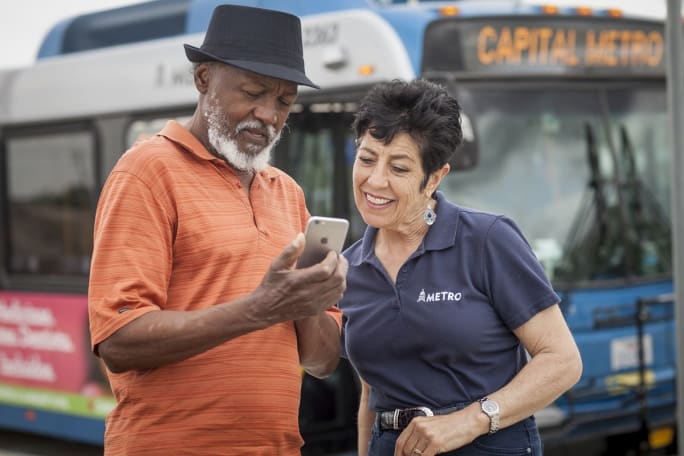
A Capital Metro employee helps a customer plan a trip with the agency’s app. CapMetro
Organizational Change
While many organizations may have the intentions of promoting the attraction and retention of a diverse workforce, intentions do not always lead to successful implementation. To ensure an accepting organizational culture, support for diversity must be clear and emphasized at every level of an organization. Buy-in to the inclusive policies must occur from the CEO to the front-line employees.
The transportation industry could benefit from the specific development and implementation of holistic diversity plans that serve as a framework with actionable specific organizational improvements. The annotated bibliography that this article is based on used a broad-based approach to identify challenged in attracting and retaining women in the transportation industry. The transportation industry is inclusive of many various work environments that vary significantly from the private sector to the public sector, or from a transit versus highway construction or design firm. This variance in work environments can be used as a beneficial characteristic as the variation allows for the pursuit of both communal and agentic goals, depending on the personal preference of the individual. Additionally, if educational curricula focuses on the skillset necessary to be successful in the transportation industry, rather than taking an occupational approach, that may lead to industrywide benefits.
Jodi Godfrey is a Research Associate with the Mineta Transportation Institute, at San Jose State University, and a Senior Research Associate with the Center for Urban Transportation Research, at the University of South Florida.
Dr. Robert Bertini is a Research Associate with the Mineta Transportation Institute, at San Jose State University, and Director of the Center for Urban Transportation Research, at the University of South Florida.
1 Susan Hanson and Elaine Murakami, 2010. Women in Transportation. FHWAHRT-10-003. Issue No: Vol. 73 No. 5. Accessed at: https://www.fhwa.dot.gov/publications/publicroads/10mar/02.cfm
2 FHWA. 2018. U.S. Department of Transportation Summer Transportation Internship Program for Diverse Groups (STIPDG) Accessed: https://www.fhwa.dot.gov/education/stipdg.cfm
3 FHWA. 2016. U.S. Department of Transportation Center for Transportation Workforce Development National Summer Transportation Institute Program. Accessed: https://www.fhwa.dot.gov/innovativeprograms/centers/workforce_dev/national_summer_program.aspx
4 Hanson and Murakami, “Women in Transportation.”
5 Kathryn L. Boucher, Fuesting, Melissa A., Diekman, Amanda B., and Murphy, Mary C. “Can I Work with and Help Others in This Field? How Communal Goals Influence Interest and Participation in STEM Fields.” Frontiers in Psychology Journal 8, (May 2017). doi:10.3389/fpsyg.2017.00901 https://www.ncbi.nlm.nih.gov/pmc/articles/PMC5450619
6 J. M. Allen et al. “To Grab and To Hold: Cultivating Communal Goals to Overcome Cultural and Structural Barriers in First Generation College Students’ Science Interest.” Trans Issues Psychol Sci. 1, no. 4. (2015): 331–341. doi: [10.1037/tps0000046]
7 Lesly R. Krome, “Attracting Women to STEM Programs: The Influences of Goal- Orientations and the Use of Gendered Wording in Recruitment Materials.” Kansas State University. 2016. http://krex.k-state.edu/dspace/handle/2097/32487
8 A.B. Diekman, Clark E.K., Johnston A.M., E.R. Brown, M. Steinberg. “Malleability in Communal Goals and Beliefs Influences Attraction to Stem Careers: Evidence for a Goal Congruity Perspective.” Journal of Personality
Subscribe to Our Newsletter
More Management
NJ TRANSIT Explores Unified Real-Time Customer Communications Platform
The agency is gathering industry input on AI, real-time data, and integrated communications technology as it prepares to procure a system that delivers faster, more consistent transit updates across every customer channel.
Read More →
RTD Launches NextRide App to Consolidate Trip Planning, Fares, Security Reporting
The app expands on RTD’s existing NextRide web application and allows customers to view real-time vehicle locations and service alerts, purchase and store digital fares, and access customer support.
Read More →
The Business Voice Behind Public Transportation
As chair of APTA’s Business Members Board of Governors, Ray Melleady explains how more than 850 business members are partnering with transit agencies to advance funding, innovation, and industry-wide collaboration.
Read More →
New York’s CDTA Service Rebalancing Boosts Productivity, On-Time Performance
Despite a slight dip in ridership, the agency’s FY2026 results show its service rebalancing strategy is helping the agency carry more riders per service hour while improving reliability.
Read More →
People Movement: ABC Names John Walsh as Chief Commercial Officer
In this edition, METRO also covers recent appointments and announcements at the DART, STV, and more, showcasing the individuals helping to shape the future of transportation.
Read More →
From Surviving to Thriving: Building Stronger Transportation Organizations
Bus Business Consultants founder Brian Dickson shares lessons on leadership, organizational health, and creating options for long-term success in a changing transportation industry.
Read More →
LA Metro Ridership Continues Growth as Rail Gains Accelerate
New rail connections and major events help drive continued ridership gains, with Metro recording its eighth consecutive month of year-over-year rail growth.
Read More →
TransDASH Summit Focuses on Measuring What Matters in Transit
Transit agencies unveil a national performance platform designed to benchmark customer experience, safety, community value, and other outcomes.
Read More →
Jacksonville’s NAVI Project Charts a New Course for Autonomous Public Transportation
Through its NAVI program, JTA is showing how autonomous vehicles, intelligent infrastructure, and coordinated operations can work together to deliver everyday public transportation.
Read More →
FRA Announces $5.3B in Rail Investments, Including $2B for Amtrak
Funding will support grade-crossing improvements, infrastructure upgrades, and new Amtrak equipment in 23 states.
Read More →