



MARTA implementing 'essential service' plan
The plan keeps MARTA running for health care personnel and other essential workers during the coronavirus pandemic.

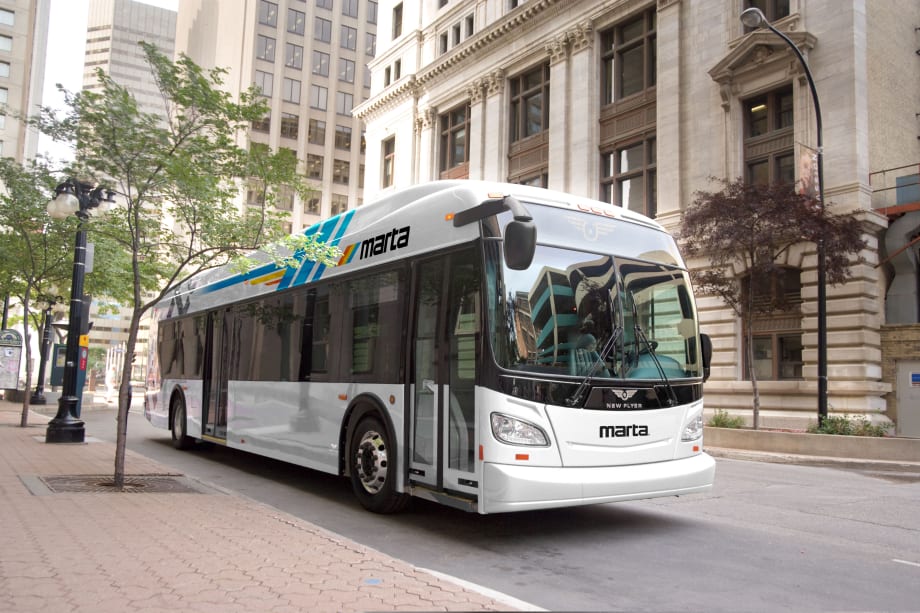
MARTA will run 40 bus routes and one new circulator service that provide transportation to 17 hospitals, 22 urgent care centers, 85 grocery stores, and 16 job centers/industrial hubs.
MARTA
MARTA will run 40 bus routes and one new circulator service that provide transportation to 17 hospitals, 22 urgent care centers, 85 grocery stores, and 16 job centers/industrial hubs. MARTA
The Metropolitan Atlanta Rapid Transit Authority (MARTA) announced it will implement an Essential Service plan that reduces the number of bus routes and allows for a doubling of service on the busiest, most critical routes. This plan keeps MARTA running for health care personnel and other essential workers during the coronavirus pandemic.
Beginning Monday, MARTA will run 40 bus routes and one new circulator service that provide transportation to 17 hospitals, 22 urgent care centers, 85 grocery stores, and 16 job centers/industrial hubs. Buses will be added to the 34 busiest routes.
“This Essential Service plan will serve the largest number of people and with these important destinations in mind, provide as much coverage in our service area as possible,” said MARTA GM/CEO Jeffrey Parker. “This was not an easy decision. I know it will have a negative impact on many bus-dependent areas, but it is necessary to keep MARTA operating and allow space on our busiest routes for customers to practice social distancing.”
Bus ridership, while down 40%, remains steady on busy routes, resulting in unacceptable crowding. Rear door boarding, and suspension of bus fares have exacerbated the issue. Despite MARTA’s implementation of several crowding mitigation efforts such as instructing operators to display a “Bus Full” sign when at capacity, a customer hotline to report a full bus and request another, and seat spacing signs to encourage social distancing, there are too many instances of customers ignoring the guidelines.
This Essential Service plan will address crowding by placing MARTA’s entire bus fleet on 41 routes. Decals near the boarding door of all buses will encourage customers NOT to board a bus that has no open seats and to wait for the next bus that will be coming along in most cases within 10 minutes. The MARTA Police Department will dispatch officers to the busiest routes to assist with overcrowding, limiting the number of passengers who board, and escorting off the bus those customers who are joyriding. MPD has also created a mobile team of officers who will respond in real time to bus operators who need assistance.
Rail ridership is down almost 80%, leaving room on trains for social distancing. Rail service will continue to operate on a Sunday schedule during weekdays with a start time of 5 a.m.
More Management

METRO Opens Submissions for 2026 Motorcoach Awards
Nominations are now being accepted for METRO Magazine’s Operator of the Year and Innovative Operator of the Year awards.
Read More →
New York MTA Advances Final Contract for Second Avenue Subway Expansion
Contract Four is the largest in the Second Avenue Subway Phase 2 project and includes construction of station infrastructure, tracks, and signals for the subway expansion, MTA officials said. Work on Contract Four will begin in 2027.
Read More →
Transit Agencies Highlight Safety Gains at National Summit
Leaders from 15 major transit systems shared crime-reduction results and safety initiatives while discussing the role of continued federal support.
Read More →

NITA Names New Leadership, Expands Reduced-Fare Program at First Board Meeting
The new regional transit authority appointed its first board chair and interim executive director while extending reduced fares across CTA, Metra, and Pace for eligible riders.
Read More →
Beyond the Checklist: A Structured Approach to Transit Maintenance
Reliability-Centered Maintenance helps transit agencies move beyond routine checklists to focus limited resources on the assets and failures that have the greatest impact on safety, reliability, and service.
Read More →
APTA 2026 Nominating Committee Selects Leadership Slate, Names Chair and Vice Chair Nominees
Leadership changes will help shape the association’s priorities and its representation of the transportation industry during the 2026–2027 term.
Read More →
DART Launches Major Security, Fare Enforcement Initiative
The 90-day demonstration will deploy coordinated security teams at five light rail stations while testing controlled access and gathering data to guide future investments.
Read More →
Advancing Fare Collection Through Technology and Innovation
Learn about delivering 1300 gates at 91 stations while managing fare evasion. Explore the large scale deployment, solution customization and real-world results that affect the region. Prepare for deployment in your region now.
Read More →
Game Day in Motion: Moving Millions During the 2026 World Cup
Between packed transit stations and team motorcoaches, see how agencies and operators across North America tackled the transportation demands of the 2026 FIFA World Cup.
Read More →
Surface Transportation Extension Averts Shutdown, Leaves Transit Funding Gap
The stopgap keeps federal transportation programs moving, but missing advance funding could complicate the transit and rail projects agencies are planning next.
Read More →