




RELATED: Greyhound taps new partners for on-board entertainment
Study highlights premium bus service growth in intercity bus industry
Several operators are using “crowd-sourcing” techniques, to determine where and when to add service.
February 4, 2019
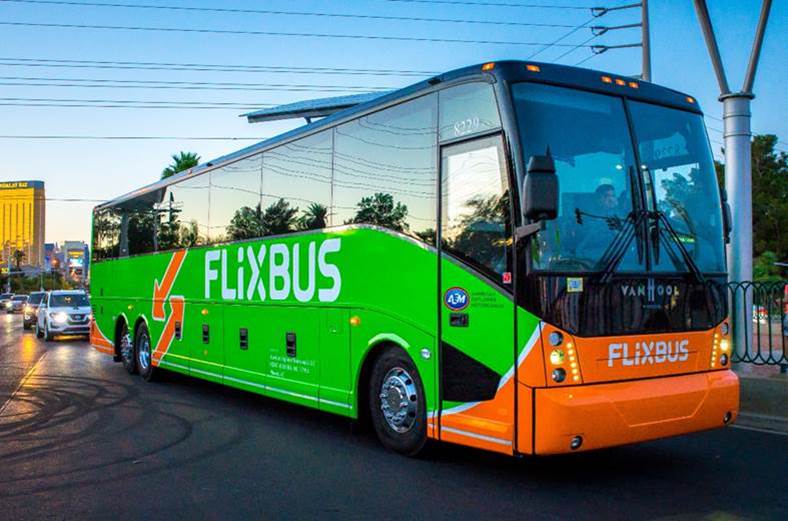
FlixBus USA
5 min to read
FlixBus USA
This year’s DePaul University annual review of intercity bus travel in the U.S. describes a strong economy spurring new premium services in the northeast and west, while low fuel prices simultaneously take their toll on conventional routes in the country’s interior. New services are being added on an ambitious timetable in the busy Boston to Washington corridor, with BoltBus, Greyhound, and megabus.com (Megabus) all making major moves. On the other side of the country, the European powerhouse Flixbus is rolling out new routes in the California and the Southwest.
Technology platforms, noted Joe Schwieterman, the DePaul University professor who is co-author of the report, “are giving smaller charter companies and regional players a greater ability to compete with well-established operators in some of the country’s most heavily traveled corridors.” Some such smaller companies offer service only a few days a week, and sometimes only during peak seasons; for example, Catch-a-Ride is now competing with giants like Greyhound and megabus.com in the Boston-New York market.
Several operators are using “crowd-sourcing” techniques, a term derived from the propensity to draw from the “wisdom of the crowd” to determine where and when to add service. This often involves experimentation with “pop up” service (i.e., services offered only for brief intervals) to gain insight into customer demand. Rally and Skedaddle are the two operators best known for their crowd-sourcing innovations allowing travelers to, in effect, schedule a charter bus that is advertised to wide audiences to help fill seats. These services have become particularly popular for special events such as concerts, public demonstrations, and rallies.
“Providers of regularly scheduled service are now borrowing a page from the same playbook,” noted Matthew Jacques, a co-author. In the Northeast, OurBus has added routes in which service is available only on days of the week where demand is strongest, and it regularly changes its schedule in response to real-time data. Flixbus is doing this in the southwest. Such strategy is a dramatic change from days when carriers printed schedules in the Russell’s Motor Coach Guide and were remiss to change them.
Due to the intensity of competition, the report’s authors conclude profit margins remain thin. FirstGroup reported a moderate reduction in earnings for Greyhound during the 2018 fiscal year, which ended in March 2018, with revenue growth of 1.7%. For the six months that followed, ending in September, performance inched downward: North American revenues as a whole dropped 1.6%, although Greyhound Express’ “like for like” revenues rose by 2.7%. The company reports: “Short haul journeys continue to outperform long haul, where there is more intense competition from the ultra-low cost airlines.” Last year, Greyhound withdrew from the western provinces of Canada, easily the biggest bus-travel story last year in this neighboring country.
Stagecoach, owner of Megabus and Coach USA, reported a 3.2% drop in its North American revenues, which included its charter and school bus service, for the six months between April and October 2018. This included a 1.7% drop in “like for like” revenue for Megabus, and revenues for other scheduled service on the continent dropped by an equal amount. As noted below, some of the revenue decline was likely attributable to competition from new bus lines, particularly in the northeast and southwest. Although rising support from government authorities offset part of the decline, the results point to the tendency for lower fuel prices to heighten competition with other modes of travel, particularly driving and flying.
The big news, though came in December, when Stagecoach agreed to sell all of its North American operations, including its Megabus unit for $271 million to Variant, a California private equity firm. Stagecoach has been a major player in the long-distance bus market since rolling out the Megabus brand here in 2006, but that will soon end.
“Funding shortfalls for Amtrak, as well as political and institutional barriers,” noted industry expert and co-author Brian Antolin, “are encouraging states to heighten their emphasis on bus travel to provide alternatives to driving.” Bustang, the carrier created by and receiving financial support from Colorado’s transportation department, had a banner year. In July, the department reported that the network had grown over 300% since its launch in 2015, and that both ridership and revenue were well above original projections. Funded in part by federal intercity bus grants, the carrier put great emphasis last year on expanding its Outrider brand, a rural regional network. The program offers partners new 38-passenger motorcoaches purchased by the state government, and provides extensive marketing, scheduling, and distribution support.
The study also points to expansion in other regions. The Virginia Breeze route, which is operated by Megabus and links Blacksburg to Washington, D.C., was expanded, and new routes emerged in Alabama, Illinois, and Kansas. Greyhound continues to make state partnerships a priority.
The push to stratify service by offering both economy and premium options took major steps forward last year. In 2018, five carriers rolled out expanded premium offerings in the northeast, while two others expanded them in other parts of the country. BestBus and Washington Deluxe both introduced premium brands in the Northeast Corridor, following earlier moves by Limoliner, Tripper, and Vamoose. In New England, Concord Coach added a trip on its existing “Plus” brand. To see the expanding array of premium lines in the country (there are now 15), check out the Chaddick Institute’s interactive map.
The study provides several trends to watch during the remainder of 2019:
Significant adjustments at Megabus stemming from Stagecoach’s sale of the carrier to Variant. FirstGroup may also be eyeing changes to Greyhound.
Continuing challenges presented by persistently low gasoline prices, particularly outside the Northeast Corridor.
Growing public awareness of premium services, as well as the potential expansion of these services to Arizona, the Carolinas, and Great Lakes region, over the next several years.
Expansion of Flixbus beyond the Southwest, possibly to northeast and Texas, and the strategies this company uses to attract new markets to bus travel.
The Chaddick Institute is hosting a free webinar with the report’s authors to discuss these trends from noon to 1 pm CT (11 a.m. ET), on Friday, February 15. To register, speak with the study authors, or join the Institute’s intercity bus listserv, which features quarterly emails, contact chaddick@depaul.edu or call 312.362.5732. The study, “New Directions: 2019 Outlook for the Intercity Bus Industry in the United States,” can be downloaded here.
More Motorcoach

People Movement: Dan Dipert Coaches Adds Third-Generation Leader, Keolis Names New Valley Metro VP/GM, and More
In this edition, we also cover recent appointments and announcements at the Wabtec, SilverRide, HNTB, and more, showcasing the individuals helping to shape the future of transportation.
Read More →
METRO Opens Submissions for 2026 Motorcoach Awards
Nominations are now being accepted for METRO Magazine’s Operator of the Year and Innovative Operator of the Year awards.
Read More →
Biz Briefs: Alstom Lands Canadian Contract, LYT to Supply California TSP, and More
In METRO's latest installment, we take a look at recent news from Complete Coach Works, Beep, FlixBus, and more partnerships making headlines across the transportation sector.
Read More →
Biz Briefs: RIPTA Unveils New Frontrunners, Clevland RTA Adds New Siemens, and More
In METRO's latest installment, we take a look at recent news from Siemens, Prevost, Dodge, and more partnerships making headlines across the transportation sector.
Read More →
People Movement: Holly Arnold Joins Transdev and More
In this edition, we also cover recent appointments and announcements at Pace, CamTran, MCI, and more, showcasing the individuals helping to shape the future of transportation.
Read More →
ABA Report: Motorcoach Travel Generates $161.6B Economic Impact
The 2025 analysis finds motorcoach travel supported nearly 900,000 jobs and generated $28 billion in federal, state, and local taxes.
Read More →
CharterUP’s Armir Harris on Technology, AI, and the Future of Group Mobility
In a recent episode of METROspectives, CharterUP Founder/CEO Armir Harris discussed the company’s evolution from an online charter bus marketplace into a technology platform supporting public- and private-sector mobility and much more.
Read More →
People Movement: ABC Names John Walsh as Chief Commercial Officer
In this edition, METRO also covers recent appointments and announcements at the DART, STV, and more, showcasing the individuals helping to shape the future of transportation.
Read More →
From Surviving to Thriving: Building Stronger Transportation Organizations
Bus Business Consultants founder Brian Dickson shares lessons on leadership, organizational health, and creating options for long-term success in a changing transportation industry.
Read More →
Biz Briefs: Luminator Marks Milestone and More
From manufacturers and suppliers to transit agencies and motorcoach operators, these updates offer a snapshot of the projects, partnerships and business moves driving the industry forward.
Read More →