



15 Virginia Projects Receive Funding to Improve the Transit Experience
The CTB's TRIP program aims to grow and improve transit use by enhancing the regional connectivity of urban areas, eliminating obstacles to transit accessibility for low-income riders, and more.

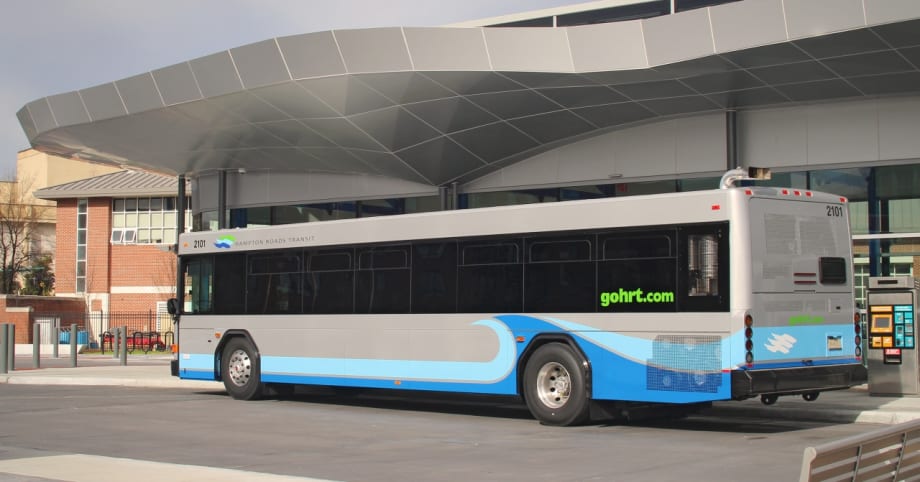
HRT will receive funding to improve rider amenities at 22 stops across the system with benches, shelters, and trash cans.
Photo: HRT
The Commonwealth Transportation Board (CTB) approved $4.4 million for 15 projects funded through the Virginia Department of Rail and Public Transportation’s (DRPT) Transit Ridership Incentive Program (TRIP), which will enhance the transit rider experience by improving bus stops and overall safety.
TRIP aims to grow and improve transit use through the following ways: enhancing the regional connectivity of urban areas, eliminating obstacles to transit accessibility for low-income riders, improving passenger amenities, and addressing public safety.
“Ensuring that people feel safe and dignified when using transit services is essential to improving the rider experience, and these projects approved help do just that,” said Jennifer DeBruhl, director, Virginia Department of Rail and Public Transportation. “Investments in enhanced security tools and bus shelters so people don’t have to wait in harsh elements are going to continue our work to build a modern transit system.”
TRIP’s Impact
Since TRIP’s creation, DRPT has now allocated $24.5 million to nine multi-year zero-fare/low-income projects, $11.6 million to 11 multi-year regional connectivity projects, $3.0 million to nine passenger amenities projects, and $1.3 million to five public safety projects.
To receive TRIP funds, transit agencies must provide a local match.
Projects Funded by the CTB
The CTB approved the following projects:
Arlington Regional Transit (ART) - ART will receive funding to construct a new bus stop and ADA site improvements to three bus stops. The grant will allow the county to use on-call contractors to immediately address accessibility issues to improve rider experience.
Bristol Virginia Transit - Bristol Transit will install security cameras on six transit buses and one passenger van to improve transit driver and rider safety. Currently, none of these transit vehicles are outfitted with security cameras. Bristol Transit will also construct a new bus shelter at an existing transit stop, improving passenger comfort, and safety, as well as traffic flow.
Central Shenandoah Planning District Commission (CSPDC) - CSPDC will rehabilitate the BRITE Transit Hub. The project will define a separate bus lane and vehicle parking, assure ADA-compliant access to bus loading areas, relocate bus shelters adjacent to bus parking, and outfit each with safety lighting and bike racks.
City of Alexandria - Alexandria will provide shelters, benches, and real-time signage at the planned transit center in the West End development (formerly Landmark Transit Center). The transit center is a high-ridership transfer hub for local and regional bus service and will act as a major hub for two planned bus rapid transit networks in the center of a major new development.
District Three Governmental Cooperative (Mountain Lynx Transit) - Mountain Lynx Transit, serving Abingdon, Galax, Marion, and Wytheville, as well as Bland, Carroll, Grayson, Smyth, Washington, and Wythe counties, will implement a systemwide zero-fare program. Most recent census data show high poverty areas are found across the agency’s service area. The elimination of fares for Mountain Lynx riders removes a major obstacle for many riders and creates the opportunity for transportation for low-income people.
Greater Richmond Transit Company (GRTC) - GRTC will make bus stop improvements in Richmond and Chesterfield County to enhance ADA accessibility and to test new text-to-speech technology providing real-time transit information to riders.
Hampton Roads Transit (HRT) - HRT will improve shelters and amenities at three existing ferry stops. The new amenities will include lighting and security features to improve accessibility for customers during the evening and enhance the existing Americans with Disabilities Act amenities. HRT will also receive funding to improve rider amenities at 22 stops across the system with benches, shelters, and trash cans. HRT will also purchase and install driver safety barriers on 155 buses not currently equipped with them.
Petersburg Area Transit (PAT) - PAT will hire three security officers and install a new security camera system to monitor PAT’s downtown multimodal center.
Roanoke Valley-Alleghany Regional Commission (RVARC) - Roanoke Valley-Alleghany Regional Commission will build a new bus shelter at an existing Roanoke County bus stop, providing an enhanced experience for riders with shelter from the weather, a place to sit and rest, and improved solar-powered lighting.
Williamsburg Area Transit Authority (WATA) - WATA will outfit six buses with new security cameras, improving safety for both the passengers and operations staff by providing live camera feeds.
More New Mobility

From Hardware to Digital Partner: Luminator Charts Its Next Chapter
CEO Magnus Friberg discusses Luminator’s shift toward becoming a digital partner, the growing importance of software and interoperability, and how AI can help agencies improve operations and passenger experience.
Read More →
Biz Briefs: Alstom Lands Canadian Contract, LYT to Supply California TSP, and More
In METRO's latest installment, we take a look at recent news from Complete Coach Works, Beep, FlixBus, and more partnerships making headlines across the transportation sector.
Read More →
CharterUP’s Armir Harris on Technology, AI, and the Future of Group Mobility
In a recent episode of METROspectives, CharterUP Founder/CEO Armir Harris discussed the company’s evolution from an online charter bus marketplace into a technology platform supporting public- and private-sector mobility and much more.
Read More →
Jacksonville’s NAVI Project Charts a New Course for Autonomous Public Transportation
Through its NAVI program, JTA is showing how autonomous vehicles, intelligent infrastructure, and coordinated operations can work together to deliver everyday public transportation.
Read More →
Biz Briefs: Luminator Marks Milestone and More
From manufacturers and suppliers to transit agencies and motorcoach operators, these updates offer a snapshot of the projects, partnerships and business moves driving the industry forward.
Read More →
New Tricks for Old Bureaucracies: Joshua Schank on Making Transit Innovation Stick
Former LA Metro Chief Innovation Officer Joshua Schank discusses why good ideas aren't enough, how transit agencies can overcome resistance to change, and why today's challenges demand more innovation.
Read More →
How DART's GoPass Is Redefining Regional Mobility
Serving 14 transit agencies, GoPass simplifies multimodal travel by allowing riders to plan, pay for, and manage an entire trip through one app.
Read More →
Biz Briefs: OCTA Taps Clean Energy for Hydrogen Station, Stadler to Supply Via Rail Vehicles, and More
From manufacturers and suppliers to transit agencies and motorcoach operators, these updates offer a snapshot of the projects, partnerships and business moves driving the industry forward.
Read More →CharterUP Expands Into New Mobility and Autonomous Transportation
Vice President of New Mobility Stephen Joos discusses how CharterUP is leveraging its nationwide transportation network, technology platform, and autonomous vehicle partnerships to expand into workforce mobility, campus shuttles, and transit solutions.
Read More →
METRO Magazine Announces 2026 Innovative Solutions Awards Winners
Projects Recognized for Advancing Mobility Through Technology, Accessibility, Workforce Innovation, and Operational Excellence
Read More →