



Biz Briefs: Tolar, Conduent Transportation, and More
Flow Labs contracted in Seattle, GIRO partners with TTC, and more fill out this week's Biz Briefs.

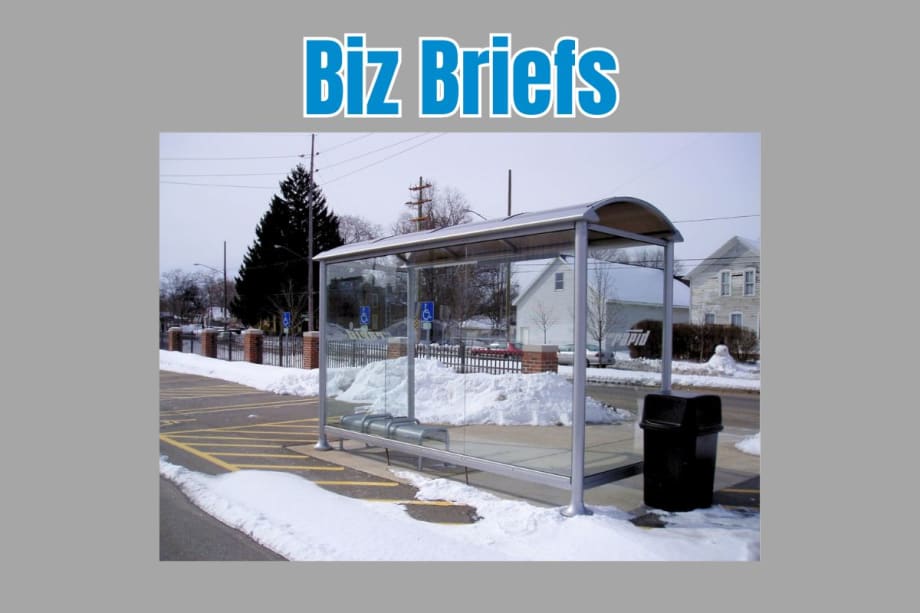
The initial round of Tolar shelters is expected to be delivered to The Rapid by July 2024.
Photo: Tolar/METRO Magazine
Biz Briefs covers the latest moves in the industry. Here's the latest from Tolar, Conduent Transportation, Flow Labs, and GIRO.
The Rapid Taps Tolar for Bus Shelters
Tolar Manufacturing Co. has been contracted to design and construct up to 100 Euro series bus shelters consisting of three custom styles designed for the Interurban Transit Partnership (The Rapid), the public transportation agency for the city of Grand Rapids, Mich., and the surrounding metro area.
The contract is part of the agency’s Bus Stop Improvement Program and an overall commitment to enhance passenger amenities guaranteeing to deliver 26 bus shelters in the first year with an option to purchase an additional 74 bus shelters for a total of 100 over five years.
The initial round of shelters is expected to be delivered by July 2024.
NJ TRANSIT Renews Fare Collection Contract with Conduent
Conduent Transportation received a five-year contract renewal from NJ TRANSIT to continue implementation and upgrades of a contactless fare collection system for customers.
Under the new contract, which builds on a relationship of more than 30 years with NJ TRANSIT, Conduent will also provide maintenance of various hardware and software systems, including ticket vending machines and on-board validators.
Last fall, under the previous contract, Conduent implemented a new “Tap & Ride” payment option for NJ TRANSIT, allowing New Jersey bus and light rail customers to use contactless credit and debit cards. The system is currently usable with existing validators on buses and at light rail stations. Additional ticket types, including Google and Apple payment options, are being made available.
GIRO to Provide HASTUS Software to Toronto
The Toronto Transit Commission (TTC) selected GIRO’s HASTUS software as part of its plans to upgrade its applications.
Following a thorough tendering process, the operator of North America’s third-largest transit system chose GIRO’s HASTUS solution to increase operational efficiency as well as enhance the employee experience.
GIRO’s software brings TTC its distinctive flexibility and performance, as well as the industry expertise of GIRO’s teams.
Flow Labs to Supply Traffic Signal Management in Seattle
Flow Labs struck an agreement with the Seattle Department of Transportation to deploy the company’s Traffic Signal Management platform across the city’s University District.
Flow Labs’ Integrated Connected Vehicle Data (ICVD) Platform seamlessly integrates Seattle’s roadway infrastructure data, capturing high resolution data from traffic signals, detection systems, and connected vehicles, and provides Seattle DOT with a comprehensive real-time view of roadway conditions at every level.
The AI-powered platform will analyze key corridors in Seattle to generate detailed information concerning traffic patterns, congestion points, and other factors affecting traffic flow, enabling Seattle DOT to understand the effectiveness of signal timings and overall traffic network performance.
More Technology

From Hardware to Digital Partner: Luminator Charts Its Next Chapter
CEO Magnus Friberg discusses Luminator’s shift toward becoming a digital partner, the growing importance of software and interoperability, and how AI can help agencies improve operations and passenger experience.
Read More →
Beyond the Checklist: A Structured Approach to Transit Maintenance
Reliability-Centered Maintenance helps transit agencies move beyond routine checklists to focus limited resources on the assets and failures that have the greatest impact on safety, reliability, and service.
Read More →
NJ TRANSIT Advances Bus Technology Upgrades Across Statewide Fleet
More than 1,500 buses now feature upgraded technology designed to improve arrival predictions and provide free Wi-Fi, with deployment expected to reach nearly 2,000 buses by the end of 2026.
Read More →

Building a Flexible Path to Transit Electrification
John Hroncich discusses BAE Systems’ modular and scalable approach, lessons learned from decades of real-world operations, and how agencies can identify electrification strategies that fit their fleets.
Read More →
Biz Briefs: Alstom Lands Canadian Contract, LYT to Supply California TSP, and More
In METRO's latest installment, we take a look at recent news from Complete Coach Works, Beep, FlixBus, and more partnerships making headlines across the transportation sector.
Read More →
From Legacy Silos to Conversational Intelligence
What if transit leaders could ask any operational question and get a trusted answer in seconds? Conversational AI is transforming how agencies use their data.
Read More →
USDOT Announces Rail Vehicle Replacement Grants, Chattanooga AV Shuttle Funding
More than $191 million in federal funding will help three transit agencies replace aging rail vehicles and support a new autonomous shuttle service in Chattanooga.
Read More →
Bus Tech Talk: Keeping Transit Technicians Ahead of the Technology Curve
LA Metro’s Obed Mejia discusses technician training, evolving maintenance technology, fleet replacement, and strategies for getting the most out of today’s transit fleets.
Read More →
Biz Briefs: RIPTA Unveils New Frontrunners, Clevland RTA Adds New Siemens, and More
In METRO's latest installment, we take a look at recent news from Siemens, Prevost, Dodge, and more partnerships making headlines across the transportation sector.
Read More →
Why Simulating Pedestrian Movement Has Become Essential for Modern Rail Stations
Pedestrian microsimulation is helping rail planners identify bottlenecks, test station designs, and prepare complex transit hubs for growing passenger volumes.
Read More →