




More News: Pittsburgh Partners to Make System More Accessible
Seattle's King County Launches Bus Lane Enforcement Pilot
Seattle's King County Metro pilot project uses cameras to count red lane and bus stop violations.
November 21, 2024
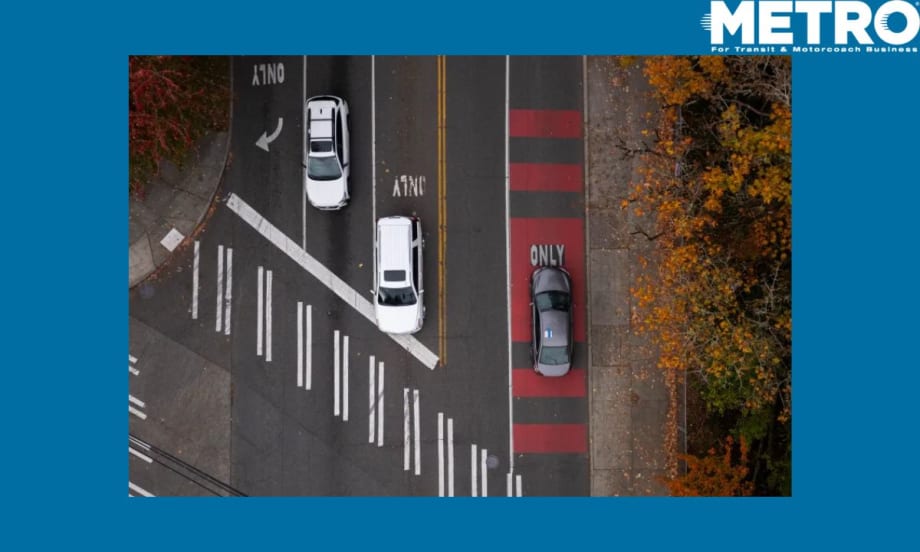
King County Metro is looking into cracking down on bus lane violations by putting cameras on buses.
Photo: King County Metro
2 min to read
Seattle's King County Metro (KCM) has observed several instances of private vehicles taking advantage of their red bus lands or bus stops, which can lead to bus delays or dangerous collisions while wasting riders’ time and taxpayers’ money. In response, they have begun a 60-day pilot program to combat these behaviors.
Catching Violations
As part of the pilot program, KCM will not issue warnings or tickets and is using onboard cameras on two buses to assess and evaluate how often private vehicles illegally use bus lanes. The program launched on Nov. 6 with cameras mounted on a RapidRide E Line bus and a Route 7 bus to begin filming a 10-second video after identifying a violation and noting the location.
Jurisdictions ultimately have the authority to use on-bus cameras to issue tickets. Washington state passed a new law to this effect earlier in the year. Los Angeles, New York City, Oakland, and Washington, D.C. are among the metropolitan areas already utilizing active bus lane enforcement programs.
In 2025, KCM will review the results of the pilot program alongside the agency’s goals and values. The review will help determine whether to respond or pursue next steps with jurisdictions. Revenue raised from the tickets in such programs is directed to pay only for equipment and city safety projects.
Cars respecting bus lanes will improve reliability of Route 7 and RapidRide E Line service. Each route face challenges staying on schedule when private vehicles park or commit lane violations in designated bus lanes.
Busy Bus Routes
Route 7 operates 256 bus trips each weekday on Rainier Ave. with an estimated 11,000 boardings on weekdays. KCM has noted numerous private vehicles illegally using designated bus lanes along Rainier Avenue. So far in 2024 about 73% of trips have been able to operate on time, short of KCM's 80% goal.
RapidRide E Line operates 278 bus trips each weekday on Aurora Avenue North, serving riders between Shoreline and downtown Seattle. KCM has similarly noted problems with private vehicles parking in the bus lanes along this route. So far this year about 75% of trips achieved their target schedule between trips, short of KCM's 80% goal. Recent estimated weekday boardings average 13,000 and can peak closer to 15,000.
Occasional bus lane collisions have occurred on these and other routes that KCM operates. A preliminary analysis shows a total of 123 collisions occurred between private vehicles and Route 7 buses in 2023 and year-to-date in 2024.
Similarly, 120 collisions occurred between private vehicles and Rapid Ride E Line during the same time.
More Bus

New York MTA Plans Largest Bus Fleet Upgrade in More Than a Decade
The agency is seeking manufacturers for 650 new CNG buses to replace aging vehicles, improve reliability, and advance its broader fleet modernization strategy.
Read More →
Building a Flexible Path to Transit Electrification
John Hroncich discusses BAE Systems’ modular and scalable approach, lessons learned from decades of real-world operations, and how agencies can identify electrification strategies that fit their fleets.
Read More →
Bus Tech Talk: Keeping Transit Technicians Ahead of the Technology Curve
LA Metro’s Obed Mejia discusses technician training, evolving maintenance technology, fleet replacement, and strategies for getting the most out of today’s transit fleets.
Read More →
Biz Briefs: RIPTA Unveils New Frontrunners, Clevland RTA Adds New Siemens, and More
In METRO's latest installment, we take a look at recent news from Siemens, Prevost, Dodge, and more partnerships making headlines across the transportation sector.
Read More →
People Movement: Holly Arnold Joins Transdev and More
In this edition, we also cover recent appointments and announcements at Pace, CamTran, MCI, and more, showcasing the individuals helping to shape the future of transportation.
Read More →
The High Cost of Transit Buses: Industry Leaders Look to Procurement Reform
Transit leaders and policymakers examine how standardized bus designs, streamlined procurement, and predictable funding could help agencies stretch budgets and deliver better service.
Read More →
The Business Voice Behind Public Transportation
As chair of APTA’s Business Members Board of Governors, Ray Melleady explains how more than 850 business members are partnering with transit agencies to advance funding, innovation, and industry-wide collaboration.
Read More →
From Surviving to Thriving: Building Stronger Transportation Organizations
Bus Business Consultants founder Brian Dickson shares lessons on leadership, organizational health, and creating options for long-term success in a changing transportation industry.
Read More →
Finding the ‘Happy Medium’: Optimizing Maintenance Without Sacrificing Reliability
The key to maintenance optimization isn’t doing less work—it’s doing the right work at the right time on the right assets.
Read More →
LA Metro, City of West Hollywood, and Partners Advance Smarter Bus Lane Enforcement
The award-winning partnership combines AI-powered detection with human oversight to improve bus reliability, accessibility, and enforcement efficiency.
Read More →