



BYD electric bus completes 24-hour test
The bus managed to travel an astounding 746 miles over the 24-hour period, operating in three shifts. Each shift logged between 240 and 256 miles before recharging the battery.

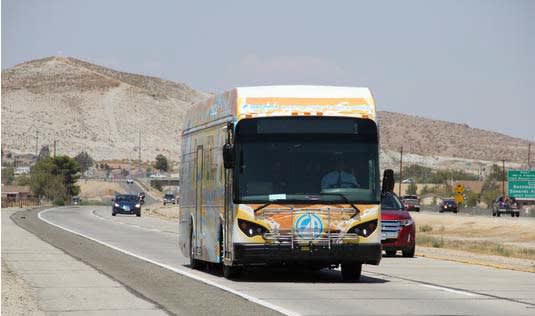
Calif.’s Antelope Valley Transit Authority’s (AVTA) new electric BYD bus is performing better than advertised, according to the company.
AVTA and BYD operators put the electric bus to the test this weekend during a 24-hour marathon ride that looped from Rosamond to Palmdale a total of 18 times.
The BYD bus managed to travel an astounding 746 miles over the 24-hour period, operating in three shifts. Each shift logged between 240 and 256 miles before recharging the battery.
“This is tremendous news and it proves the BYD electric bus can be a transit work horse like its diesel counterpart,” stated Board Chair Norm Hickling. “We are looking forward to putting our electric buses into service on local transit routes to further evaluate their true performance under all weather and road conditions.”
RELATED:BYD's Lancaster Event in pictures
AVTA’s electric bus was loaded with 5,250 lbs. of sand bags to simulate the weight of 35 passengers. The bus traveled a total of 240 miles before its first battery charge, which is nearly 100 miles more than BYD advertises and 30 miles more than is needed to service an average transit route in the Antelope Valley.
The air conditioning system ran during most of the test except during the early morning hours when it was cold outside.
This is the second test for AVTA’s electric bus. Its first unofficial test was July 29 when it traveled to Los Angeles to pick up the consul general of the Chinese Consulate who was scheduled to tour the BYD manufacturing facility in Lancaster.
More Bus

Report: Transit Bus Manufacturing Supports 34,100 Jobs, $5.1B in GDP
The “Buses Mean Business” report examines the transit bus manufacturing industry’s economic footprint, supply chain, and rising demand for vehicle replacements.
Read More →
Biz Briefs: New Flyer Delivers in Columbus, Houston, Beep and Freebee Merge, and More
In this edition of Biz Briefs, we spotlight the latest developments shaping the future of mobility.
Read More →
People Movement: Dan Dipert Coaches Adds Third-Generation Leader, Keolis Names New Valley Metro VP/GM, and More
In this edition, we also cover recent appointments and announcements at the Wabtec, SilverRide, HNTB, and more, showcasing the individuals helping to shape the future of transportation.
Read More →
New York MTA Plans Largest Bus Fleet Upgrade in More Than a Decade
The agency is seeking manufacturers for 650 new CNG buses to replace aging vehicles, improve reliability, and advance its broader fleet modernization strategy.
Read More →
Building a Flexible Path to Transit Electrification
John Hroncich discusses BAE Systems’ modular and scalable approach, lessons learned from decades of real-world operations, and how agencies can identify electrification strategies that fit their fleets.
Read More →
Bus Tech Talk: Keeping Transit Technicians Ahead of the Technology Curve
LA Metro’s Obed Mejia discusses technician training, evolving maintenance technology, fleet replacement, and strategies for getting the most out of today’s transit fleets.
Read More →
Biz Briefs: RIPTA Unveils New Frontrunners, Clevland RTA Adds New Siemens, and More
In METRO's latest installment, we take a look at recent news from Siemens, Prevost, Dodge, and more partnerships making headlines across the transportation sector.
Read More →
People Movement: Holly Arnold Joins Transdev and More
In this edition, we also cover recent appointments and announcements at Pace, CamTran, MCI, and more, showcasing the individuals helping to shape the future of transportation.
Read More →
The High Cost of Transit Buses: Industry Leaders Look to Procurement Reform
Transit leaders and policymakers examine how standardized bus designs, streamlined procurement, and predictable funding could help agencies stretch budgets and deliver better service.
Read More →
The Business Voice Behind Public Transportation
As chair of APTA’s Business Members Board of Governors, Ray Melleady explains how more than 850 business members are partnering with transit agencies to advance funding, innovation, and industry-wide collaboration.
Read More →