



Calif.-based Omnitrans' Go Smart program a huge success
Omnitrans launched Go Smart as a pilot for the 2011-2012 school year by partnering with California State University, San Bernardino; Chaffey College; Crafton Hills College and San Bernardino Valley College to offer free, unlimited bus rides to more than 50,000 college students.

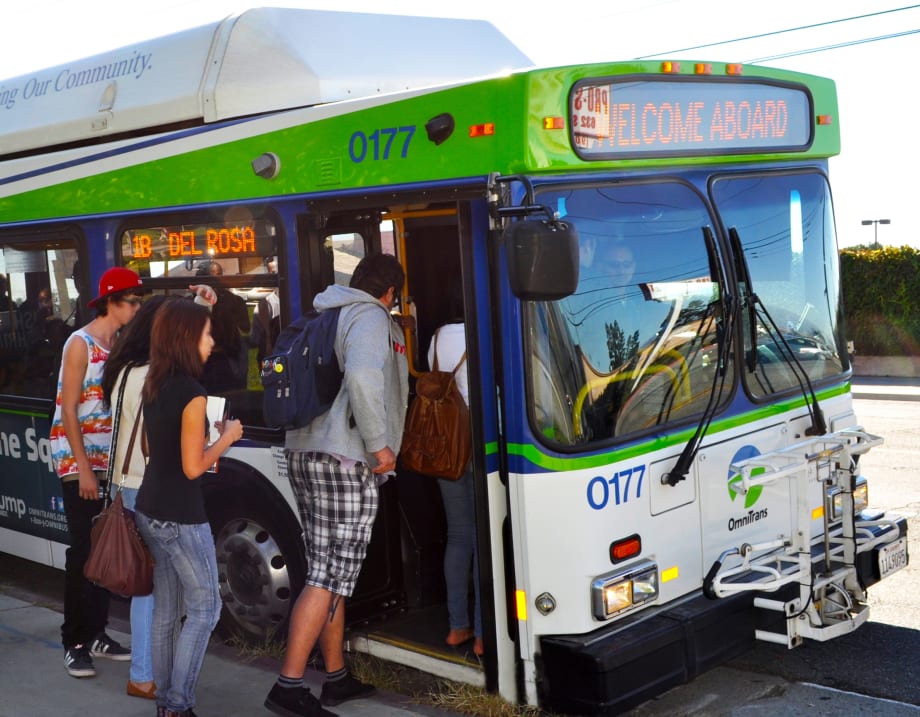

Earlier this month, San Bernardino, Calif.-based Omnitrans won a Clean Air Award from the South Coast Air Quality Management District (SCAQMD) for its “Go Smart” program, which is dedicated to transitioning local college students in the San Bernardino Valley to using public transit rather than driving to get to campus.
Omnitrans launched Go Smart as a pilot for the 2011-2012 school year by partnering with California State University, San Bernardino (CSUSB); Chaffey College; Crafton Hills College and San Bernardino Valley College to offer free, unlimited bus rides to more than 50,000 college students.
The pilot program was funded by partner colleges and each of the 15 cities and county in the Omnitrans service area, using monies earmarked for emission reduction projects. Approximately 1.4 million trips were made by over 13,500 individual students in pilot year.
“We believed we could get a bigger market share from the students enrolled if we had a program that was highly convenient for them,” explained Wendy Williams, director of marketing at Omnitrans. “Highly convenient to us meant they didn’t have to go to any special office way out off in the corner to get a bus pass. We had discounted passes for them for years and years and never really got more than about 4% market share.”
When initially launched, 5,100 unique students rode Omnitrans, during a typical week, meaning more than 10% of students became regular transit riders, with more than 25% of enrolled students trying the program at least once. By taking public transportation instead of driving, it removed an estimated 129.2 tons of carbon monoxide from the air while also reducing the levels of reactive organic gases, nitrogen oxide and particulate matter — a major reason it won the SCAQMD award.

Accepting the Clean Air Award, from left, was Omnitrans Interim CEO/GM Scott Graham, Board Chair and Ontario Councilmember Alan Wapner, and Director of Marketing Wendy Williams.
Once the pilot was completed, ongoing self-funded Go Smart programs were established at each of the pilot program colleges and student ridership continues to increase over a year later.
“We established five-year programs with the three community colleges through student-passed referendums,” said Williams. “The Cal State has not taken it to a referendum yet, but they have found other funding for now and hope to do a referendum some time in the future.”
Over the last couple of years, the number of unique riders at each of the colleges and CSUSB has continued to grow, with ridership on some routes growing by as much as 40% year-over-year.
“There is a lot of turnover at colleges and universities, so you have to constantly promote public transit as an option,” Williams said. “By partnering with the schools, it became a joint program. The schools saw the benefit; they were all dealing with overflow parking, in many cases, and they were also all tasked with sustainability goals. It was just a good partnership.”
In addition to the community colleges and CSUSB, Omnitrans recently added a trade school and is testing a similar program at some charter high schools in the area.
“One of the benefits of focusing on the student market is they are much more receptive to try something new, and I think that is part of the success of the program,” Williams said. “They are just at a time of their life where they are open to the unknown, so the fact they haven’t ever taken a bus before doesn’t faze them as much as someone who is a little older.”
More Bus

From Surviving to Thriving: Building Stronger Transportation Organizations
Bus Business Consultants founder Brian Dickson shares lessons on leadership, organizational health, and creating options for long-term success in a changing transportation industry.
Read More →
Finding the ‘Happy Medium’: Optimizing Maintenance Without Sacrificing Reliability
The key to maintenance optimization isn’t doing less work—it’s doing the right work at the right time on the right assets.
Read More →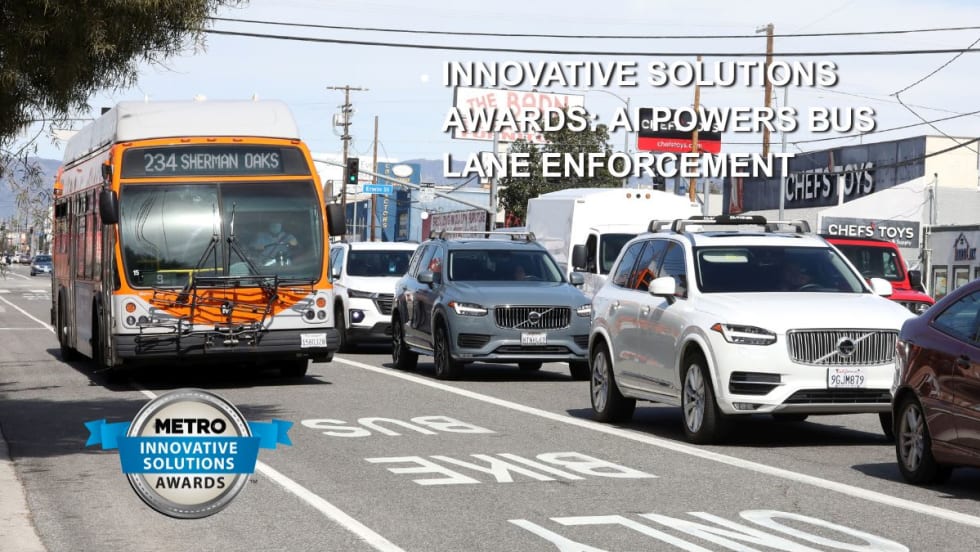
LA Metro, City of West Hollywood, and Partners Advance Smarter Bus Lane Enforcement
The award-winning partnership combines AI-powered detection with human oversight to improve bus reliability, accessibility, and enforcement efficiency.
Read More →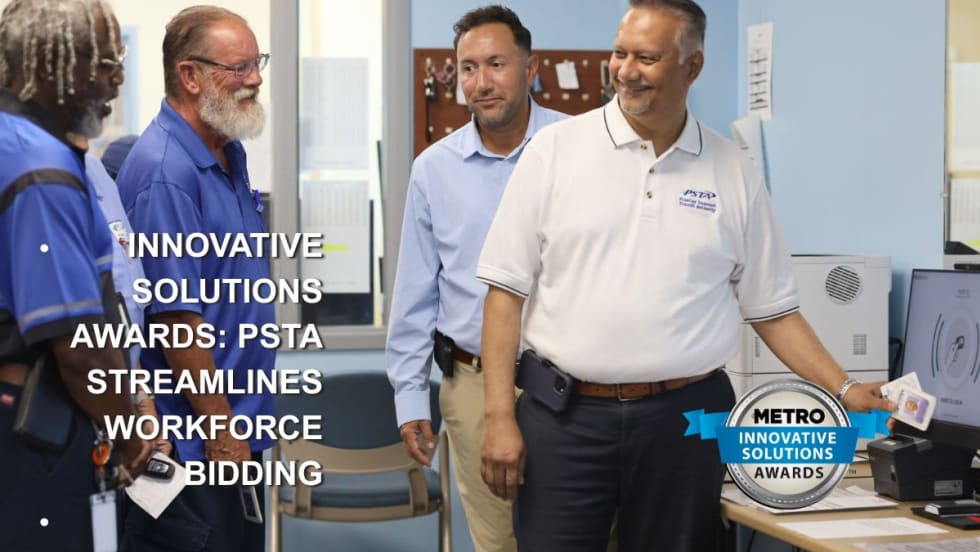
PSTA Modernizes Workforce Management with Digital Bidding System
The award-winning Workforce Transit Modernization project replaced paper bidding with a transparent digital platform, cutting administrative effort while improving access for operators.
Read More →
Washington's Community Transit Sets Six-Year Roadmap for Growth, Expansion
Approved TDP targets more bus service, new mobility options, Swift BRT expansion, and a potential Everett Transit annexation.
Read More →
DART Customer Satisfaction Reaches Six-Year High
Overall satisfaction rose to 74.9%, while the agency’s Net Promoter Score reached a record 33.7.
Read More →
How DART's GoPass Is Redefining Regional Mobility
Serving 14 transit agencies, GoPass simplifies multimodal travel by allowing riders to plan, pay for, and manage an entire trip through one app.
Read More →
Biz Briefs: OCTA Taps Clean Energy for Hydrogen Station, Stadler to Supply Via Rail Vehicles, and More
From manufacturers and suppliers to transit agencies and motorcoach operators, these updates offer a snapshot of the projects, partnerships and business moves driving the industry forward.
Read More →
METRO Magazine Announces 2026 Innovative Solutions Awards Winners
Projects Recognized for Advancing Mobility Through Technology, Accessibility, Workforce Innovation, and Operational Excellence
Read More →
Biz Briefs: STV teams with Amtrak, Motorcoach Operators Boost Fleet and Land Contracts, and More
From manufacturers and suppliers to transit agencies and motorcoach operators, these updates offer a snapshot of the projects, partnerships and business moves driving the industry forward.
Read More →