



Calif. Gov. commemorates new Proterra LA manufacturing facility
Partially funded by a grant from the California Energy Commission, the 100,000-square-foot facility has the capacity to manufacture 400 buses annually.

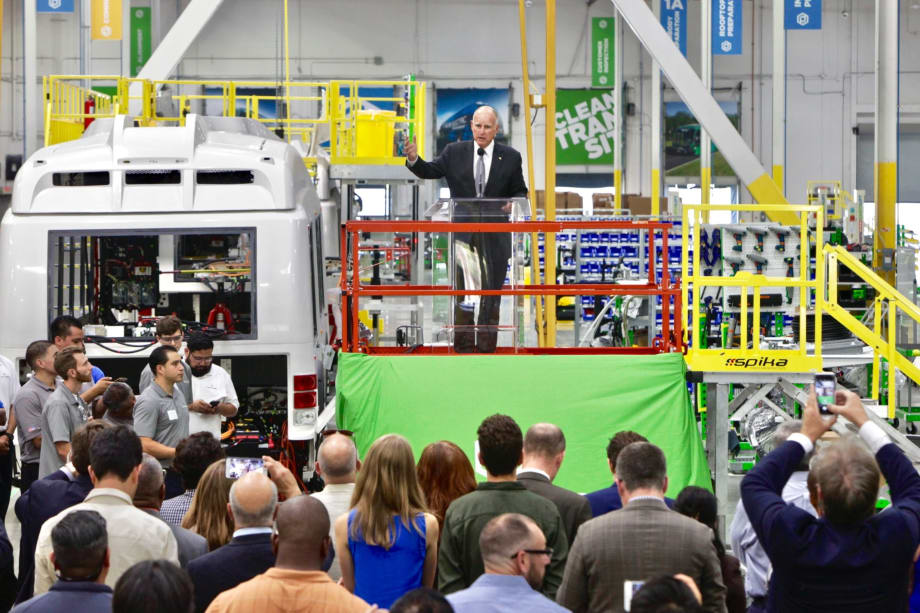
California Governor Jerry Brown gave a rousing speech on clean air policy during the commemoration of the Proterra's new bus manufacturing facility in Los Angeles County.
Photo: Proterra & Dominic Bolton
California Governor Jerry Brown gave a rousing speech on clean air policy during the commemoration of the Proterra's new bus manufacturing facility in Los Angeles County.
Photo: Proterra & Dominic Bolton
Joined by California Gov. Jerry Brown, heavy-duty electric transportation manufacturer, Proterra, officially commemorated the opening of its new Los Angeles manufacturing facility on July 26.
The event, attended by various state and local leaders, featured tours of the new 100,000-square-foot facility and rides on Proterra buses.
“In order to achieve California’s climate goals, we need more electric cars, trucks and buses on the road. Manufacturing these electric buses in California creates good jobs and cleans up the air,” said Gov. Brown.
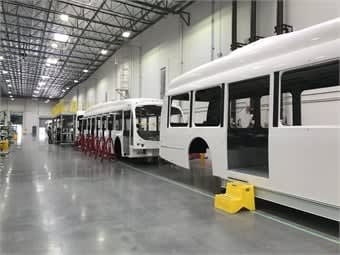
Partially funded by a grant from the California Energy Commission, the 100,000-square-foot facility has the capacity to manufacture 400 buses annually.
Proterra selected metro Los Angeles as an optimal vehicle production location to serve West Cost transit agencies, adding to its existing battery manufacturing facility in Silicon Valley and its East Coast vehicle production facility in Greenville, S.C. Between the Los Angeles Mobility 2035 Plan and Measure M, the successful ballot measure to fund transportation infrastructure developments and improvements, the greater Los Angeles Metropolitan region represents a massive opportunity to revitalize clean public transportation, according to the company.
The new Los Angeles County facility will benefit local economically distressed communities throughout the San Gabriel Valley, providing strong, long-term jobs in southern California’s emerging center of high-tech manufacturing. Proterra expects to have over 60 employees working in this facility by the end of 2017 and close to 100 employees by the end of 2018, building upon its already diverse workforce. Partially funded by a grant from the California Energy Commission, the 100,000-square-foot facility has the capacity to manufacture 400 buses annually.
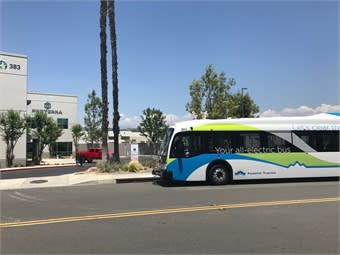
Proterra’s facility is also in close proximity to its first customer, Foothill Transit.
Proterra’s facility is also in close proximity to its first customer, Foothill Transit, which serves 22 cities from downtown L.A. to the east, and is currently operating 17 of Proterra’s electric buses, with 30 more Proterra Catalyst® E2 buses on the way. Foothill will be the first transit agency to receive the new Catalyst E2 buses that roll off the assembly line this summer.
“We’ve committed to go 100 percent electric by 2030, and this goal has been made possible by our leadership’s confidence in the rapid evolution of the technology,” said Foothill Transit Executive Director, Doran Barnes. “A recent NREL study found our electric buses were eight times more energy efficient than CNG buses on the same route, which validates our commitment.”
To date, Proterra buses across the U.S. have completed over 3.5 million miles of revenue service, displacing more than 900,000 gallons of diesel, and eliminating over 13.7 million pounds of carbon emissions, according to the company.
“As car culture wanes and more communities embrace 21st century, multi-modal transit, California has a unique opportunity to lead the country in this market transition,” said Proterra CEO Ryan Popple. “We are grateful for Governor Brown and the state’s support as we work to modernize and decarbonize transportation for all.”
More Bus

New York MTA Plans Largest Bus Fleet Upgrade in More Than a Decade
The agency is seeking manufacturers for 650 new CNG buses to replace aging vehicles, improve reliability, and advance its broader fleet modernization strategy.
Read More →
Building a Flexible Path to Transit Electrification
John Hroncich discusses BAE Systems’ modular and scalable approach, lessons learned from decades of real-world operations, and how agencies can identify electrification strategies that fit their fleets.
Read More →
Bus Tech Talk: Keeping Transit Technicians Ahead of the Technology Curve
LA Metro’s Obed Mejia discusses technician training, evolving maintenance technology, fleet replacement, and strategies for getting the most out of today’s transit fleets.
Read More →
Biz Briefs: RIPTA Unveils New Frontrunners, Clevland RTA Adds New Siemens, and More
In METRO's latest installment, we take a look at recent news from Siemens, Prevost, Dodge, and more partnerships making headlines across the transportation sector.
Read More →
People Movement: Holly Arnold Joins Transdev and More
In this edition, we also cover recent appointments and announcements at Pace, CamTran, MCI, and more, showcasing the individuals helping to shape the future of transportation.
Read More →
The High Cost of Transit Buses: Industry Leaders Look to Procurement Reform
Transit leaders and policymakers examine how standardized bus designs, streamlined procurement, and predictable funding could help agencies stretch budgets and deliver better service.
Read More →
The Business Voice Behind Public Transportation
As chair of APTA’s Business Members Board of Governors, Ray Melleady explains how more than 850 business members are partnering with transit agencies to advance funding, innovation, and industry-wide collaboration.
Read More →
From Surviving to Thriving: Building Stronger Transportation Organizations
Bus Business Consultants founder Brian Dickson shares lessons on leadership, organizational health, and creating options for long-term success in a changing transportation industry.
Read More →
Finding the ‘Happy Medium’: Optimizing Maintenance Without Sacrificing Reliability
The key to maintenance optimization isn’t doing less work—it’s doing the right work at the right time on the right assets.
Read More →
LA Metro, City of West Hollywood, and Partners Advance Smarter Bus Lane Enforcement
The award-winning partnership combines AI-powered detection with human oversight to improve bus reliability, accessibility, and enforcement efficiency.
Read More →