



California's OCTA Advances Priority Coastal Rail Projects
The move is another decisive step in the ongoing effort to protect and stabilize the coastal rail line through San Clemente to help ensure safe and uninterrupted rail service.

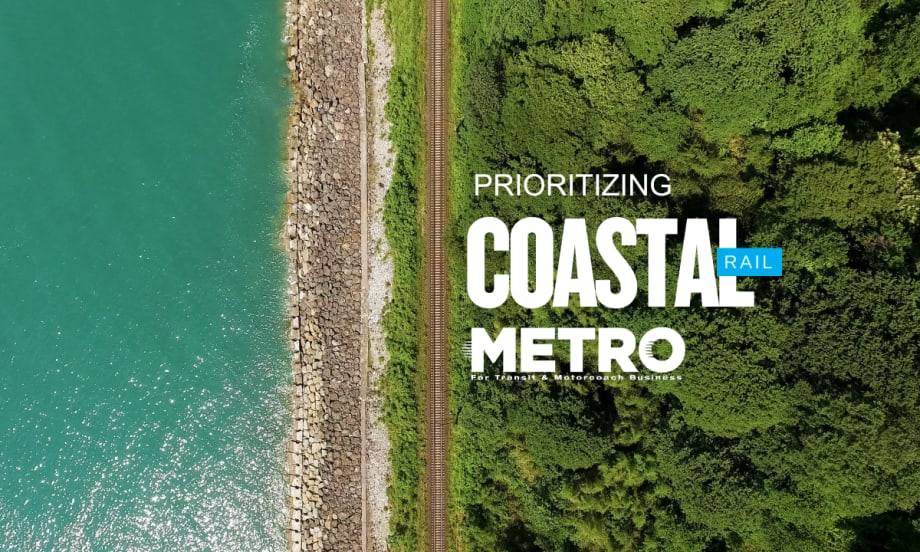
To address these urgent concerns, OCTA has been actively collaborating with regulatory agencies to implement strategic solutions in the near future, while continuing to look at short and mid-term solutions to protect the rail line in place.
Photo: Metro Magazine
California’s Orange County Transportation Authority (OCTA) board voted to advance four priority projects under the Coastal Rail Stabilization Priority Project, marking a significant milestone in efforts to safeguard the rail corridor.
The move is another decisive step in the ongoing effort to protect and stabilize the coastal rail line through San Clemente to help ensure safe and uninterrupted rail service.
“This rail line is essential to safely moving passengers and freight, and I’m proud of the work we are doing with strong input from the community and all stakeholders to make sure this vital corridor remains operating smoothly,” said OCTA Chair Doug Chaffee.
Coastal Rail Issues
Since fall 2021, multiple bluff failures and landslides on privately owned land have, along with coastal erosion, have significantly impacted rail operations along the Los Angeles – San Diego – San Luis Obispo (LOSSAN) Rail Corridor, requiring emergency stabilization efforts. Subsequently, studies indicated that other areas through San Clemente are at risk.
To address these urgent concerns, OCTA has been actively collaborating with regulatory agencies to implement strategic solutions in the near future, while continuing to look at short and mid-term solutions to protect the rail line in place. OCTA is also working with the state toward long-term solutions.
OCTA staff has continued to engage with regulatory agencies to find ways to streamline the permitting processes and advance the four identified reinforcement areas.
The priority projects are currently under the environmental and preliminary engineering phase, which would help to ensure the timely implementation of protective measures while aiming to minimize future rail service disruptions.
OCTA advanced the following projects:
Reinforcement Area 3: A proposed catchment wall at Mariposa Point designed to protect from landslides will be expedited. This location does not require permits from the U.S. Army Corps of Engineers or the California State Lands Commission, allowing for accelerated project implementation.
Reinforcement Areas 1, 2, and 4: OCTA is evaluating multiple protective measures, including riprap repair, engineered revetments, seawalls, and sand nourishment to address coastal erosion risks.
Collaborative Efforts, Funding Secured
OCTA is working closely with geotechnical, structural, and coastal engineers, alongside key stakeholders, such as the City of San Clemente, State Parks, Southern California Regional Rail Authority (Metrolink), LOSSAN, Amtrak, and BNSF Railway.
The collaborative approach ensures the selection of the most resilient and cost-effective solutions that would protect the rail line.
Last fall, OCTA secured $305 million in state and federal funding, enabling the completion of design and construction for the Coastal Rail Stabilization Priority Project. This financial commitment underscores the urgency and importance of protecting the region’s transportation infrastructure.
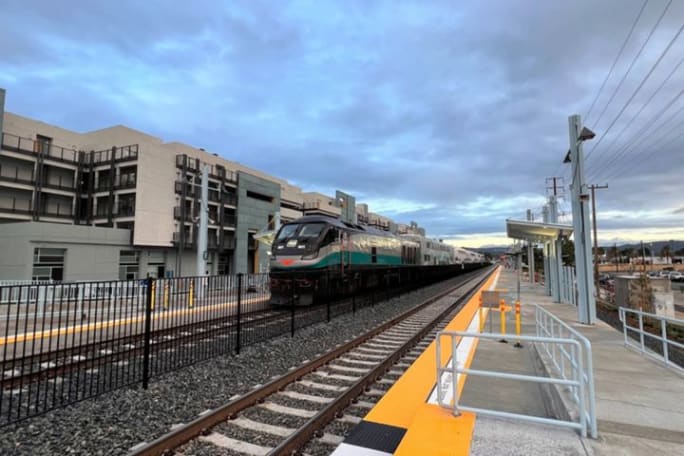
Since fall 2021, multiple bluff failures and landslides on privately owned land have, along with coastal erosion, have significantly impacted rail operations along the LOSSAN Rail Corridor, requiring emergency stabilization efforts
Photo: OCTA
Advancing the Project
OCTA continues to work with the U.S. Army Corps of Engineers, the California Coastal Commission, and the California State Lands Commission to advance the project under the standard regulatory framework, while looking for ways to expedite the effort. The work includes:
Submitting a Coastal Development Permit (CDP) application to the Coastal Commission.
Conducting geological and environmental assessments.
Identifying and securing sand sources to support beach nourishment.
In a series of public meetings, OCTA heard from and recognized the importance of incorporating sand nourishment into any proposed solutions. A critical component of the project includes a one-time infusion of approximately 540,000 cubic yards of sand for beach nourishment.
OCTA is exploring viable offshore and inland sand sources to support erosion control measures. Environmental studies and permitting processes are actively being pursued to expedite approvals and ensure efficient project implementation.
Project Timeline and Next Steps
The alternative analysis for Reinforcement Area 3 is expected to be finalized by March 2025, with preliminary engineering and environmental documentation completed by early 2026.
For Areas 1, 2, and 4, the alternatives analysis process is anticipated to conclude by mid-2025, with preliminary engineering and environmental documentation completed by early 2027. The timeline is subject to change.
Additionally, OCTA is coordinating with rail operators to minimize disruptions to passenger and freight rail services once construction begins.
OCTA is steadfast in its commitment to protecting Orange County’s coastal rail corridor through strategic, data-driven solutions to ensure continued reliability and resilience of one of the nation’s busiest rail corridors.
More Rail

Strada360’s Steve Lassey on Turning Transit Data Into Better Decisions
From breaking down data silos to preparing for AI, Strada360 CEO Steve Lassey discusses how transit agencies can use technology to improve operations, customer information, and long-term decision-making.
Read More →
SEPTA Details Accelerate Vision for Transit System
The plan outlines investments in trolley modernization, new Metro and Regional Rail vehicles, accessible stations, and more frequent bus and rail service.
Read More →
FTA Ends Direct Oversight of MBTA Safety Actions
The federal agency closed its remaining special directive to the Massachusetts Department of Public Utilities following a safety review that began in 2022.
Read More →
Amtrak, CN Reach Agreements to Strengthen Passenger Rail Service, Safety
The agreement resolves a more than decade-long proceeding before the Surface Transportation Board concerning the terms and conditions for Amtrak services, such as the City of New Orleans, Illini/Saluki, and Wolverine.
Read More →
New York MTA Advances Final Contract for Second Avenue Subway Expansion
Contract Four is the largest in the Second Avenue Subway Phase 2 project and includes construction of station infrastructure, tracks, and signals for the subway expansion, MTA officials said. Work on Contract Four will begin in 2027.
Read More →
San Diego MTS Breaks Monthly Trolley Ridership Record
Agency officials said July’s ridership indicates MTS’s continued recovery from the pandemic.
Read More →
Report Examines NJ TRANSIT Reliability, Funding Challenges
The Garden State Initiative analysis examines the roles of Amtrak infrastructure, fleet management, and agency operations while recommending a more performance-based approach to improving reliability.
Read More →
Stadler, CapMetro Sign Long-Term Rail Fleet Support Agreement
Beginning in 2027, Stadler will provide on-site technical expertise, spare parts support, training, and obsolescence management to help extend the reliability and longevity of CapMetro’s GTW fleet.
Read More →
Biz Briefs: Alstom Lands Canadian Contract, LYT to Supply California TSP, and More
In METRO's latest installment, we take a look at recent news from Complete Coach Works, Beep, FlixBus, and more partnerships making headlines across the transportation sector.
Read More →
CATS Gold Line Marks 5 Years of Service, 2.8M Passenger Trips
With a six-mile expansion planned, the Charlotte streetcar is positioned to connect more neighborhoods and major transit hubs across the region.
Read More →