




Related: Austin makes real-time transportation data available
CapMetro plan would nearly triple high-frequency routes
The changes recommended in the Connections 2025 draft plan would be implemented in phases over the next 10 years.
August 23, 2016
3 min to read
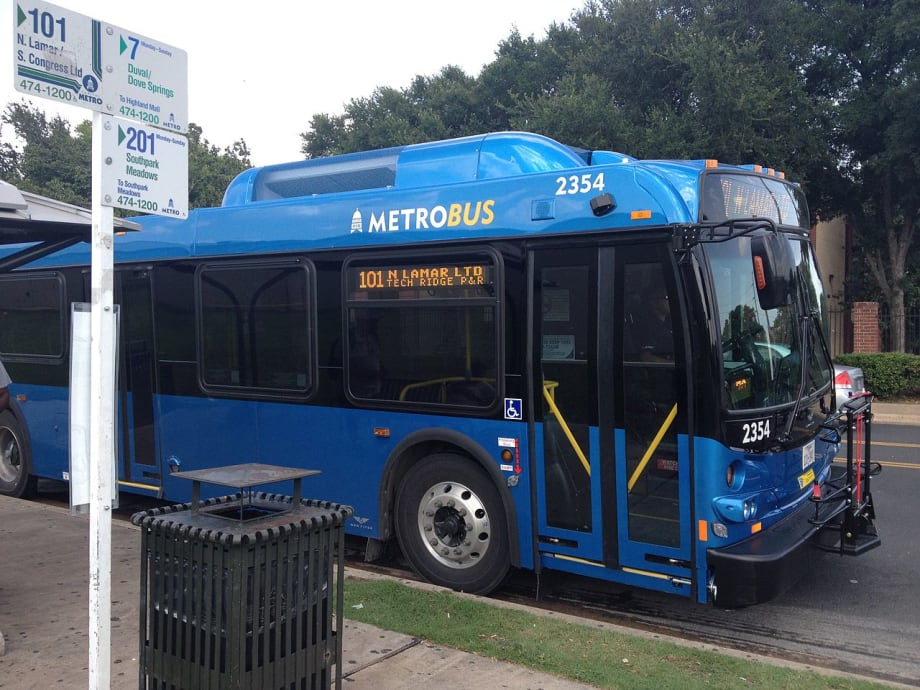
Capital Metro has presented its board with a 10-year draft transit plan that would nearly triple existing frequent routes, and significantly increase reliability and connections for riders.
The draft plan, called Connections 2025, would take Capital Metro in a new direction, increasing the number of high-frequency routes from 6 to 17, and upping frequency on many of its services to every 15-minutes or less. The plan also calls for doubling the number of MetroRapid routes and increasing frequency on that service to every 7 to 10 minutes during peak travel times.
More east-west connections would also be added, as well as more Express service on MoPac Express lanes, and on-demand circulator service for shorter distance travel in denser neighborhoods.
Building out the frequent service network as recommended would put over half a million people within a half-mile of a frequent bus route. Four out of five current riders would have better access to transit service overall.
As proposed, the improvements would combine to give riders six different service options:
Rapid Transit – Frequent MetroRail or bus service with dedicated right-of-way along regional corridors, including bus service operating on future I-35 Express Lanes with in-line stations. Frequency: 15 minutes.
MetroRapid – Rapid bus service along four major corridors. Frequency: 7 to 10 minutes.
Frequent Local – Reliably convenient service throughout the Capital Metro service area. Frequency: 15 minutes.
Local – Bus service connecting most neighborhoods to the High-Frequency Route Network and major destinations. Frequency: 30 minutes.
Express – Peak commuter service connecting Park & Rides to key destinations.
Community – Short-distance circulator routes serving specific communities.
The plan also recommends implementing a simplified fare structure to create an easier-to-navigate system that makes transferring easier and faster as passengers move across town. This would mean eliminating the current Premium fare, which includes MetroRapid and Flyer routes, and folding these services into the Local base fare.
The plan also addresses the region’s growing population centers, such as Mueller, The Domain, Seaholm and the future Plaza Saltillo development, by proposing new circulator services in these population centers that would offer connections around the centers and to the frequent network.
Frequency, reliability and better connections were the attributes mentioned most often during several months of public input this year.
Capital Metro and Transportation Management Design performed an in-depth market and service analysis to develop short- (1–10 years) and long-range (10+ years) recommendations to improve the network.
The draft plan calls for consolidating corridors with duplicative service to reinvest in frequency. Even with some less-efficient routes and segments eliminated, Capital Metro would retain service within a quarter mile, or a 5-minute walk, for more than 98 percent of riders.
A recent report by TransitCenter cites concentrating development around transit corridors, and improving walkable neighborhoods and frequency as the best methods to make public transit more useful for more people. Increased utility and convenience typically boost ridership and customer satisfaction.
The changes recommended in the Connections 2025 draft plan would be implemented in phases over the next 10 years. Capital Metro is proposing the first phase of changes in January 2017, utilizing the MoPac Express Lanes for Routes 982, 985 and 987; the addition of two new routes, 980 and 981; and the discontinuation of Route 983, due to redundancy of service.
The agency conducts a study of its bus system every five years. In 2010, the study resulted in the formation of MetroRapid, the addition of transit-priority lanes downtown, and the creation of the High-Frequency Route Network.
More efficient, higher-frequency transit networks can play an important role in mitigating commuter congestion. Central Texas is projected to see a population increase of 20-29 percent by 2025 and 45-80 percent by 2040.
More Bus

New York MTA Plans Largest Bus Fleet Upgrade in More Than a Decade
The agency is seeking manufacturers for 650 new CNG buses to replace aging vehicles, improve reliability, and advance its broader fleet modernization strategy.
Read More →
Building a Flexible Path to Transit Electrification
John Hroncich discusses BAE Systems’ modular and scalable approach, lessons learned from decades of real-world operations, and how agencies can identify electrification strategies that fit their fleets.
Read More →
Bus Tech Talk: Keeping Transit Technicians Ahead of the Technology Curve
LA Metro’s Obed Mejia discusses technician training, evolving maintenance technology, fleet replacement, and strategies for getting the most out of today’s transit fleets.
Read More →
Biz Briefs: RIPTA Unveils New Frontrunners, Clevland RTA Adds New Siemens, and More
In METRO's latest installment, we take a look at recent news from Siemens, Prevost, Dodge, and more partnerships making headlines across the transportation sector.
Read More →
People Movement: Holly Arnold Joins Transdev and More
In this edition, we also cover recent appointments and announcements at Pace, CamTran, MCI, and more, showcasing the individuals helping to shape the future of transportation.
Read More →
The High Cost of Transit Buses: Industry Leaders Look to Procurement Reform
Transit leaders and policymakers examine how standardized bus designs, streamlined procurement, and predictable funding could help agencies stretch budgets and deliver better service.
Read More →
The Business Voice Behind Public Transportation
As chair of APTA’s Business Members Board of Governors, Ray Melleady explains how more than 850 business members are partnering with transit agencies to advance funding, innovation, and industry-wide collaboration.
Read More →
From Surviving to Thriving: Building Stronger Transportation Organizations
Bus Business Consultants founder Brian Dickson shares lessons on leadership, organizational health, and creating options for long-term success in a changing transportation industry.
Read More →
Finding the ‘Happy Medium’: Optimizing Maintenance Without Sacrificing Reliability
The key to maintenance optimization isn’t doing less work—it’s doing the right work at the right time on the right assets.
Read More →
LA Metro, City of West Hollywood, and Partners Advance Smarter Bus Lane Enforcement
The award-winning partnership combines AI-powered detection with human oversight to improve bus reliability, accessibility, and enforcement efficiency.
Read More →