




Related: Chicago completes wireless installation on 2 rail lines
Chicago Transit expands Second Chance Program
The initiative provides valuable job skills and career opportunities to Chicago residents who often face challenges re-entering the workforce.
January 6, 2016
Cragin Spring
2 min to read
Cragin Spring
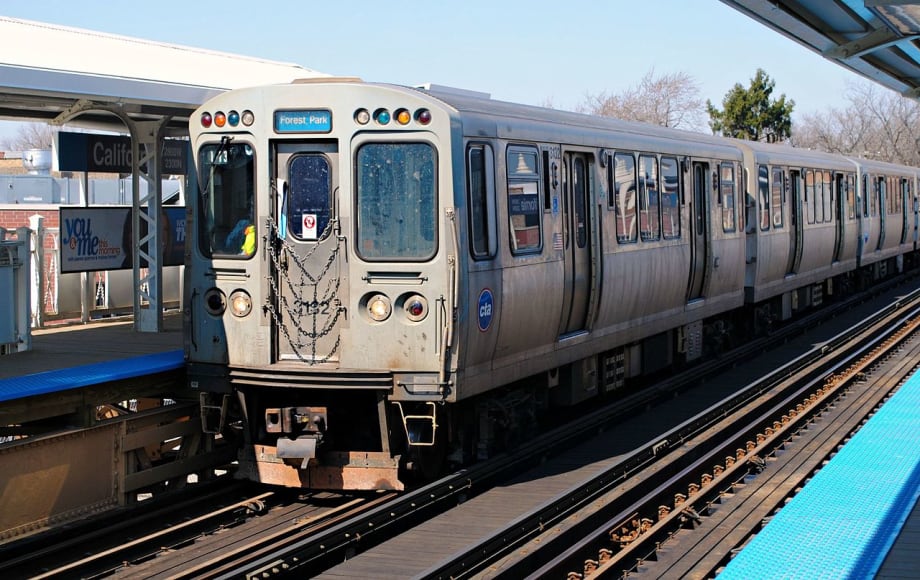
The Chicago Transit Authority (CTA) announced a new partnership with City Colleges of Chicago to expand the CTA’s successful Second Chance Program, an innovative initiative that provides valuable job skills and career opportunities to Chicago residents who often face challenges re-entering the workforce.
Through the partnership, City Colleges will provide new skills development and career training for Second Chance Program participants, which include nonviolent ex-offenders, victims of abuse and others who face barriers to employment.
Under Mayor Rahm Emanuel, the Second Chance program has quadrupled in size, becoming one of the largest programs of its kind in the country. The program has grown to 265 positions for bus and railcar servicers who clean and detail the CTA’s more than 1,200 railcars and nearly 1,800 buses, as well as rail station platforms and bus and rail yards.
Earlier this year, the CTA received a $750,000 federal grant to help expand diesel mechanic training as part of the Second Chance program — providing participants with a career skill that will see significant demand here in Chicago and across the country over the next decade.
The training for the Second Chance program participants will be provided by the Workforce Academy, a division of City Colleges providing fee for service customized, non-credit bearing, on-the-job training for Chicago area employers and their employees.
City Colleges is working with CTA to finalize the training based on the needs of CTA and the Second Chance Program. Training will be customized and contextualized for CTA and its areas of focus, and will include customer service for the transportation industry, core skills such as mathematics and problem solving, as well as technical skills in equipment safety. City Colleges also offers free GED high school equivalency courses, of which program participants can take advantage.
Since May 2011, more than 600 men and women have participated in the CTA program. One-hundred-fifty have been hired by CTA, and dozens more have moved on to other jobs, thanks to the experience they received in the Second Chance program. Of the 150 hired by CTA, five have moved up to manager-level positions.
More Management

FTA Ends Direct Oversight of MBTA Safety Actions
The federal agency closed its remaining special directive to the Massachusetts Department of Public Utilities following a safety review that began in 2022.
Read More →
Report: Transit Bus Manufacturing Supports 34,100 Jobs, $5.1B in GDP
The “Buses Mean Business” report examines the transit bus manufacturing industry’s economic footprint, supply chain, and rising demand for vehicle replacements.
Read More →
LIT Marks 10-Year Milestone at Annual Summit
Hosted by the COTA from September 10 to 13, the Summit carried the theme “Celebrating 10 Years of Excellence, Leadership, and Impact,” with every part of the program honoring the people, agencies, and partners who built LIT over its first decade.
Read More →

People Movement: Dan Dipert Coaches Adds Third-Generation Leader, Keolis Names New Valley Metro VP/GM, and More
In this edition, we also cover recent appointments and announcements at the Wabtec, SilverRide, HNTB, and more, showcasing the individuals helping to shape the future of transportation.
Read More →
METRO Opens Submissions for 2026 Motorcoach Awards
Nominations are now being accepted for METRO Magazine’s Operator of the Year and Innovative Operator of the Year awards.
Read More →
New York MTA Advances Final Contract for Second Avenue Subway Expansion
Contract Four is the largest in the Second Avenue Subway Phase 2 project and includes construction of station infrastructure, tracks, and signals for the subway expansion, MTA officials said. Work on Contract Four will begin in 2027.
Read More →
Transit Agencies Highlight Safety Gains at National Summit
Leaders from 15 major transit systems shared crime-reduction results and safety initiatives while discussing the role of continued federal support.
Read More →
NITA Names New Leadership, Expands Reduced-Fare Program at First Board Meeting
The new regional transit authority appointed its first board chair and interim executive director while extending reduced fares across CTA, Metra, and Pace for eligible riders.
Read More →
Beyond the Checklist: A Structured Approach to Transit Maintenance
Reliability-Centered Maintenance helps transit agencies move beyond routine checklists to focus limited resources on the assets and failures that have the greatest impact on safety, reliability, and service.
Read More →
APTA 2026 Nominating Committee Selects Leadership Slate, Names Chair and Vice Chair Nominees
Leadership changes will help shape the association’s priorities and its representation of the transportation industry during the 2026–2027 term.
Read More →