



Cincinnati’s Metro Hits 1M Riders for First Time Since Pandemic
To help celebrate the occasion, Metro identified Mala Escobar as January’s one-millionth rider.

As a result of several improvements, last month saw a 68% increase in monthly ridership over January 2022 and a more than 80% return to pre-pandemic (2019) levels.
Metro
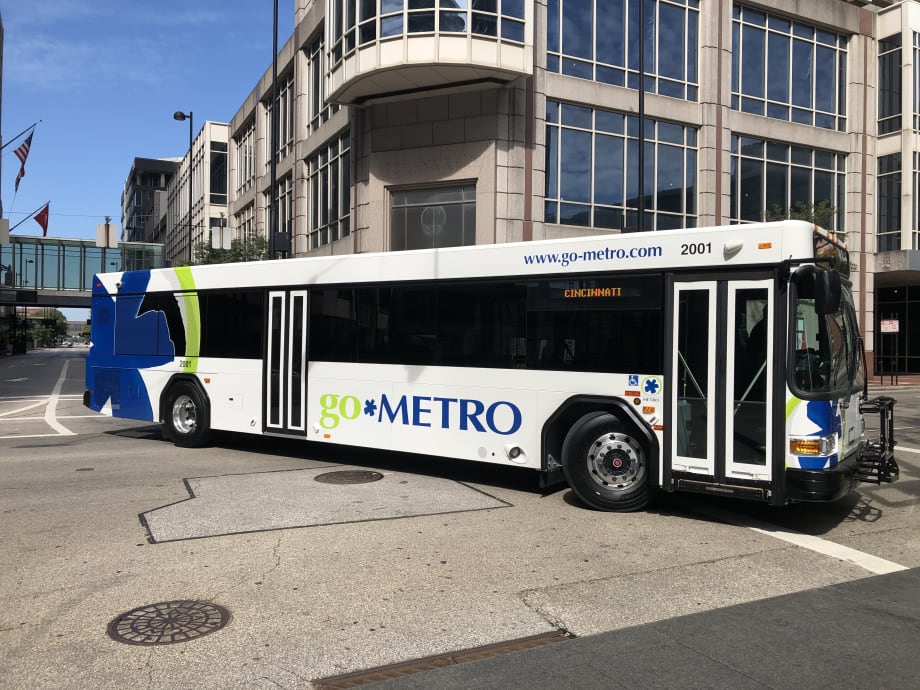
Cincinnati’s Metro provided more than one million trips in the month of January, marking the first time the transit agency has reached the ridership milestone since early 2020, before the COVID-19 pandemic hit the region.
To help celebrate the occasion, Metro identified Mala Escobar as January’s one-millionth rider. Escobar told Metro she recently began riding the bus to her place of employment in Bond Hill after experiencing car trouble. Even though she has since had her vehicle repaired, she said she is happy the experience introduced her to Metro as a transportation alternative and she continues to ride.
For the noteworthy part she has played in Metro’s ongoing comeback from the pandemic, the staff congratulated Escobar with a 30-day bus pass, a bag stuffed with Metro goodies, and recognition at the Southwest Ohio Regional Transit Authority (SORTA) Board of Trustees Planning & Operations Committee meeting.
“Ms. Escobar’s story is a very familiar one to us here at Metro,” said Sr. VP, External Affairs, Brandy Jones. “As the Reinventing Metro plan continues to build our service across Hamilton County, these ridership numbers tell us we remain on the right path toward building one of the most robust and dependable transit agencies in the country. In cases like Ms. Escobar’s, we’re also seeing that once someone goes Metro, they’ll keep coming back.”
Unlike most of its peers, who made the difficult decision to cut service during the pandemic, Metro had the opportunity to add service, thanks to the passage of Issue 7 in 2020. In the nearly two years since, Metro has introduced new, 24-hour service on seven routes; launched two new crosstown routes; increased frequency and service-hour span on most routes; simplified numerous route alignments and Metros’ fare structure; and added new weekend service and state-of-the-art amenities like free, onboard Wi-Fi and charging ports, all as part of the Reinventing Metro plan.

Mala Escobar, photographed Feb. 17, 2023, poses at her Bond Hill workplace with balloons and a Cincinnati Metro giftbag after being identified as the transit agency’s one millionth rider in January 2023.
Metro
As a result of these improvements, last month saw a 68% increase in monthly ridership over January 2022 and a more than 80% return to pre-pandemic (2019) levels, exceeding the national average return by nearly 20%, according to data collected by the American Public Transportation Association.
These improvements also have laid the groundwork for two of Metro’s most exciting new service offerings: an on-demand service, MetroNow!, slated to launch Spring of 2023, and bus rapid transit, which is being designed for the Hamilton Avenue and Reading Road corridors throughout Hamilton County.
More Bus

New York MTA Plans Largest Bus Fleet Upgrade in More Than a Decade
The agency is seeking manufacturers for 650 new CNG buses to replace aging vehicles, improve reliability, and advance its broader fleet modernization strategy.
Read More →
Building a Flexible Path to Transit Electrification
John Hroncich discusses BAE Systems’ modular and scalable approach, lessons learned from decades of real-world operations, and how agencies can identify electrification strategies that fit their fleets.
Read More →
Bus Tech Talk: Keeping Transit Technicians Ahead of the Technology Curve
LA Metro’s Obed Mejia discusses technician training, evolving maintenance technology, fleet replacement, and strategies for getting the most out of today’s transit fleets.
Read More →
Biz Briefs: RIPTA Unveils New Frontrunners, Clevland RTA Adds New Siemens, and More
In METRO's latest installment, we take a look at recent news from Siemens, Prevost, Dodge, and more partnerships making headlines across the transportation sector.
Read More →
People Movement: Holly Arnold Joins Transdev and More
In this edition, we also cover recent appointments and announcements at Pace, CamTran, MCI, and more, showcasing the individuals helping to shape the future of transportation.
Read More →
The High Cost of Transit Buses: Industry Leaders Look to Procurement Reform
Transit leaders and policymakers examine how standardized bus designs, streamlined procurement, and predictable funding could help agencies stretch budgets and deliver better service.
Read More →
The Business Voice Behind Public Transportation
As chair of APTA’s Business Members Board of Governors, Ray Melleady explains how more than 850 business members are partnering with transit agencies to advance funding, innovation, and industry-wide collaboration.
Read More →
From Surviving to Thriving: Building Stronger Transportation Organizations
Bus Business Consultants founder Brian Dickson shares lessons on leadership, organizational health, and creating options for long-term success in a changing transportation industry.
Read More →
Finding the ‘Happy Medium’: Optimizing Maintenance Without Sacrificing Reliability
The key to maintenance optimization isn’t doing less work—it’s doing the right work at the right time on the right assets.
Read More →
LA Metro, City of West Hollywood, and Partners Advance Smarter Bus Lane Enforcement
The award-winning partnership combines AI-powered detection with human oversight to improve bus reliability, accessibility, and enforcement efficiency.
Read More →