



Columbus, Ohio wins Smart City Challenge
The U.S. DOT also announced that it will collaborate with government and private sector partners to help all seven finalist cities in the Smart City Challenge move forward with ideas that each city developed over the past six months.

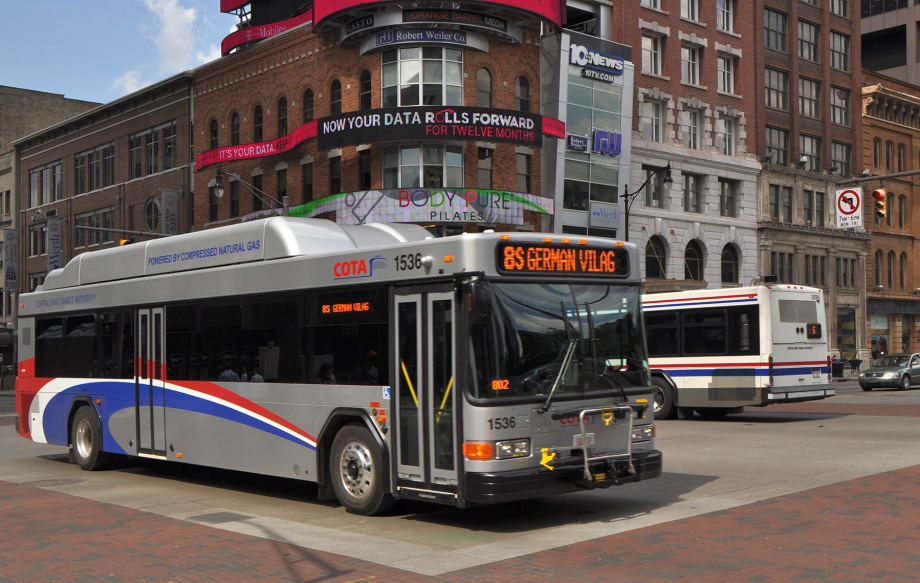
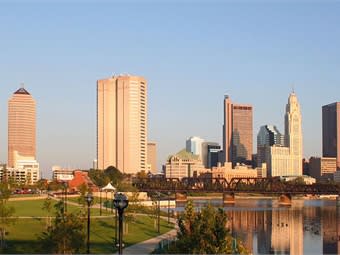
COLUMBUS, OHIO — The City of Columbus beat out six other finalists to win the U.S. Department of Transportation’s (U.S. DOT) Smarty City Challenge and will now receive $50 million in grant funding from the feds and Vulcan Inc. to develop the region into the nation’s proving ground for intelligent transportation systems, The Columbus Dispatch reports.
Columbus’ application included a transit pass payment system that could be used for multiple forms of transportation, including Central Ohio Transit Authority (COTA) and app-based car services, which could help those who don’t have credit cards or bank accounts. Kiosks could be built to reload transit cards, or the city could use a smartphone app as a universal payment system. Several other transportation innovations on the city’s application included an autonomous vehicle test fleet at Easton Town Center that would pick up passengers at the COTA terminal and deliver them nearer to jobs at the shopping center.
The city, which will be honored on Thursday, also has about $90 million in local matching commitments lined up, including $19 million in public money, giving them a total of $140 million to upgrade its transportation network. For the full story, click here.
Prior to the announcement of the winner, the U.S. DOT also announced that it will collaborate with government and private sector partners to help all seven finalist cities in the Smart City Challenge — San Francisco; Austin, Texas; Portland, Ore.; Kansas City, Mo.; Denver, Pittsburgh and Columbus — move forward with ideas that each city developed over the past six months.
The collaboration will include continued support from Paul G. Allen’s Vulcan Inc., and will focus resources from across the federal government and the private sector to support innovation in the seven cities.
“Each of our finalist cities has demonstrated incredible vision and creativity in developing meaningful plans to use technology to improve the lives of their citizens and create a truly smart city,” said Secretary Anthony Foxx. “There has been a remarkable spirit of cooperation as these cities moved through the competition, and working together with our partners, we are excited to help empower all seven finalists to move forward in creating smart cities.”
The U.S. DOT will work to identify federal resources for all seven finalists, including providing technical assistance with the department’s grant and credit programs. Partner and federal agency involvement will include the following:
Vulcan Inc. will lead the effort to bring in other philanthropists to provide additional funding to support the climate and electrification efforts of all seven cities and beyond.
The Department of Energy (DOE) is committed to engaging with all seven cities, as well as other aspiring smart cities, to help cities with transportation system modeling and analysis, data management and the electrification of their transportation networks. DOE will also engage with the finalist cities on a “technologist-in-cities” program to assist cities in their implementation efforts and facilitate continued engagement with DOE programs.
The Department of Homeland Security Science and Technology Directorate will focus on using technology to reimagine resiliency in the digital age, helping cities improve their disaster response efforts and become more resilient to evolving threats and climate change.
Consistent with their efforts around the Global City Teams Challenge, the National Institute of Standards and Technology will encourage connections to enable the cities to share their ideas and solutions for replicable and measurable smart city transportation systems that go beyond traffic to improve safety and mobility, catalyze economic growth, enable a cleaner and more sustainable environment, and provide an improved quality of life for residents of communities worldwide.
Most of U.S. DOT’s Smart City Challenge partners have also committed to support the seven cities moving forward.
The original Smart City Challenge was launched in December 2015 by U.S. Transportation Secretary Anthony Foxx and Vulcan President and Chief Operating Officer Barbara Bennett as an innovative competition for cities to reshape their transportation systems harnessing the power of technology, data, and creativity to reimagine how people and goods move throughout cities. Seventy-eight cities submitted entries to the competition, and in March, seven finalists were selected. Each finalist then prepared a full proposal, and the mayors of the seven cities presented their final pitches at a live event in Washington, D.C. in early June.
More New Mobility

From Hardware to Digital Partner: Luminator Charts Its Next Chapter
CEO Magnus Friberg discusses Luminator’s shift toward becoming a digital partner, the growing importance of software and interoperability, and how AI can help agencies improve operations and passenger experience.
Read More →
Biz Briefs: Alstom Lands Canadian Contract, LYT to Supply California TSP, and More
In METRO's latest installment, we take a look at recent news from Complete Coach Works, Beep, FlixBus, and more partnerships making headlines across the transportation sector.
Read More →
CharterUP’s Armir Harris on Technology, AI, and the Future of Group Mobility
In a recent episode of METROspectives, CharterUP Founder/CEO Armir Harris discussed the company’s evolution from an online charter bus marketplace into a technology platform supporting public- and private-sector mobility and much more.
Read More →
Jacksonville’s NAVI Project Charts a New Course for Autonomous Public Transportation
Through its NAVI program, JTA is showing how autonomous vehicles, intelligent infrastructure, and coordinated operations can work together to deliver everyday public transportation.
Read More →
Biz Briefs: Luminator Marks Milestone and More
From manufacturers and suppliers to transit agencies and motorcoach operators, these updates offer a snapshot of the projects, partnerships and business moves driving the industry forward.
Read More →
New Tricks for Old Bureaucracies: Joshua Schank on Making Transit Innovation Stick
Former LA Metro Chief Innovation Officer Joshua Schank discusses why good ideas aren't enough, how transit agencies can overcome resistance to change, and why today's challenges demand more innovation.
Read More →
How DART's GoPass Is Redefining Regional Mobility
Serving 14 transit agencies, GoPass simplifies multimodal travel by allowing riders to plan, pay for, and manage an entire trip through one app.
Read More →
Biz Briefs: OCTA Taps Clean Energy for Hydrogen Station, Stadler to Supply Via Rail Vehicles, and More
From manufacturers and suppliers to transit agencies and motorcoach operators, these updates offer a snapshot of the projects, partnerships and business moves driving the industry forward.
Read More →CharterUP Expands Into New Mobility and Autonomous Transportation
Vice President of New Mobility Stephen Joos discusses how CharterUP is leveraging its nationwide transportation network, technology platform, and autonomous vehicle partnerships to expand into workforce mobility, campus shuttles, and transit solutions.
Read More →
METRO Magazine Announces 2026 Innovative Solutions Awards Winners
Projects Recognized for Advancing Mobility Through Technology, Accessibility, Workforce Innovation, and Operational Excellence
Read More →