



Global Agreement to Target 100% Zero-Emission New Truck, Bus Sales by 2040
Fifteen countries agree to work together toward 100% zero-emission new truck and bus sales by 2040.
CALSTART’s Global Commercial Vehicle Drive to Zero program and campaign (Drive to ZeroTM) and the government of the Netherlands are the organizing bodies of the new MOU plus endorsement.
Photo: CALSTART
Under the new Global Memorandum of Understanding (MOU) for Zero-Emission Medium- and Heavy-Duty Vehicles (ZE-MHDVs), 15 countries have agreed to work together toward 100% zero-emission new truck and bus sales by 2040.
Austria, Canada, Chile, Denmark, Finland, Luxembourg, Netherlands, New Zealand, Norway, Scotland, Switzerland, Turkey, United Kingdom, Uruguay, and Wales are setting an interim goal of 30% zero-emission new vehicle sales by 2030.
According to CALSTART's press release, subnational governments — like Québec (Canada), and Telengana (India) — as well as top manufacturers and fleets like Scania, DHL, and Heineken are endorsing the MOU and agreeing to work collaboratively toward the same 2030 and 2040 goals.
“For too long our medium- and heavy-duty vehicles were too difficult to decarbonize," said Steven van Weyenberg, Minister for the Environment of the Netherlands. "But technology is improving fast and costs are reducing quickly. So now is the time to speed up. Not just for the climate. Everyone has the right to breathe clean air. This cuts both ways: investments now will lead to more green jobs in the coming years. I call on other countries to join our effort as soon as possible,”
CALSTART’s Global Commercial Vehicle Drive to Zero program and campaign (Drive to ZeroTM) and the government of the Netherlands are the organizing bodies of the new MOU plus endorsement.
The effort is a headline announcement at COP26’s “Transport Day” in Glasgow. The United Kingdom — with the support of the Climate Group — is announcing the COP26 declaration on zero-emission cars and vans, a global agreement, which brings together national governments, states, regions, cities, vehicle manufacturers businesses, investors, and civil society all committed to working towards 100% zero-emission car and van sales by 2035 in leading markets, and no later than 2040 globally.
“For the first time we have a unified target, supported by leading governments and industry, for when new trucks and buses should fully transition to zero-emission technologies,” said Dr. Cristiano Façanha, CALSTART’s global director. “Globally, freight trucks and buses represent about 4% of the on-road fleet globally but are responsible for 36% of greenhouse gas emissions, and over 70% of nitrogen oxide emissions that contribute to local air pollution. This makes trucks and buses a very effective target for fast decarbonization.”
The transition to 100% zero-emission technologies for trucks and buses will require investments in battery and electric component manufacturing and charging infrastructure as well as cross-collaboration between countries and the public and private sector.
“We endorse this global agreement on zero-emission trucks and buses as part of wider efforts to accelerate the shift towards sustainable transport," said Christian Levin, president and CEO, Scania. "We will do our part to facilitate scaling of solutions faster and more cost-efficiently, not the least through initiatives that spur the build out of charging infrastructure for heavy vehicles."
Active discussions are being held with other countries that have not yet signed the MOU.
“With already 8.4% of all buses and coaches registered in Luxembourg being electrified and with a clear aim to decarbonize by 2030 all the public buses operated by the State, the next necessary step is to accelerate the shift towards zero-emission trucks," said François Bausch, Deputy Prime Minister and Minister for Mobility and Public Works of Luxembourg. "Given that this requires a strong collaboration between governments and stakeholders in order to put in place the needed policies, vehicles and infrastructure, Luxembourg welcomes this ambitious memorandum of understanding and is looking forward to its implementation."
Current MOU signatories represent the first group of countries aligned around the same target for zero-emission trucks and buses.
The Dutch Ministry for the Environment and CALSTART worked together to coordinate the Global Agreement on Zero-Emission Trucks and Buses.
More Zero Emissions
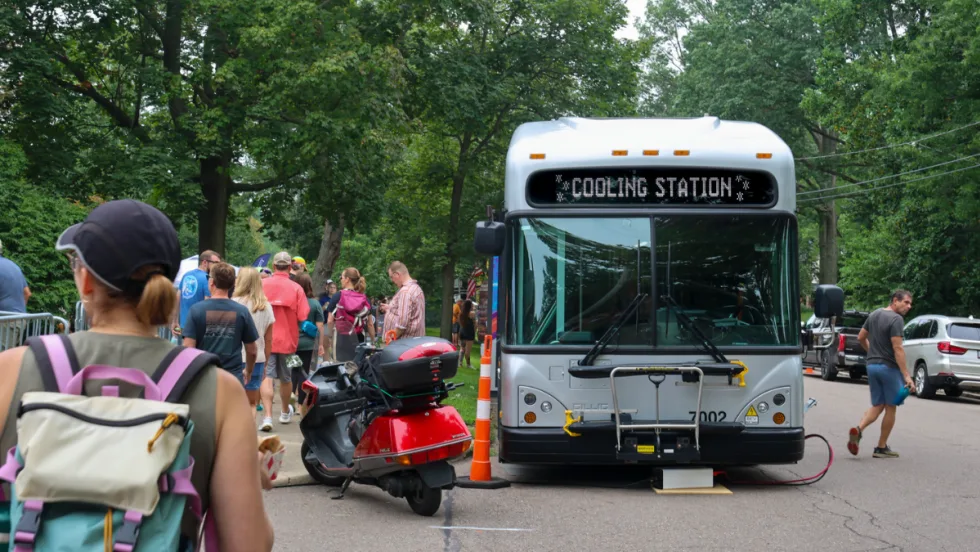
Ohio’s METRO RTA Turns Electric Buses into Mobile Power Sources at PorchROKR
See how three Gillig battery-electric buses powered festival stages while the agency’s new Park & Ride service carried approximately 1,000 attendees, demonstrating another potential use for transit agencies’ electric fleets.
Read More →
CALSTART and Forth Combine to Form Catalyst Mobility
The new name represents a renewed vision for the nonprofit focused on advancing clean, equitable, and affordable transportation solutions that move people and goods.
Read More →
Building a Flexible Path to Transit Electrification
John Hroncich discusses BAE Systems’ modular and scalable approach, lessons learned from decades of real-world operations, and how agencies can identify electrification strategies that fit their fleets.
Read More →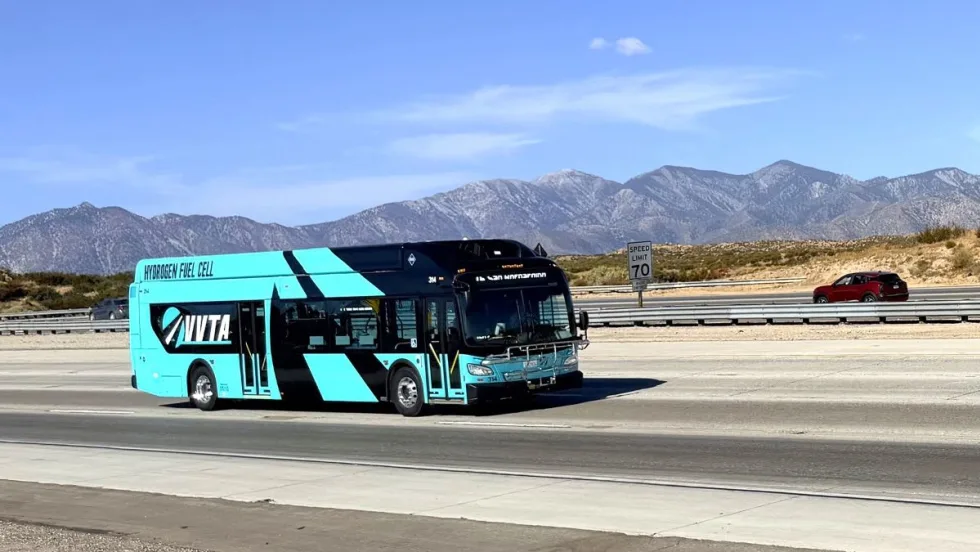
California's VVTA Begins Phased Rollout of Hydrogen Fuel Cell Buses
The agency is introducing 13 zero-emission buses into revenue service while evaluating performance across its urban, rural, and long-distance routes.
Read More →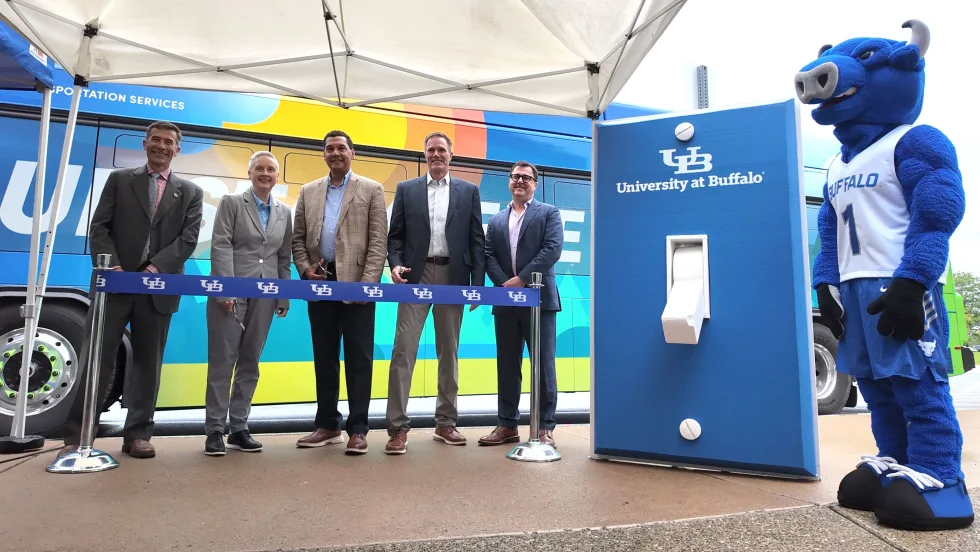
Inside Look: University at Buffalo Puts First 8 Electric Buses Into Stampede Service
UB, transportation solutions provider WeDriveU, and fleet electrification specialist Zenobē marked the deployment in the presence of students, university administrators, and local officials.
Read More →
Biz Briefs: OCTA Taps Clean Energy for Hydrogen Station, Stadler to Supply Via Rail Vehicles, and More
From manufacturers and suppliers to transit agencies and motorcoach operators, these updates offer a snapshot of the projects, partnerships and business moves driving the industry forward.
Read More →
AC Transit’s Cecil Blandon on Building the Next Generation of Transit Maintenance Leaders
The agency’s maintenance chief discusses leadership, workforce development, zero-emission technology, and preparing technicians for the future of public transportation.
Read More →
CTDOT Taps STV for Electric Bus Facility Design
The firm will work with CTDOT and RVT to define the facility layout, operational requirements, and long-term flexibility for RVT’s growing electric fleet.
Read More →
Chicago’s Pace Deploys 24 Hybrid-Electric Buses in Will County
The new buses reduce emissions and fuel consumption while advancing the agency's long-term goal of transitioning to a fully zero-emission fleet.
Read More →
DASH Breaks Ground on First On-Route Electric Bus Chargers in D.C. Region
The fast-charging infrastructure will help extend electric bus range, improve fleet utilization, and support DASH's goal of transitioning to a fully zero-emission fleet.
Read More →