




More News: New York MTA Approves Purchase of Additional Subway Cars
CTA Meets Record-Breaking Workforce Milestone
CTA was able to train 200 new rail operators and hire 1,000 bus operators over the course of 2024.
December 23, 2024
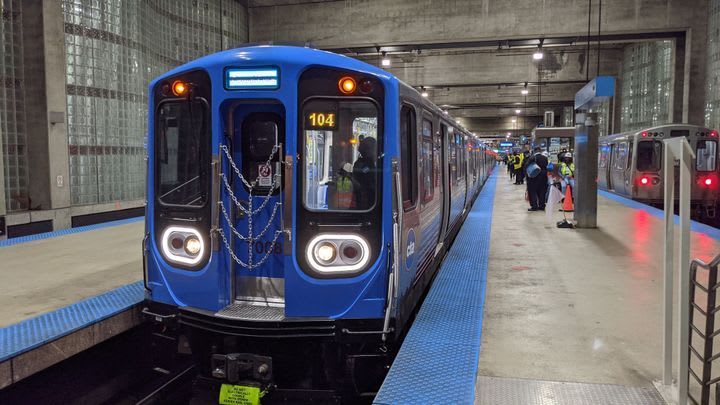
The CTA has reached pre-pandemic levels once again on both their bus and rail system thanks to the influx of new employees this year.
PHOTO: CTA
2 min to read
The Chicago Transit Authority (CTA) celebrated two major milestones recently, the training and qualifying of more than 200 new rail operators and the hiring of more than 1,000 new bus operators in 2024, of which more than 850 have entered service.
CTA President Dorval R. Carter JR. along with other agency leadership celebrated these achievements, which were critical to the agency reaching pre-pandemic service levels across the bus and rail systems before the end of the year.
The event comes after the CTA announced its winter bus schedule and restored scheduled bus services to pre-pandemic levels.
“We have reached and surpassed our goal of qualifying 200 new rail operators this year — an achievement that was vital to re-establishing the level of rail service our riders expect,” Carter said. “Meanwhile, we’ve also ensured our bus network can fully return to pre-pandemic levels. We owe much gratitude for the dedication and teamwork of our new operators, veteran instructors and temporary retired instructors, who worked tirelessly to bring our transit system back from an unprecedented pandemic and the darkest times many of us have seen in our lifetimes.”
The event also brought together newly trained operators, community members and instructors. Carter acknowledged the operators’ role in boosting service, while congratulating and thanking bus and rail instructors.
Impact of New Hires
CTA was able to meet their goals for rail service and bus service that were set at the beginning of the year.
For rail service, CTA decided to double their intake of new rail operator trainees, increasing classes from the previous year, and accommodating at least 20 participants per training cohort. The workforce expansion helped ensure CTA has the skilled personnel needed to meet increasing ridership demands and service enhancements in 2025.
CTA was able to restore pre-pandemic service with a 20% boost in scheduled weekly roundtrips across all eight lines. The system now provides over 1,200 additional weekly rail trips.
Coming into the Fol
More than 1,000 operators were hired to enhance CTA’s bus service as well. 850 of these operators have been qualified and entered service. With the new operators in place the bus system currently exceeds 99% of scheduled service delivery.
In 2025, CTA hopes to further improve the rider experience by introducing more frequent bus and rail service while also exploring tools that improve their services. This includes piloting a service disruption management feature on CTA Bus Tracker to eliminate ghost buses, testing of new technologies that expand real-time arrival and alert signage to bus stops.
The CTA remains committed to ongoing improvements and expansions that benefit both riders and employees.
More Management

METRO Opens Submissions for 2026 Motorcoach Awards
Nominations are now being accepted for METRO Magazine’s Operator of the Year and Innovative Operator of the Year awards.
Read More →
New York MTA Advances Final Contract for Second Avenue Subway Expansion
Contract Four is the largest in the Second Avenue Subway Phase 2 project and includes construction of station infrastructure, tracks, and signals for the subway expansion, MTA officials said. Work on Contract Four will begin in 2027.
Read More →
Transit Agencies Highlight Safety Gains at National Summit
Leaders from 15 major transit systems shared crime-reduction results and safety initiatives while discussing the role of continued federal support.
Read More →

NITA Names New Leadership, Expands Reduced-Fare Program at First Board Meeting
The new regional transit authority appointed its first board chair and interim executive director while extending reduced fares across CTA, Metra, and Pace for eligible riders.
Read More →
Beyond the Checklist: A Structured Approach to Transit Maintenance
Reliability-Centered Maintenance helps transit agencies move beyond routine checklists to focus limited resources on the assets and failures that have the greatest impact on safety, reliability, and service.
Read More →
APTA 2026 Nominating Committee Selects Leadership Slate, Names Chair and Vice Chair Nominees
Leadership changes will help shape the association’s priorities and its representation of the transportation industry during the 2026–2027 term.
Read More →
DART Launches Major Security, Fare Enforcement Initiative
The 90-day demonstration will deploy coordinated security teams at five light rail stations while testing controlled access and gathering data to guide future investments.
Read More →
Sponsored•September 9, 2026
Advancing Fare Collection Through Technology and Innovation
Learn about delivering 1300 gates at 91 stations while managing fare evasion. Explore the large scale deployment, solution customization and real-world results that affect the region. Prepare for deployment in your region now.
Read More →
Game Day in Motion: Moving Millions During the 2026 World Cup
Between packed transit stations and team motorcoaches, see how agencies and operators across North America tackled the transportation demands of the 2026 FIFA World Cup.
Read More →
Surface Transportation Extension Averts Shutdown, Leaves Transit Funding Gap
The stopgap keeps federal transportation programs moving, but missing advance funding could complicate the transit and rail projects agencies are planning next.
Read More →