



CTA's upgraded Belmont Station to feature notable architecture
The project will include a community gateway, architecturally enhancing the street-level entrance to the Belmont subway station, and will improve the bus arrival/departure areas to speed bus boarding and provide a safer, more comfortable environment for pedestrians.


Tripp from Chicago
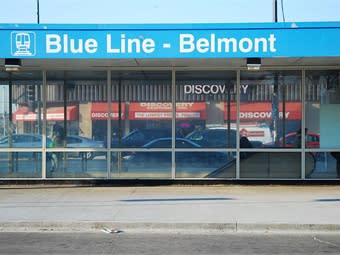
Tripp from Chicago
Mayor Rahm Emanuel and Chicago Transit Authority (CTA) President Dorval R. Carter Jr. announced plans to use a new improvement project at the Belmont station on the Blue Line O’Hare branch to infuse unique architecture into the Northwest Side neighborhood.
The project will include a community gateway, architecturally enhancing the street-level entrance to the Belmont subway station, and will improve the bus arrival/departure areas to speed bus boarding and provide a safer, more comfortable environment for pedestrians. The most visible element will be an architectural canopy above the Belmont station entrance. Designed by the Chicago architecture firm Carol Ross Barney, the canopy will provide an expanded covered area for waiting customers, while creating a strong visual identifier for both the CTA and the community.
“Projects like this bring notable architecture and design that celebrates and complements the character of our communities, enhance our neighborhoods, and bring economic and cultural opportunities to residents and businesses,” said Mayor Emanuel. “The Your New Blue program has already created notable improvements for Blue Line customers on the O’Hare branch, and now we’re expanding those to the Avondale community. We are committed to continuing our unprecedented investment in creating a world-class transit system.”
The project will also include streetscape and landscape improvements which, combined with the station improvements, will create a signature gateway to the Avondale community.
“As we have done with recent projects like the 95th Street Terminal and the Cermak-McCormick Place station, our goal is create an efficient, attractive environment for our customers while also incorporating modern, innovative designs,” said Carter. “These improvements go hand in hand with the improvements to rail and bus service that we are making across our transit system to better serve our customers.”
The Belmont Blue subway station and bus terminal is an important transit hub in the Avondale community, providing access to the Blue Line and to the busy #77 Belmont and #82 Kimball/Homan bus routes. The station provided nearly 1.8 million train rides in 2015.
The facility opened in 1970 as part of the Blue Line’s extension from Logan Square to Jefferson Park. It was designed by renowned Chicago architectural firm Skidmore, Owings & Merrill, which developed a modern, functional form for the station. This will be the station’s first major renovation.
The gateway will also incorporate prepaid bus boarding, which CTA began testing this summer at the Belmont Blue station. Prepaid boarding allows customers at the station to prepay their bus fares ahead of boarding #77 Belmont buses during the weekday evening rush hours. The goal of the six-month pilot program is to study how permitting customers to pre-pay their fares in a designated area improves the speed and efficiency of bus boarding and overall bus service.
The gateway project, which is still in the design and development phase, is expected to cost up to $15 million. The CTA expects to begin the improvements in 2017. The CTA will work closely with local community members and elected officials to provide project updates and will strive to minimize impacts to service.
More Management

METRO Opens Submissions for 2026 Motorcoach Awards
Nominations are now being accepted for METRO Magazine’s Operator of the Year and Innovative Operator of the Year awards.
Read More →
New York MTA Advances Final Contract for Second Avenue Subway Expansion
Contract Four is the largest in the Second Avenue Subway Phase 2 project and includes construction of station infrastructure, tracks, and signals for the subway expansion, MTA officials said. Work on Contract Four will begin in 2027.
Read More →
Transit Agencies Highlight Safety Gains at National Summit
Leaders from 15 major transit systems shared crime-reduction results and safety initiatives while discussing the role of continued federal support.
Read More →

NITA Names New Leadership, Expands Reduced-Fare Program at First Board Meeting
The new regional transit authority appointed its first board chair and interim executive director while extending reduced fares across CTA, Metra, and Pace for eligible riders.
Read More →
Beyond the Checklist: A Structured Approach to Transit Maintenance
Reliability-Centered Maintenance helps transit agencies move beyond routine checklists to focus limited resources on the assets and failures that have the greatest impact on safety, reliability, and service.
Read More →
APTA 2026 Nominating Committee Selects Leadership Slate, Names Chair and Vice Chair Nominees
Leadership changes will help shape the association’s priorities and its representation of the transportation industry during the 2026–2027 term.
Read More →
DART Launches Major Security, Fare Enforcement Initiative
The 90-day demonstration will deploy coordinated security teams at five light rail stations while testing controlled access and gathering data to guide future investments.
Read More →
Advancing Fare Collection Through Technology and Innovation
Learn about delivering 1300 gates at 91 stations while managing fare evasion. Explore the large scale deployment, solution customization and real-world results that affect the region. Prepare for deployment in your region now.
Read More →
Game Day in Motion: Moving Millions During the 2026 World Cup
Between packed transit stations and team motorcoaches, see how agencies and operators across North America tackled the transportation demands of the 2026 FIFA World Cup.
Read More →
Surface Transportation Extension Averts Shutdown, Leaves Transit Funding Gap
The stopgap keeps federal transportation programs moving, but missing advance funding could complicate the transit and rail projects agencies are planning next.
Read More →