




Is the first major step in a broader office consolidation strategy that will save the transit authority $130 million over the next 20 years.
D.C. Metro unveils location for new headquarters
First major step in a broader office consolidation strategy that will save the transit authority $130 million over the next 20 years.
October 31, 2018
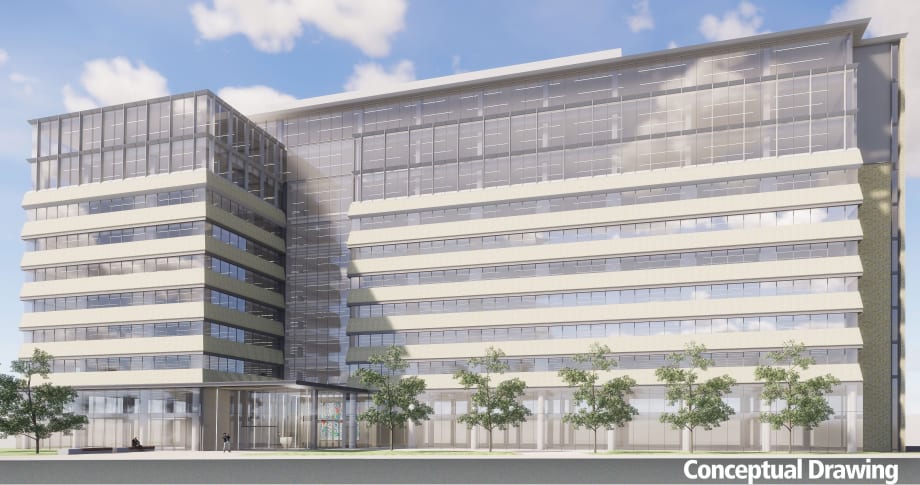
The new Metro HQ site will be stripped to its structural concrete and completely renovated to modern workplace standards. Rendering: Metro
3 min to read

The new Metro HQ site will be stripped to its structural concrete and completely renovated to modern workplace standards. Rendering: Metro
Washington, D.C.'s Metro has selected L'Enfant Plaza as the home for its new, centrally located headquarters building, the authority announced.
This week, Metro will begin a process to seeking final approval to purchase 300 7th Street SW - an existing, vacant office structure - as the replacement for its current HQ, the outmoded Jackson Graham Building in Northwest.
Formerly known as the Reporter's Building, the new Metro HQ site will be stripped to its structural concrete and completely renovated to modern workplace standards, including new commercial amenities on the ground floor to activate the streetscape and benefit the surrounding community. In addition, Metro plans to "re-skin" the building to improve its exterior appearance and may add three floors, creating space that could be leased to generate additional revenue.
The selection of Metro's new DC headquarters is the first major step in a broader office consolidation strategy that will save the transit authority $130 million over the next 20 years. As part of that process, Metro is downsizing from 10 current office buildings throughout the region to seven. Selection of the DC building is the first major step in the process, because the size and location of that building informs other selection decisions in Maryland and Virginia, where several viable sites are being evaluated. The office consolidation effort was approved by the WMATA Board in June.
Metro's current DC headquarters, a hulking brutalist structure known as the Jackson Graham Building or JGB, was constructed in 1974 and does not meet current accessibility requirements or modern fire/life-safety standards (e.g. there are no fire sprinklers), despite being the daytime home for more than 1,300 employees and contractors. Most building systems within JGB are at the end of their useful life — some dating to the original construction of the building — with some at risk of imminent failure.
Metro has long since determined that moving from JGB to other sites would be significantly less expensive — and less disruptive — than attempting to renovate the existing building. In addition, Metro stands to generate tens of millions of dollars by redeveloping the property under a long-term ground lease, given its prime location on a 43,000-square-foot parcel in DC's thriving Gallery Place neighborhood, directly across from the Capital One Arena and the National Building Museum. Metro plans to put the JGB site on the market in spring 2019.

Selected with access to Metro in mind, the site is immediately adjacent to L'Enfant Plaza, with rail service on the Green, Yellow, Orange, Blue, and Silver lines, as well as convenient access to VRE commuter rail and multiple Metrobus routes. Rendering: Metro
"This is the right move for all the right reasons, most immediately the safety of more than a thousand people who occupy JGB each day," said Metro GM/CEO Paul J. Wiedefeld. "Beyond that, moving our headquarters to L'Enfant Plaza will make us even more accessible to our customers, create a modern and vibrant office space that allows us to attract and retain top-flight talent, and generate revenue to support transit service."
The new HQ site was selected with access to Metro in mind. The site is immediately adjacent to L'Enfant Plaza, with rail service on the Green, Yellow, Orange, Blue, and Silver lines, as well as convenient access to VRE commuter rail and multiple Metrobus routes.
Designed with the goal of achieving LEED-Gold certification, the new Metro HQ building will be stripped to its structural shell and then built out to meet the needs of a modern workforce. Metro would have the option to add up to three floors to the building which, along with revenue from ground-floor commercial rentals, could generate revenue for Metro's operating budget.
As currently constructed, the new building is about 30% smaller than JGB, and Metro expects that some functions currently operating out of JGB will be shifted to Metro's new sites in Maryland and Virginia as part of the office consolidation plan.
The WMATA Board Finance Committee will consider the confidential purchase terms on Thursday. If the full board approves the transaction on November 15, Metro could close on the new building by the end of the month. Design and construction is expected to take about two years.
More Management

METRO Opens Submissions for 2026 Motorcoach Awards
Nominations are now being accepted for METRO Magazine’s Operator of the Year and Innovative Operator of the Year awards.
Read More →
New York MTA Advances Final Contract for Second Avenue Subway Expansion
Contract Four is the largest in the Second Avenue Subway Phase 2 project and includes construction of station infrastructure, tracks, and signals for the subway expansion, MTA officials said. Work on Contract Four will begin in 2027.
Read More →
Transit Agencies Highlight Safety Gains at National Summit
Leaders from 15 major transit systems shared crime-reduction results and safety initiatives while discussing the role of continued federal support.
Read More →

NITA Names New Leadership, Expands Reduced-Fare Program at First Board Meeting
The new regional transit authority appointed its first board chair and interim executive director while extending reduced fares across CTA, Metra, and Pace for eligible riders.
Read More →
Beyond the Checklist: A Structured Approach to Transit Maintenance
Reliability-Centered Maintenance helps transit agencies move beyond routine checklists to focus limited resources on the assets and failures that have the greatest impact on safety, reliability, and service.
Read More →
APTA 2026 Nominating Committee Selects Leadership Slate, Names Chair and Vice Chair Nominees
Leadership changes will help shape the association’s priorities and its representation of the transportation industry during the 2026–2027 term.
Read More →
DART Launches Major Security, Fare Enforcement Initiative
The 90-day demonstration will deploy coordinated security teams at five light rail stations while testing controlled access and gathering data to guide future investments.
Read More →
Sponsored•September 9, 2026
Advancing Fare Collection Through Technology and Innovation
Learn about delivering 1300 gates at 91 stations while managing fare evasion. Explore the large scale deployment, solution customization and real-world results that affect the region. Prepare for deployment in your region now.
Read More →
Game Day in Motion: Moving Millions During the 2026 World Cup
Between packed transit stations and team motorcoaches, see how agencies and operators across North America tackled the transportation demands of the 2026 FIFA World Cup.
Read More →
Surface Transportation Extension Averts Shutdown, Leaves Transit Funding Gap
The stopgap keeps federal transportation programs moving, but missing advance funding could complicate the transit and rail projects agencies are planning next.
Read More →