



Dallas' DART Adds first of New Gillig Buses
The new buses represent one of the first visible elements of DART Transform, which focuses on upgrading vehicles, stations, passenger facilities, and operating facilities, as well as creating a unified signaling system.

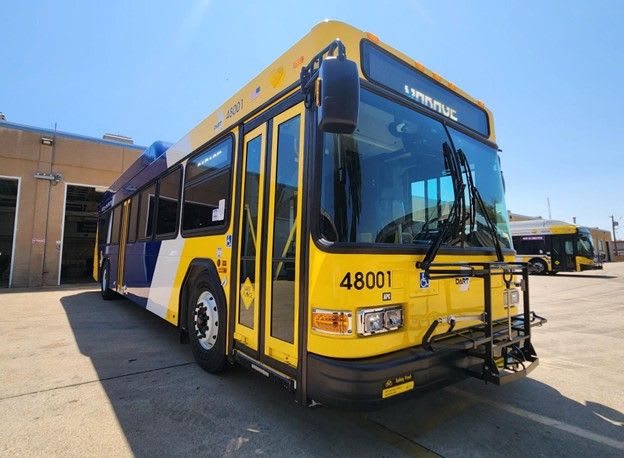
DART’s 476 new buses will begin replacing the current aging fleet as each bus approaches the 500,000-mile or useful lifespan mark.
Photo: DART
Dallas Area Rapid Transit (DART) welcomed the first two buses of its new 476-bus fleet, marking a significant milestone in DART Transform — a comprehensive modernization program designed to improve the customer experience across the entire transit network, the agency said.
The new buses represent one of the first visible elements of DART Transform, which focuses on upgrading vehicles, stations, passenger facilities, and operating facilities, as well as creating a unified signaling system. This effort enables DART to grow transit opportunities in response to the needs of its riders.
Together, these improvements advance DART’s Point B Strategic Plan according to the agency, which focuses on delivering fast, convenient, and easy public transit, creating fantastic spaces utilized by the community, and positioning DART as a key mobility and economic asset to North Texas.
“We’ve made a strategic commitment to improving our entire transit network with DART Transform, and the new buses will be the first major component that every rider will get to experience,” said Nadine S. Lee, DART president and CEO. “We can’t wait to see the positive impact these new vehicles will have on our customers as they travel to their next destination with DART.”
Gillig, a California-based company, is manufacturing the buses.
Set to go into Service Soon
The arrival of the first two buses will allow DART’s maintenance and operations team to inspect and test the vehicles before full production begins in October. Like its current fleet, the new buses will operate on compressed natural gas (CNG).
DART was awarded a $103 million competitive grant from the FTA’s Low- or No-Emission Grant Program, which provides funding for the purchase of low-emission and zero-emission transit buses. The grant helps cover nearly one-third of the total cost of the buses, with DART saving an additional $15 million by purchasing the 476 buses in a single large order.
The agency is ordering 76 30-foot buses and 400 40-foot buses to align with ridership capacity needs. Once the full production is established, DART anticipates receiving 20 to 30 buses per month with operators running the first routes later this fall, in mid- to late-November.
Customers can expect amenities such as vinyl seating, new on-board passenger information displays in both English and Spanish, tinted windows, and upgraded bike racks on the new Gillig buses.
Replacing an Aging Fleet
DART said it replaces its vehicles when they reach the end of their useful life. FTA defines the useful life of a heavy-duty transit bus as 12 to 14 years or 500,000 miles, whichever comes first.
DART’s 476 new buses will begin replacing the current aging fleet as each bus approaches the 500,000-mile or useful lifespan mark.
As the bus fleet has aged, reliability has decreased, and maintenance costs have increased, particularly in the most expensive repair categories, such as engine, HVAC, and transmission, according to the agency.
The new buses will help lower the surge in maintenance and repair costs, as well as address the shortage of parts for some of the oldest vehicles in the fleet.
More Bus

New York MTA Plans Largest Bus Fleet Upgrade in More Than a Decade
The agency is seeking manufacturers for 650 new CNG buses to replace aging vehicles, improve reliability, and advance its broader fleet modernization strategy.
Read More →
Building a Flexible Path to Transit Electrification
John Hroncich discusses BAE Systems’ modular and scalable approach, lessons learned from decades of real-world operations, and how agencies can identify electrification strategies that fit their fleets.
Read More →
Bus Tech Talk: Keeping Transit Technicians Ahead of the Technology Curve
LA Metro’s Obed Mejia discusses technician training, evolving maintenance technology, fleet replacement, and strategies for getting the most out of today’s transit fleets.
Read More →
Biz Briefs: RIPTA Unveils New Frontrunners, Clevland RTA Adds New Siemens, and More
In METRO's latest installment, we take a look at recent news from Siemens, Prevost, Dodge, and more partnerships making headlines across the transportation sector.
Read More →
People Movement: Holly Arnold Joins Transdev and More
In this edition, we also cover recent appointments and announcements at Pace, CamTran, MCI, and more, showcasing the individuals helping to shape the future of transportation.
Read More →
The High Cost of Transit Buses: Industry Leaders Look to Procurement Reform
Transit leaders and policymakers examine how standardized bus designs, streamlined procurement, and predictable funding could help agencies stretch budgets and deliver better service.
Read More →
The Business Voice Behind Public Transportation
As chair of APTA’s Business Members Board of Governors, Ray Melleady explains how more than 850 business members are partnering with transit agencies to advance funding, innovation, and industry-wide collaboration.
Read More →
From Surviving to Thriving: Building Stronger Transportation Organizations
Bus Business Consultants founder Brian Dickson shares lessons on leadership, organizational health, and creating options for long-term success in a changing transportation industry.
Read More →
Finding the ‘Happy Medium’: Optimizing Maintenance Without Sacrificing Reliability
The key to maintenance optimization isn’t doing less work—it’s doing the right work at the right time on the right assets.
Read More →
LA Metro, City of West Hollywood, and Partners Advance Smarter Bus Lane Enforcement
The award-winning partnership combines AI-powered detection with human oversight to improve bus reliability, accessibility, and enforcement efficiency.
Read More →